
Travel costs in Thailand in 2026 range from genuine budget pricing to European-level luxury, often within the same destination. What changes is not the country. It is the decisions made before booking.
Travelers do not overspend in Thailand because it is expensive. They overspend because most first-time itineraries are built within mid-range and luxury zones by default, without the planning awareness to recognize this. A traveler who stays in Chiang Mai guesthouses and eats at night markets spends differently than someone in a Phuket villa with a private day on a speedboat. Neither is doing Thailand wrong. They are doing two different trips that happen to share a border.
In Phuket, a beachfront villa at 25,000 THB per night can sit less than 2 km from guesthouses priced under 800 THB. Same road. Same island. Different economic reality entirely.
This breakdown covers actual 2026 spending ranges across accommodation, food, transport, and activities, the regional gaps that catch even repeat visitors off guard, and the specific line items that quietly push budgets beyond expectations. For destination selection logic that informs these cost tiers, see how region choice changes your daily costs in the Thailand Travel Regions guide.
Travel costs in Thailand in 2026 range from 1,200 THB to 15,000+ THB per day, depending on travel style, with mid-range travelers typically spending 3,500 to 6,000 THB per day. A 2-week trip costs between 20,000 THB (budget) and 200,000+ THB (luxury), excluding international flights.
How Much Does Thailand Cost Per Day in 2026?
The cost of traveling in Thailand depends less on the country's overall affordability and more on three variables: which region you visit, which travel tier you operate in, and how you move between destinations. Daily spending in 2026 ranges from approximately 1,200 THB (33 USD) for a budget traveler to 4,500 THB (125 USD) for a comfortable mid-range experience, and 15,000 THB or more (420+ USD) for a luxury stay with private transfers and premium dining.
"Affordable" and "cheap" are not the same in Thailand. Phuket and Koh Samui are priced at mid-range European levels once accommodation and private transfers are factored in. The beach photo looks identical. The bill does not.
Thailand Daily Budget at a Glance (2026)
| Travel Tier | Daily Spend (THB) | Daily Spend (USD approx.) | Typical Profile |
|---|---|---|---|
| Budget | 1,200 to 2,000 | 33 to 56 | Guesthouses, street food, and local transport |
| Mid-range | 3,500 to 6,000 | 97 to 167 | 3-star hotels, restaurants, and occasional tours |
| Upper mid / comfort | 6,000 to 12,000 | 167 to 333 | Boutique stays, private transfers, curated dining |
| Luxury | 15,000 to 40,000+ | 420 to 1,100+ | Private villas, charters, fine dining, spa access |
Figures exclude international flights. Internal flight costs are covered in the transport section below.
Accommodation Costs in Thailand by Tier and Region
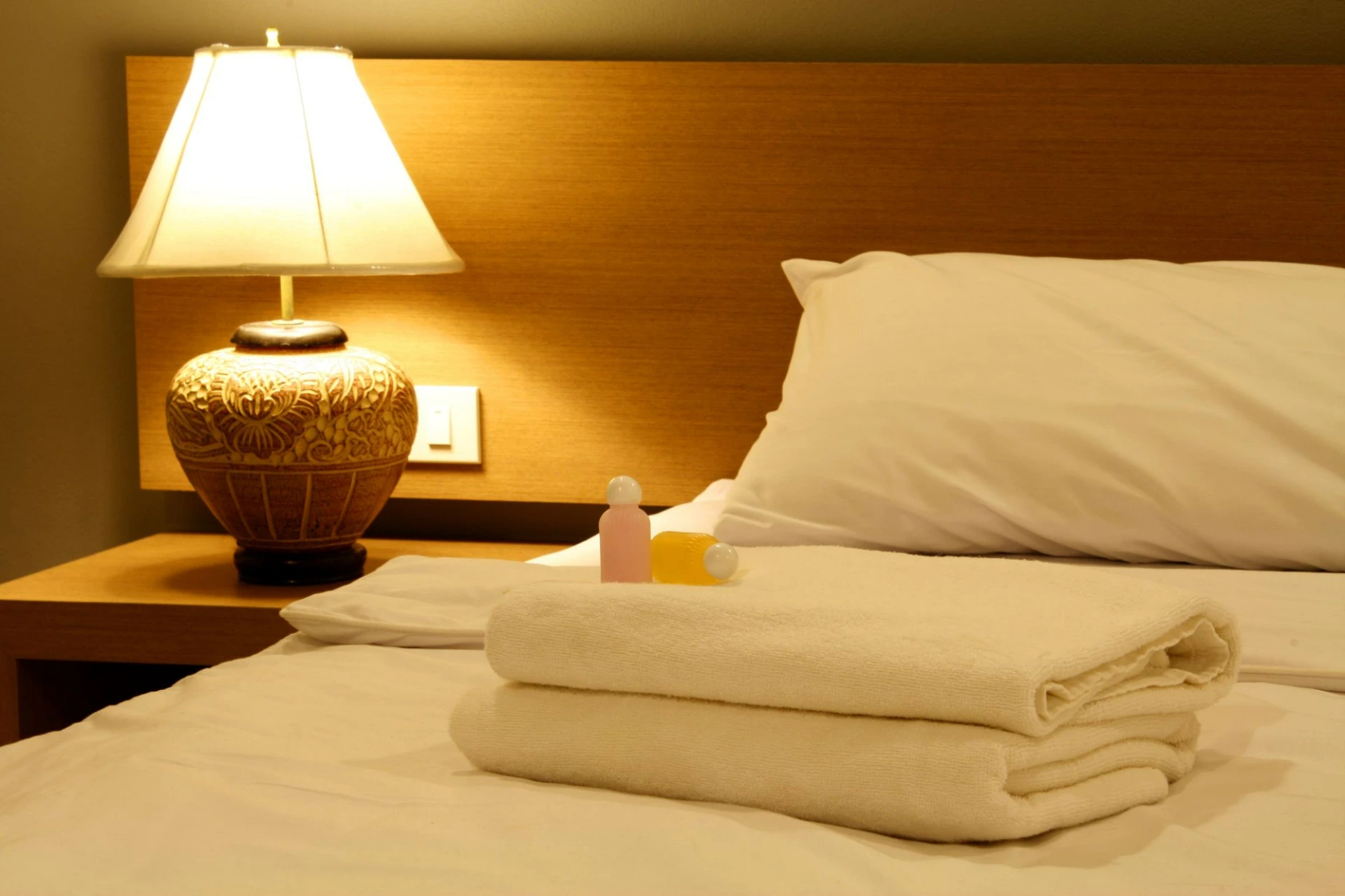
Accommodation is where the largest variance appears, and where planning decisions compound fastest. The same nightly budget yields very different stays depending on whether you are in Chiang Mai, Bangkok, or at a beach-adjacent property in Phuket.
Bangkok: Budget guesthouses and hostels from 350 THB per night. Mid-range hotels with reliable air conditioning and en-suite bathrooms cost between 1,800 and 3,500 THB. Upper mid-range and design hotels run 4,000-8,000 THB. Luxury hotels, including established international brands, range from 8,000 to 25,000 THB per night.
Chiang Mai: Consistently 20 to 35% cheaper than Bangkok across all tiers. A comfortable boutique guesthouse costs 900-2,200 THB. Mid-range hotels with pool access run 2,000 to 4,000 THB. The city's luxury properties are priced lower than in Bangkok, typically between 5,000 and 12,000 THB.
Phuket: Beach-adjacent accommodation commands a significant premium. Mid-range starts at 3,000 THB, and that frequently means a property 10 to 20 minutes from the water. Private villa rentals start at around 15,000 THB per night for two-bedroom villas with a pool. Five-star beachfront resorts run from 20,000 to 60,000 THB. In practice, many beachfront properties in Phuket require crossing busy coastal roads to reach the water, which affects both noise levels and walkability despite the premium pricing.
Krabi / Ao Nang: Runs 10 to 15% higher than comparable Bangkok properties in the 3-star and above bracket. Accessing Railay Beach adds a longtail boat transfer of 200 to 300 THB per person per crossing, which is not included in accommodation quotes. Railay's limestone walls block road access entirely, so that the transfer cost applies every time you leave or return.
Koh Samui: Luxury resorts on the north coast area start from 12,000 THB per night. Budget options are available, but they are farther from the beach. Peak season (December to February) adds 40-70% to base rates.
For a detailed breakdown of where to base yourself on Koh Samui and what each area delivers at different price points, review the north vs east coast comparison before booking.
Food Costs in Thailand: Street Stalls to Fine Dining
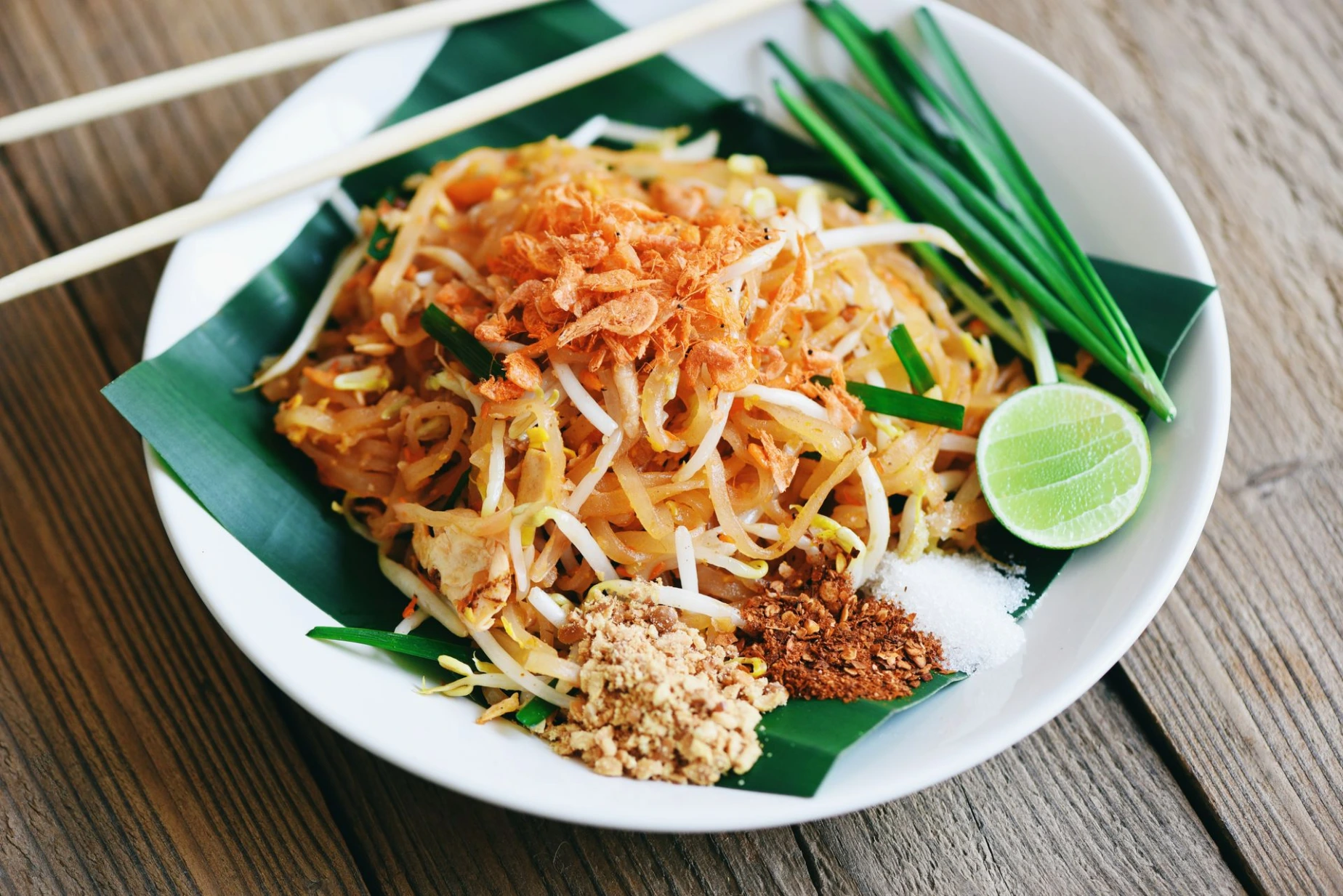
Food is where Thailand's affordability is most visible, and also where the range is most dramatic. The gap between a street-stall pad thai and a fine-dining tasting menu in Bangkok is wider than in almost anywhere else in Asia.
Typical meal costs (2026):
- Street food meal (noodles, rice dishes, grilled items): 60 to 120 THB (1.70 to 3.30 USD)
- Local sit-down restaurant, per person: 150 to 350 THB
- Tourist-zone Western-leaning restaurant, per person: 350 to 800 THB
- Fine dining, Bangkok or Phuket, per person with drinks: 1,500 to 4,000 THB
- Hotel restaurant (mid-range property): 400 to 900 THB per person
Daily food spend by tier: Budget travelers who eat primarily street food spend 300-500 THB per day. Mid-range travelers who eat at restaurants for lunch and dinner spend 800 to 1,500 THB. Luxury dining, including hotel restaurants and fine dining, costs 3,000 THB or more per person per day.
Bangkok's fine-dining scene now includes Michelin-recognized restaurants where the per-person bill routinely exceeds what a budget traveler spends in three days. Same city. The distance between those two experiences is a decision, not a geography.
Transport Costs Inside Thailand
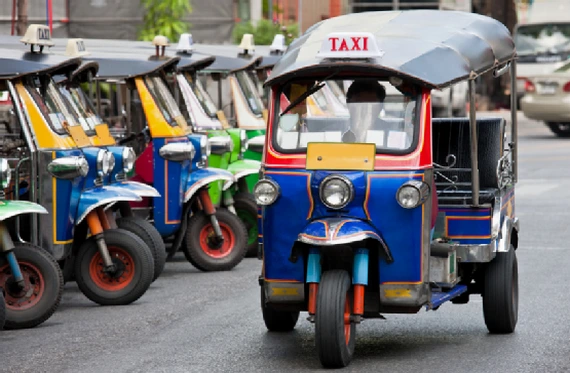
Thailand travel expenses vary considerably depending on how you travel. City transport is inexpensive. Inter-destination transfers, particularly to and between islands, incur meaningful daily costs that pre-trip calculations often overlook.
City transport:
- Grab (Bangkok): Average fare is 80 to 200 THB per ride in central areas. Surge pricing applies during peak hours and rain.
- BTS Skytrain (Bangkok): 17-59 THB per journey, depending on distance. A day pass costs 140 THB.
- Songthaew (Chiang Mai): Red trucks operate on fixed routes for 20-40 THB per person.
Inter-city and inter-island:
- Domestic flights, Bangkok to Phuket: From 900 to 2,500 THB one-way when booked 4 to 6 weeks ahead. Last-minute fares on the same route can reach 5,000 to 7,000 THB.
- Domestic flights, Bangkok to Chiang Mai: From 700 THB one-way with budget carriers.
- Private airport transfers (Phuket airport to Patong): 800-1,200 THB. Metered taxi with expressway: 600-900 THB.
- Inter-island ferries: 350-650 THB, depending on the route. The ferry from Koh Samui to Koh Phangan costs 200 to 300 THB.
- ATM withdrawal fee: 220 THB per transaction, fixed across all Thai ATMs for foreign cards.
Domestic flights are cheap enough that the bus-versus-fly decision is rarely about money. An overnight bus from Bangkok to Chiang Mai costs roughly 600-900 THB. A 70-minute flight starts at 700 THB. The time difference resolves the comparison for most itineraries.
Understand how transport costs compound across a multi-stop southern Thailand route before confirming your island sequence.
Activity and Experience Costs
Activities are where budget and luxury travelers diverge most sharply, not because the experiences are entirely different, but because the access method changes the cost by a factor of 10 or more. The same bay looks the same from a group speedboat at 1,500 THB or a private charter at 20,000 THB. The distinction is who else is on it, and when you leave.
Group tours to Phang Nga Bay and the Four Islands typically depart between 8:30 and 9:30 AM, so you arrive at the main stops after peak crowds. Private charters set their own schedule. That operational difference, not the price, drives the booking decision for travelers who prioritize access over cost.
| Activity | Group / Standard (THB) | Private / Premium (THB) |
|---|---|---|
| Grand Palace entry | 500 per person | N/A (fixed entry) |
| Elephant sanctuary, Chiang Mai (half-day) | 2,500 to 3,500 | Private booking from 8,000 |
| Phang Nga Bay boat tour | 1,200 to 1,800 | 12,000 to 22,000 (private charter) |
| Scuba diving, Koh Tao (2 dives) | 1,200 to 1,600 | Private guide from 3,500 |
| PADI Open Water course, Koh Tao | 9,500 to 12,000 | Private instruction from 16,000 |
| Thai massage, reputable spa (1 hour) | 300 to 600 | Hotel spa: 1,500 to 3,500 |
| Cooking class, Chiang Mai (half-day) | 1,200 to 2,000 | Private class from 4,500 |
Private boat departures from Ao Nang in peak season book out 3 to 5 days ahead. Cost is not the limiting variable. Timing is. See how to plan Krabi activities by travel style before committing to an Andaman coast itinerary.
Regional Cost Comparison: Where Your Thailand Trip Budget Goes Further
Chiang Mai and Phuket operate on different economic baselines, and choosing a destination without accounting for that difference routinely results in trips that cost more than planned for a lower-quality outcome.
| Destination | Accommodation Range (THB/night) | Cost vs Bangkok | Key Cost Driver |
|---|---|---|---|
| Chiang Mai | 600 to 8,000 | 20-35% lower | Most affordable major destination |
| Bangkok | 800 to 25,000 | Baseline | Nightlife and dining inflate totals |
| Krabi / Ao Nang | 1,500 to 18,000 | 10-15% higher | Boat transfers add a per-day cost |
| Phuket | 1,800 to 45,000+ | 20-40% higher | Beach proximity commands a premium |
| Koh Samui | 1,200 to 35,000 | Comparable to Phuket | Peak season surcharges significant |
| Koh Yao Noi | 3,000 to 20,000 | The mid-range floor is higher | Limited infrastructure, cash only |
Koh Yao Noi has no major beach clubs, no convenience stores, and no reliable ATM infrastructure. Cash planning is not optional. Arrive from Phuket or Krabi with sufficient baht for your full stay.
Confirm which destinations fit your travel style before settling on a cost tier, because your region choice shapes both your experience and your spend in ways no budget calculator accounts for.
The Costs That Quietly Inflate Thailand Travel Expenses
These are not scams or surprises. They are predictable line items that are excluded from pre-trip calculations and instead appear on bank statements.
Peak-season accommodation surcharges: December to February rates on Phuket and Koh Samui are 40 to 70% above low-season equivalents. A hotel that costs 3,500 THB in September costs 5,500-6,000 THB in January. This reflects the standard operating rate for the high-demand window, not a temporary price spike.
Transport layering across island routes: Getting from Phuket airport to a Krabi villa isn't a single transfer. It can be an airport taxi, a ferry, a longtail, or a songthaew, each with a separate fare. On a 5-day Railay stay, four crossings per day at 200 to 500 THB per person add 4,000 to 10,000 THB in transfer costs that rarely appear in accommodation quotes.
ATM fees: The 220 THB ATM fee is fixed regardless of withdrawal amount. 10 withdrawals over a two-week trip add up to 2,200 THB in fees alone. That is roughly two nights in a Chiang Mai guesthouse, spent on nothing. Withdrawing 5,000-10,000 THB per transaction and carrying a Wise or Revolut card as a backup reduces this significantly.
Baggage fees on domestic budget airlines: AirAsia and Nok Air routes charge 200-600 THB per checked bag when added at the airport. Pre-booking the same allowance online typically costs 150-300 THB. Across a two-stop itinerary, that gap adds up.
Travel insurance: Frequently excluded entirely from Thailand cost guides. A medical evacuation from a remote island can cost more than 200,000 THB without coverage. Comprehensive travel insurance for a two-week trip typically costs 1,500 to 4,000 THB, depending on nationality and provider.
For the full operational layer beneath a well-planned Thailand trip budget, including currency handling, transport friction, and the scams that still catch experienced travelers off guard, review the Thailand travel tips guide before confirming bookings.
Thailand Luxury Travel Costs: What the Premium Actually Buys
At the upper end of the Thailand cost spectrum, the gap with European luxury destinations narrows considerably. The value of Thai luxury lies not in the nightly rate in isolation. It is the staff-to-guest ratio, the privacy available at that price point, and the reduction in logistical friction that comes with it.
Luxury cost benchmarks (2026):
- Private villa, 2 bedrooms, Phuket (pool, sea view): 18,000 to 45,000 THB per night, depending on location and service inclusion
- Six Senses, Rosewood, Four Seasons tier: 25,000 to 80,000 THB per night
- Private speedboat charter, full day, Phang Nga Bay: 18,000 to 30,000 THB
- Private chef service in villa (meal service for two): 3,000 to 6,000 THB
- Realistic luxury daily total for two people: 40,000 to 100,000 THB, including villa, transfers, dining, and one activity
A comparable private-villa experience in Ibiza or on the Amalfi Coast costs about the same. Thailand's advantage at that tier is operational: the level of service, the accessibility of private water transport, and the privacy available within 30 minutes of a major airport.
For the full luxury planning framework covering private villas, vetted transfers, and experience design in Thailand, the Thailand Luxury Travel section covers the coordination layer that enables high-end trips to operate.
Who Should Adjust Their Thailand Budget Assumptions
These are the planning mismatches that most often lead to budget surprises:
- Travelers benchmarking costs against guides written before 2022 will find tourist-zone prices 30 to 50% higher than those references suggest. Inflation has been real and uneven across regions.
- Budget travelers visiting the islands in peak season (December to February) often spend mid-range amounts but do not receive a mid-range experience. Accommodation rates rise. Food prices in beach-adjacent areas follow.
- Luxury travelers who spend heavily on villas but rely on shared ferries and public longtails lose the privacy they are paying for elsewhere. The transport tier should match the accommodation tier.
- Travelers planning to calibrate costs on arrival will consistently overpay for accommodation and transport. Same-day hotel bookings during peak season in Phuket and Koh Samui cost 25 to 40% more than those booked 3 to 4 weeks in advance.
Thailand Travel Cost 2026: Common Questions
How much does a 2-week trip to Thailand cost in total? A 2-week trip to Thailand costs approximately 20,000 to 35,000 THB for budget travelers, 50,000 to 90,000 THB for mid-range travelers, and 200,000 THB and above for luxury travelers. These figures exclude international flights and assume a route that covers Bangkok and one or two additional destinations. Island stops in peak season push totals toward the upper end of each range.
How much money do I need per day in Thailand? For a comfortable mid-range experience, budget 3,500 to 6,000 THB (97 to 167 USD) per day. This covers a 3-star hotel, two restaurant meals, one activity, and local transport. Budget travelers relying primarily on street food and guesthouses can manage on 1,500-2,000 THB.
Is Thailand still affordable to travel to in 2026? Compared to Western Europe and Australia, yes. Compared to Southeast Asian neighbors such as Vietnam or Cambodia, Thailand's tourist zones now run noticeably higher. The value proposition holds, but it requires matching the correct destination and travel tier. Chiang Mai remains genuinely affordable. Central Phuket in December does not.
What is the most expensive part of a Thailand trip? Accommodation on the islands in peak season is consistently the largest single daily expense. Private transfers and boat charters follow. Food, even at the restaurant level, rarely drives the budget beyond expectations unless dining is concentrated in hotel restaurants or fine dining venues.
How much cash should I carry in Thailand? Carry enough baht to cover 2 to 3 days of spending at any point in the trip. On smaller islands, including Koh Lipe and Koh Yao Noi, ATM access is limited, and withdrawal fees are fixed at 220 THB regardless of amount. Withdrawing 5,000-10,000 THB at a time on the mainland before island transfers reduces the per-baht fee.
When is Thailand most expensive to visit? December through February is the peak season on the Andaman coast (Phuket, Krabi, Koh Lipe), with accommodation rates 40 to 70% above low season rates. The Gulf coast (Koh Samui, Koh Phangan) peaks at different times due to different monsoon cycles. Aligning destination choice with seasonal patterns affects daily spend as much as any budget tier decision.
Does luxury travel in Thailand cost less than in Europe? At the entry level of luxury, Thailand is significantly cheaper. At the top end, the gap narrows. A private villa with full service in Phuket can run at rates comparable to those in Ibiza or Sardinia. The distinction is what that rate includes: staff ratios, private water access, and proximity to genuinely secluded environments that would cost considerably more in Mediterranean equivalents.
Planning Your Thailand Budget: What the Numbers Tell You
Thailand is not one budget. It is a country that operates at five different cost levels simultaneously, sometimes within the same postcode.
Travelers who overspend are not making careless decisions. They are working from averaged figures that flatten the real variation between a night market stall in Chiang Mai and a beachfront villa on Koh Samui. Travelers who feel Thailand is poor value usually apply a cost tier to an experience that runs in a different tier entirely.
The correct Thailand trip budget is the one that matches your actual travel style to the right cost tier before you book, not after you arrive. The numbers above make that alignment possible.
Thailand rewards precision more than spending.