
The structure most travelers use for a Thailand 2-week itinerary looks consistent: Bangkok, Chiang Mai, and some version of the islands. The logic is reasonable. Execution is where most trips lose time that they cannot get back.
The planning detail most itinerary guides omit is this: the direct flight from Chiang Mai to Krabi operates seasonally and is frequently unavailable between May and October. Travelers who discover this after booking accommodation at both ends either lose money on non-refundable nights or absorb a Bangkok layover that costs three to four hours of island time. Those who confirm availability before booking build a different and better trip.
In practice, most itinerary inefficiencies come from flight assumptions rather than destination choices.
A Thailand 2-week itinerary is not complicated when connections are understood before hotels are confirmed. This guide is structured around that operational sequence.
The Short Answer

For most travelers, a Thailand 2-week itinerary works best structured as 4 nights in Bangkok, 3 nights in Chiang Mai, 6 nights in the south, and 1 buffer day. Internal flights connect each leg. The Andaman coast (Phuket, Krabi) is best for travel from November through April. The Gulf coast (Koh Samui) is the correct swap for June through October.
Confirm the Chiang Mai-to-southern destination flight before booking accommodation at either end. This is the single step most itineraries skip.
Quick Summary: Thailand 14 Day Itinerary at a Glance
| Region | Nights | Transport | Best For |
|---|---|---|---|
| Bangkok | 4 | Private car, BTS Skytrain | City orientation, culture, and food |
| Chiang Mai | 3 | Private car, half-day tours | Temples, nature, slower pace |
| Southern Islands | 6 | Flight + private boat or car | Beach, privacy, and Andaman access |
| Buffer day | 1 | Any | Delays, final Bangkok transit |
Transfer days are not counted separately. Evening flights between legs preserve full days at every destination.
How to Plan a Thailand 2 Week Itinerary Efficiently

The most common routing error in a Thailand travel route covering Bangkok, Chiang Mai, and the islands is flying north to Chiang Mai, then backtracking through Bangkok to reach the south. This adds one unnecessary connection and regularly costs a full travel day, depending on timing.
The cleaner sequence is linear: Bangkok first, Chiang Mai second, southern islands third.
Key routing rules:
- Avoid backtracking through Bangkok between the north and south
- Confirm the Chiang Mai to the southern destination flight is direct before booking hotels
- Sequence the north before the islands to preserve the strongest days for the beach leg
Chiang Mai to Phuket (HKT) operates year-round on most airline schedules. Chiang Mai to Krabi (KBV) runs direct primarily from November through April. Outside that window, the connection passes through Bangkok, adding three to four hours. One airline confirmation call takes two minutes and can prevent a full day of avoidable transit.
The Tourism Authority of Thailand publishes seasonal regional travel guidance to help determine which destinations are most accessible on specific travel dates.
Bangkok: Days 1 to 4
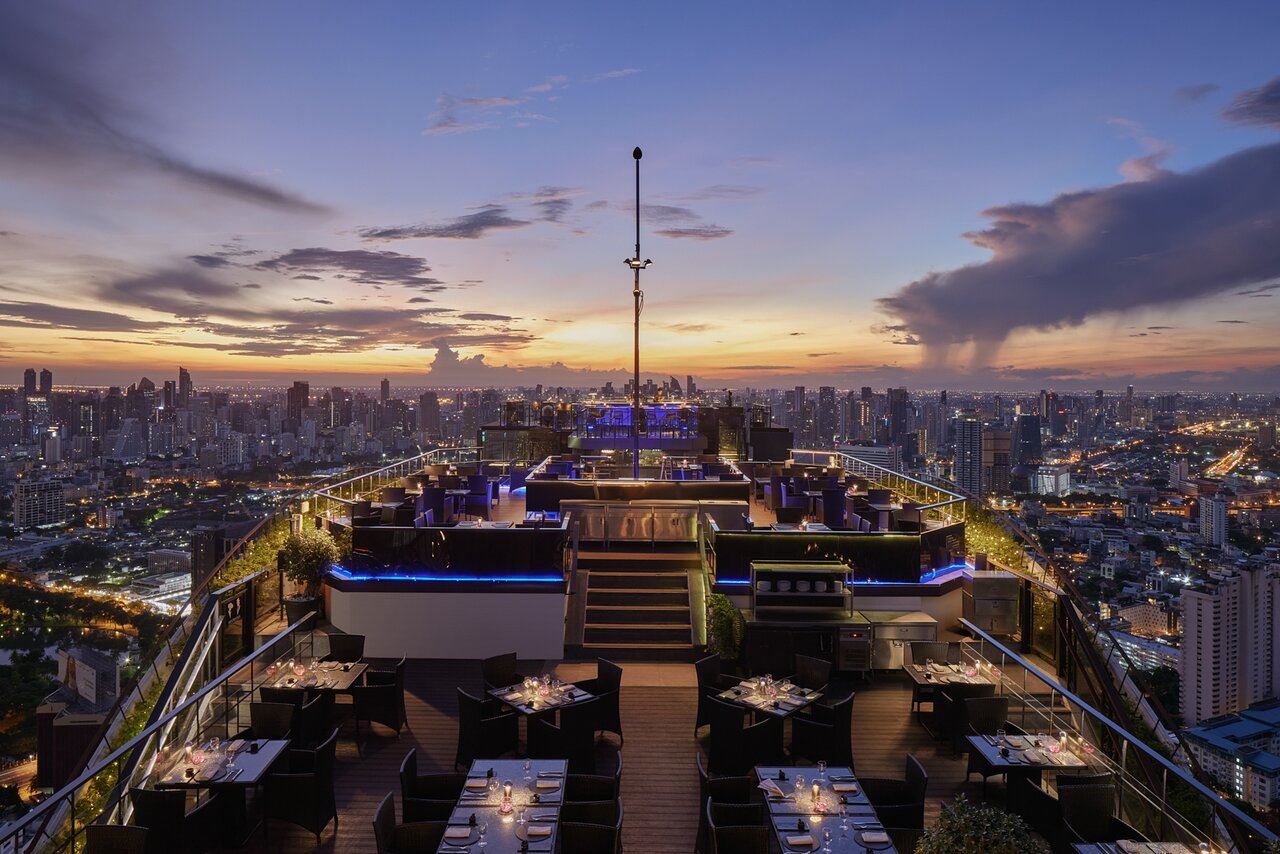
What to Prioritize in Four Nights
Bangkok does not reward broad touring. It rewards knowing which neighborhood you are in and why.
The city's core planning problem is scale. Suvarnabhumi International Airport sits 30 kilometers east of the center. The Grand Palace sits at the western edge of the Old City. Sukhumvit, where most international hotels are concentrated, is three to four kilometers east of the river. These distances look modest on a map and become punishing in traffic. An itinerary that treats Bangkok as a single walkable zone routinely loses two to three hours per day to unnecessary movement.
Choose accommodation based on where you plan to spend most of your time, not on the proximity of a single landmark. For first visits, the Riverside corridor (Charoen Krung, Chao Phraya) places you within ten minutes of the Grand Palace, Wat Pho, and the elevated walkways of the Rattanakosin quarter. For return visitors, Silom and Sathorn offer faster BTS access and better dining density without the heritage surroundings.
Hotel trade-off worth noting: Riverside properties deliver atmosphere and proximity to the Old City. Sukhumvit properties deliver convenience and transit access. Choosing based on atmosphere, then needing to commute to everything, creates the kind of daily friction that accumulates over four nights.
Before arrival, settle the airport transfer. Suvarnabhumi (BKK) and Don Mueang (DMK) are not interchangeable. Most international arrivals use Suvarnabhumi. Most domestic and low-cost departures use Don Mueang. The two airports are 35 kilometers apart and require 60 to 90 minutes to travel between them in peak-hour traffic. The full breakdown of Bangkok transfer costs and options is in the Thailand Airport Transfer Options Explained (2026) guide.
Bangkok Day-by-Day
| Day | Area | Key Experiences |
|---|---|---|
| Day 1 | Arrival + Riverside | Airport transfer, check-in, early evening walk along the Chao Phraya |
| Day 2 | Old City / Rattanakosin | Grand Palace from 8.30 am, Wat Pho, river taxi from Tha Tien Pier |
| Day 3 | Silom / Lumphini | Lumpini Park morning, private wellness session, dinner in the Silom corridor |
| Day 4 | Flexible + transfer | Half-day Chatuchak Weekend Market or MOCA, evening domestic flight to Chiang Mai |
Booking note: Grand Palace entry requires shoulders and knees covered. Queues are heaviest between 9 am and 11 am. Arriving at 8.30 am reduces waiting time by approximately 40 minutes in peak season.
Where this fits in your trip: Arrive Suvarnabhumi (BKK), 4 nights Riverside or Silom, depart Don Mueang (DMK) to Chiang Mai (CNX)
Chiang Mai: Days 5 to 7
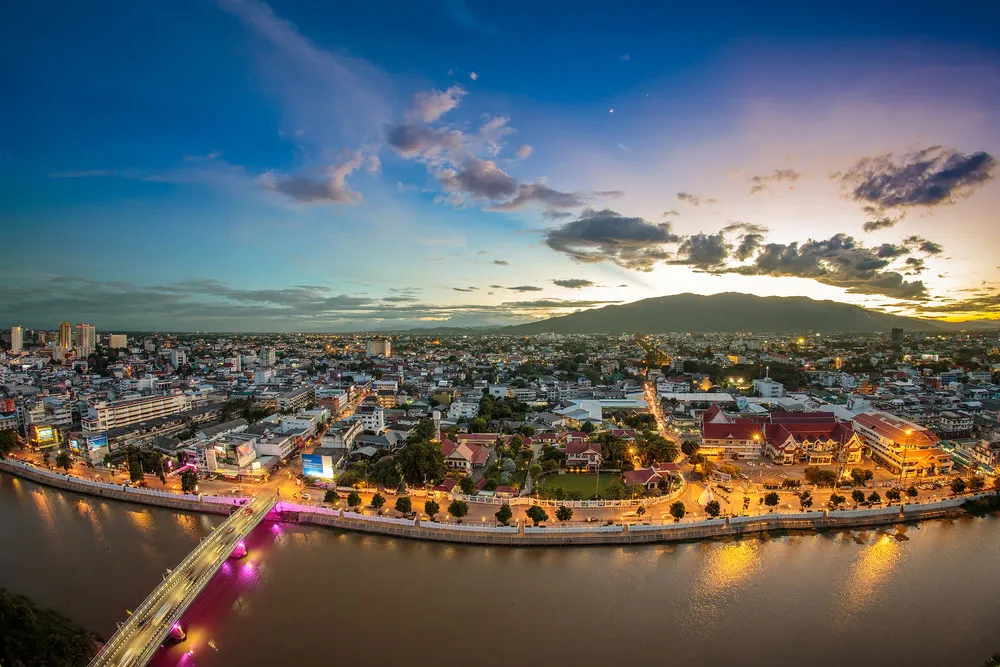
Why Three Nights Is the Right Allocation for This Thailand Travel Route
Chiang Mai is frequently treated as a half-day excursion from Bangkok. That is a category error, not a planning shortcut.
The city has its own architectural identity, its own food culture, and a geographic spread that makes compressing it into a single narrative counterproductive. Doi Suthep, the temple complex sitting at 1,080 meters on the western ridge above the city, is qualitatively different from anything available in Bangkok or on the islands. Arriving before 8 am means near-empty terraces, cool air, and unobstructed views south over the plain. Arriving at 10 am means sharing the same terrace with three tour groups. The difference is two hours of timing, not a different ticket.
Three nights allocate enough time to cover the Old City temple circuit, Doi Suthep at the right hour, the Saturday or Sunday Walking Street, and a half-day excursion into the outskirts. Four nights suits travelers adding Chiang Rai or the Mae Sa Valley in any depth.
Accommodation positioning: The Old City (within the moat) provides walkable access to Wat Chedi Luang and Wat Phra Singh. Nimman Road, ten minutes west, offers better coffee and restaurant density. Both are viable. Choose based on whether temple proximity or dining variety matters more to how you actually spend mornings.
Trade-off for Phuket-focused travelers: Chiang Mai in the north is an intentional detour. Travelers who skip it in favor of more island time are not making a mistake. They are making a different trip. Three nights in Chiang Mai is correct for the traveler who wants geographic breadth. For travelers whose primary interest is the Andaman coast, a one- or two-night Bangkok extension is a reasonable alternative to the full northern leg.
Seasonal note: March and April are the burning season in northern Thailand. Agricultural and forest fires push AQI readings in Chiang Mai Province above 300 during peak burn weeks. This is an environmental condition, not a weather inconvenience. November through February is consistently the correct window for every element of the Chiang Mai leg.
Chiang Mai Day-by-Day
| Day | Area | Key Experiences |
|---|---|---|
| Day 5 | Arrival + Old City | CNX arrival, check-in, evening at Nimman Road or Night Bazaar |
| Day 6 | Doi Suthep + outskirts | Wat Phra That Doi Suthep before 8 am, Mae Sa Valley, or the ethical elephant sanctuary in the afternoon |
| Day 7 | Transfer day | Leisurely morning, Warorot Market optional, afternoon domestic flight south |
Booking note: Ethical elephant sanctuaries require advance booking. Elephant Nature Park in Mae Taeng District is the benchmark for animal welfare in the region. Venues offering riding should be avoided entirely. Slots fill four to six weeks ahead during December and January.
Where this fits in your trip: Fly CNX direct to HKT (Phuket) or KBV (Krabi). Confirm direct route availability before booking hotels at either end.
Southern Thailand: Days 8 to 13
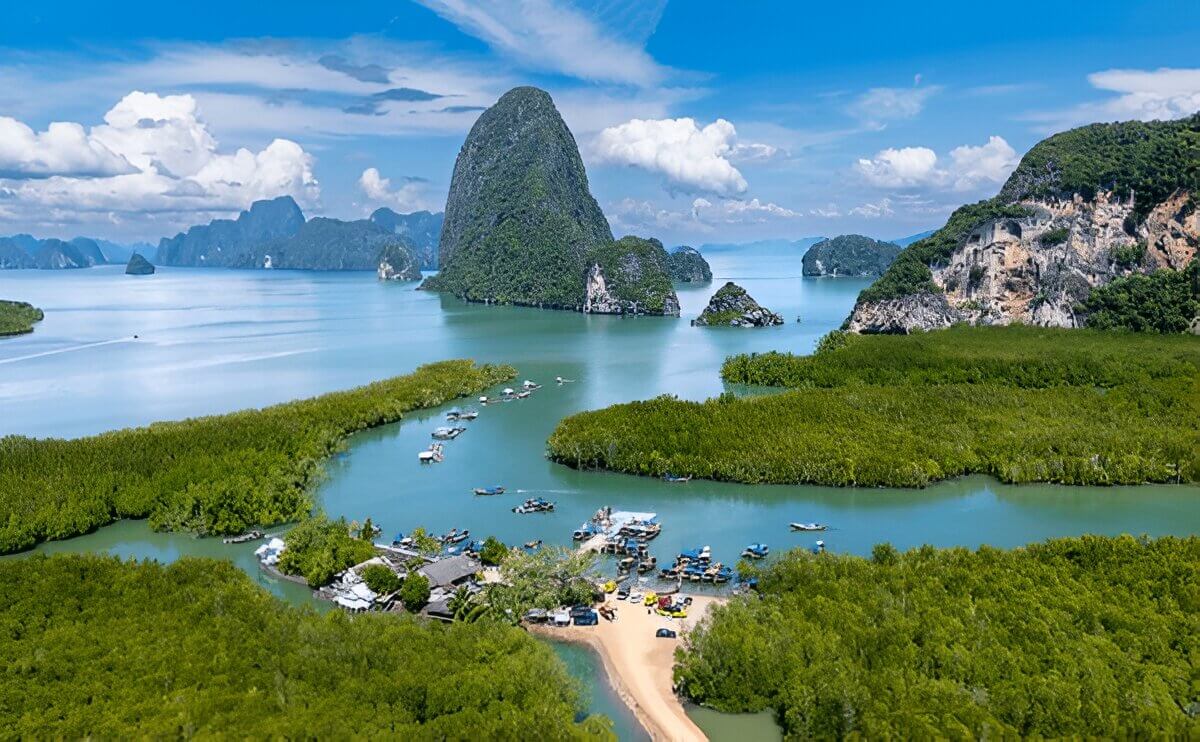
Choosing Your Base for the Best Thailand Itinerary for First-Time Visitors
The southern leg is where this Thailand 14-day itinerary faces its most consequential decision. It is also the one most frequently made on insufficient information.
The Andaman coast is accessed primarily through Phuket International Airport (HKT). Within a 60 to 90-minute radius of that airport, three distinct environments are available. Phuket's west coast offers developed resort and beach club infrastructure, with Surin and Kamala as the cleaner alternatives to the more commercial Patong corridor. Krabi and Railay offer karst limestone scenery and a pace that registers as genuinely different from resort Thailand. Koh Yao Noi, sitting in Phang Nga Bay between Phuket and Krabi, offers near-total separation from tourist infrastructure. It has no major beach clubs, no large resort chains, and no road connections to the mainland.
Railay is one of the few destinations in Thailand where no roads exist. Every arrival and departure depends on a longtail boat transfer from Ao Nang Pier or Krabi Town, regardless of weather, luggage weight, or time of day. This is the defining operational fact of that destination, and it shapes everything from luggage choices to check-in timing.
For a first visit within a 2-week structure, 3 nights in Phuket and 3 nights in Krabi or Railay covers the widest range of Andaman experience without overcomplicating logistics. Phuket handles Phang Nga Bay day charters and provides strong resort infrastructure. Krabi provides the visual environment and a slower pace.
Phuket trade-off: The west coast works well for beach club access and Phang Nga Bay departures. Travelers seeking isolation, particularly along the Surin and Kamala corridor, will find the environment more developed than photographs suggest during peak season. Surin Beach in December is a very different experience from what it is in a brochure.
The full regional breakdown, including accommodation tiers and area logistics, is in the Southern Thailand Andaman Coast Travel Guide: Phuket, Krabi, and Phang Nga. If the destination choice between Phuket, Krabi, and Koh Samui is still unresolved, the Phuket vs Krabi vs Koh Samui: Which Is Right for You? The guide addresses it directly.
Decision Shortcut
- Choose Phuket if you want beach club infrastructure, Phang Nga Bay day-charter access, and logistics that stay simple throughout.
- Choose Krabi or Railay if limestone scenery, lower crowd density, and a slower pace are the priority. Confirm luggage plans before booking.
- Choose Koh Yao Noi if complete separation from resort infrastructure is the aim, and you have experienced the Andaman's more developed options before.
At a Glance: Southern Thailand Destination Comparison
| Phuket | Krabi / Railay | Koh Yao Noi | |
|---|---|---|---|
| Access | Direct flight | Flight or 60-90 min speedboat | Speedboat from Phuket or Krabi |
| Infrastructure | High | Moderate | Minimal |
| Crowd level | High in peak season | Moderate | Low |
| Best for | Beach clubs, Phang Nga day trips | Scenery, couples, seclusion | Privacy, silence, total separation |
| Key limitation | Less raw natural beauty | Railay boat-access only, no roads | Very limited dining and activities |
| Typical villa range (est.) | 8,000 to 35,000 THB per night | 5,000 to 20,000 THB per night | 6,000 to 18,000 THB per night |
Southern Islands Day-by-Day (Phuket + Krabi Split)
| Day | Location | Key Experiences |
|---|---|---|
| Day 8 | Arrival Phuket | Flight from CNX, Surin or Kamala Beach, private villa check-in |
| Day 9 | Phang Nga Bay | Private speedboat from Ao Por Grand Marina, karst formations, Ko Tapu |
| Day 10 | Phuket west coast | Surin Beach morning, beach club afternoon, sunset at Laem Phromthep |
| Day 11 | Transfer to Krabi | Private speedboat (60 to 90 min) or van via Phang Nga (2.5 to 3 hrs), Railay check-in |
| Day 12 | Railay / Phra Nang | Phra Nang Cave Beach, East Railay at low tide, longtail to Tham Phra Nang |
| Day 13 | Krabi coast | Ao Nang at leisure, departure preparation, or final resort night |
Booking note: Longtail boats from Ao Nang to Railay run approximately every 15 to 20 minutes during daylight hours and cease after sunset. Late arrivals requiring a night transfer should confirm private boat availability with their property in advance.
For Phang Nga Bay charter specifics, including departure pier options, timing windows, and operator comparisons, confirm arrangements using the Private Boat Tours in Phuket: 2026 Planning Guide before booking.
Where this fits in your trip: Arrive HKT (Phuket), 3 nights west coast, speedboat to Railay, 3 nights Krabi coast, depart KBV or return HKT
Day 14: Departure from Bangkok or transit
Most international routes out of Thailand connect through Suvarnabhumi. Phuket International Airport (HKT) now operates direct services to several Gulf hubs, select European cities, and regional Asian gateways, making a Bangkok connection unnecessary for many travelers.
If the outbound departs early from Suvarnabhumi, a final night in Bangkok is a practical buffer. The road distance from Krabi to Phuket International Airport is approximately 2.5-3 hours. If an international departure from Phuket is before 10 am, a Krabi final night introduces timing risk that a Phuket-based final night removes entirely.
Transfer Logistics for This Thailand Travel Route
Bangkok to Chiang Mai: Domestic flight from Don Mueang (DMK) or Suvarnabhumi (BKK) to Chiang Mai (CNX). Thai Lion Air, Thai AirAsia, and Bangkok Airways operate this route. Flight time approximately 1 hour. Estimated fare: 1,500 to 3,500 THB one way. If arriving internationally at Suvarnabhumi and departing from Don Mueang, allow a minimum of 90 minutes between airports during peak traffic hours.
Chiang Mai to Phuket or Krabi: Direct routes operate seasonally. Flights from Chiang Mai to Phuket (HKT) are consistently available year-round. Chiang Mai to Krabi (KBV) direct runs primarily from November through April. Outside that window, most connections route through Bangkok, adding 3 to 4 hours. Estimated direct fare: 2,500 to 5,500 THB. Confirm the direct connection before confirming hotel check-in times at either destination.
Phuket to Krabi mid-trip: Private speedboat from Ao Por Grand Marina or Ao Chalong Pier to Ao Nang or Railay, approximately 60 to 90 minutes. Estimated cost: 3,500 to 8,000 THB per boat. Van transfer via Phang Nga takes 2.5 to 3 hours by road and costs 1,200 to 2,500 THB. The speedboat preserves significantly more of Day 11 for travelers for whom time has more value than cost.
All cost figures are estimates based on 2025-2026 operator pricing. Confirm directly with operators at the time of booking.
When to Take This 2-Week Thailand Travel Plan
November through February is the optimal window. The Andaman coast is at peak clarity, Chiang Mai is dry and cooler, and Bangkok sits in its most comfortable temperature range. Peak demand runs from December through January. Railay villa inventory and Phang Nga Bay private charter availability tighten from late December onward. Secure the southern bookings before anything else.
March through May brings heat throughout all three regions. The burning season in the north runs from late February through April, with March and early April typically the most affected. The south grows increasingly humid as April transitions toward the early monsoon.
June through October is the southwest monsoon season on the Andaman coast. Krabi and Phuket receive heavy rainfall from May onward, with July and August the most disruptive months for outdoor and boat-based activity. For travel in this window, replace the Andaman southern leg with the Gulf coast. Koh Samui, Koh Phangan, and Koh Tao follow a different monsoon pattern and remain largely accessible through October. The full Gulf coast sequencing, island comparisons, and transfer logistics are covered in the Southern Thailand Gulf Coast Travel Guide (2026).
Who This Itinerary Is Not For
Travelers wanting to add the Gulf Coast to the same 2-week Andaman routing. The Gulf Coast sits on the opposite side of the peninsula. Adding it requires a separate flight through Bangkok or a multi-hour overland crossing. It fractures the southern leg and adds at least one full lost day. It is a different itinerary, not an extension of this one.
Travelers planning to visit Chiang Mai in March or April. AQI readings in Chiang Mai Province have exceeded 300 during peak burn weeks in recent years. The temples remain accessible. The outdoor experience does not hold up under those conditions. For travelers committed to this window, consider replacing Chiang Mai with a Bangkok extension and returning to the north in a future trip.
Travelers expecting Bangkok to feel manageable without a clear neighborhood plan. Traffic, density, and the geographic spread between the airport, the Old City, and the main hotel corridors mean that a loosely structured Bangkok schedule loses two to three hours per day to unnecessary movement. The city rewards specificity.
Travelers wanting seven or more nights in a single island destination. This itinerary is built for geographic breadth. For depth in one place, the allocation and structure changes significantly.
The Three Bookings That Define This Trip
Three reservations determine the quality ceiling of this itinerary. Everything else is adjustable.
The Phang Nga Bay private charter fills quickly during December and January, particularly for weekend departures from Ao Por Grand Marina. The Railay or Krabi property that fits your standards, rather than what remains available, requires booking months in advance during the high season. The Chiang Mai elephant sanctuary, which operates ethically, offers a limited number of daily slots and fills four to six weeks out in peak season.
Confirm these three first. Domestic flights, Bangkok accommodation, and remaining nights fill around them without difficulty.
Frequently Asked Questions
What is the best Thailand 2-week itinerary for first-time visitors?
The most practical Thailand 2-week itinerary for first-time visitors is: 4 nights Bangkok, 3 nights Chiang Mai, 6 nights on the southern Andaman coast with a Phuket-and-Krabi split recommended, and 1 buffer day. All three connections use domestic flights. This structure covers Thailand's three most distinct geographic experiences without compressing any leg into a surface-level visit.
How many days do you need in Bangkok within a 2-week Thailand trip?
Three to four nights is the correct allocation for most travelers. Four nights allow full coverage of the Rattanakosin Old City and the Riverside corridor, plus one flexible half-day, without the fatigue that follows from overscheduling a city this dense. Fewer than three nights in Bangkok consistently produces the feeling of having passed through rather than arrived.
Can you do Bangkok, Chiang Mai, and the islands in 2 weeks?
Yes, with domestic flights between each leg. The routing works cleanly as long as the Chiang Mai-to-southern-destination flight is confirmed to be direct. Bangkok to Chiang Mai is approximately 1 hour by air. Chiang Mai to Phuket is approximately 1.5 to 2 hours by direct flight. Chiang Mai to Krabi direct service operates seasonally and should be confirmed before booking any accommodation at either end.
What is the best time of year for a Thailand 14-day itinerary on the Andaman coast?
November through February is the optimal window. The Andaman coast is clear and calm, Chiang Mai is dry and cooler, and Bangkok is most comfortable. For travel between June and October, the southern leg should move to the Gulf coast, which follows a different monsoon pattern and remains largely accessible during the Andaman's wet season.
Is Phuket or Krabi better for a 2-week Thailand trip?
For a first Andaman visit within a 2-week structure, a three-night split at each works better than choosing one. Phuket provides access to Phang Nga Bay and reliable beach infrastructure. Krabi and Railay offer limestone scenery and a quieter pace. If only one is possible, choose Phuket for logistical ease and range of day-trip options; choose Krabi for natural character and visual environment.
How much does a 2-week luxury Thailand itinerary cost?
A mid-to-upper-range trip using four- and five-star hotels with private transfers typically costs USD 4,500-9,000 per person for 14 days, excluding international flights. Hotel costs vary by region: Bangkok luxury properties typically run 5,000 to 18,000 THB per night, Chiang Mai 3,000 to 10,000 THB, and Phuket or Railay villas 8,000 to 35,000 THB. Private boat charters and bespoke additions increase the total. All figures are estimates. Confirm directly with operators and properties.
Conclusion
A Thailand 2-week itinerary covering Bangkok, Chiang Mai, and the southern islands is well within reach for most travelers. The difference between a trip that flows cleanly and one that loses a day to an avoidable transit or arrives at the islands already depleted comes down to three things: confirming the direct Chiang Mai to south flight before booking hotels, securing the three anchor bookings before building the rest of the itinerary, and matching the southern destination to the season rather than to a name on a list.
This itinerary is straightforward when the sequence is confirmed early.
The difference is not where you go. It is how precisely the route is built before anything is confirmed.
Plan a Thailand itinerary built around confirmed routes, efficient transfers, and stays that align with your travel style. Connect with Southeast Asia Simplified.