
Where to base yourself, what each area delivers, and the mistake most first-time visitors make
Most Koh Samui travel content points to Chaweng as the default base. For travelers prioritizing resort quality, privacy, and a coherent beach environment, Chaweng is the least suitable area on the island. The planning decision that actually matters in Koh Samui is not whether to go but where to position yourself. The north shore and the east coast are functionally different products operating under the same island name. Choosing between them based on reputation rather than traveler fit is where most Koh Samui trips go wrong.
The Short Answer
Koh Samui works best for travelers who prioritize resort quality and ease of access over raw beach scenery. It is one of the few Thai islands where high-end villa resorts, international-standard infrastructure, and direct airport access are all present. That combination has a cost: the airport is operated by a single airline, which keeps ticket prices structurally higher than comparable mainland destinations.
The north shore (Bophut, Maenam, Bangrak) suits luxury travelers, couples, and longer-stay visitors who prioritize a quieter environment with strong resort options. The east coast (Chaweng, Lamai) suits travelers who want convenience, nightlife, and a wide range of mid-range accommodation. For a first visit structured around resort quality and pace, the north shore is the stronger choice on most itineraries. For short stays of 3 to 4 nights, the choice of base becomes even more critical, as switching coasts mid-stay introduces unnecessary transfer time.
Koh Samui Quick Take
- Best for: couples, resort-focused stays, Gulf of Thailand beach holiday
- North shore: quieter, stronger luxury tier, calmer water, suits longer stays
- East coast: busier, more facilities, lower water clarity, nightlife access
- Worst mistake: booking Chaweng for a luxury trip based on name recognition
- Typical stay length: 3 to 5 nights (shorter stays increase the importance of location choice)
- Access shortcut: fly to Surat Thani on a budget carrier, then ferry (saves THB 2,000 to 4,000 vs Bangkok Airways)
- Best months: December to April (peak dry season), June to July (secondary window)
- Avoid: October and November (northeast monsoon, heaviest rain risk)
If you are still deciding between Koh Samui and the Andaman coast before committing to a destination, the Phuket vs Krabi vs Koh Samui comparison covers the full trade-off structure across all three options.
How Koh Samui Differs From the Andaman Coast
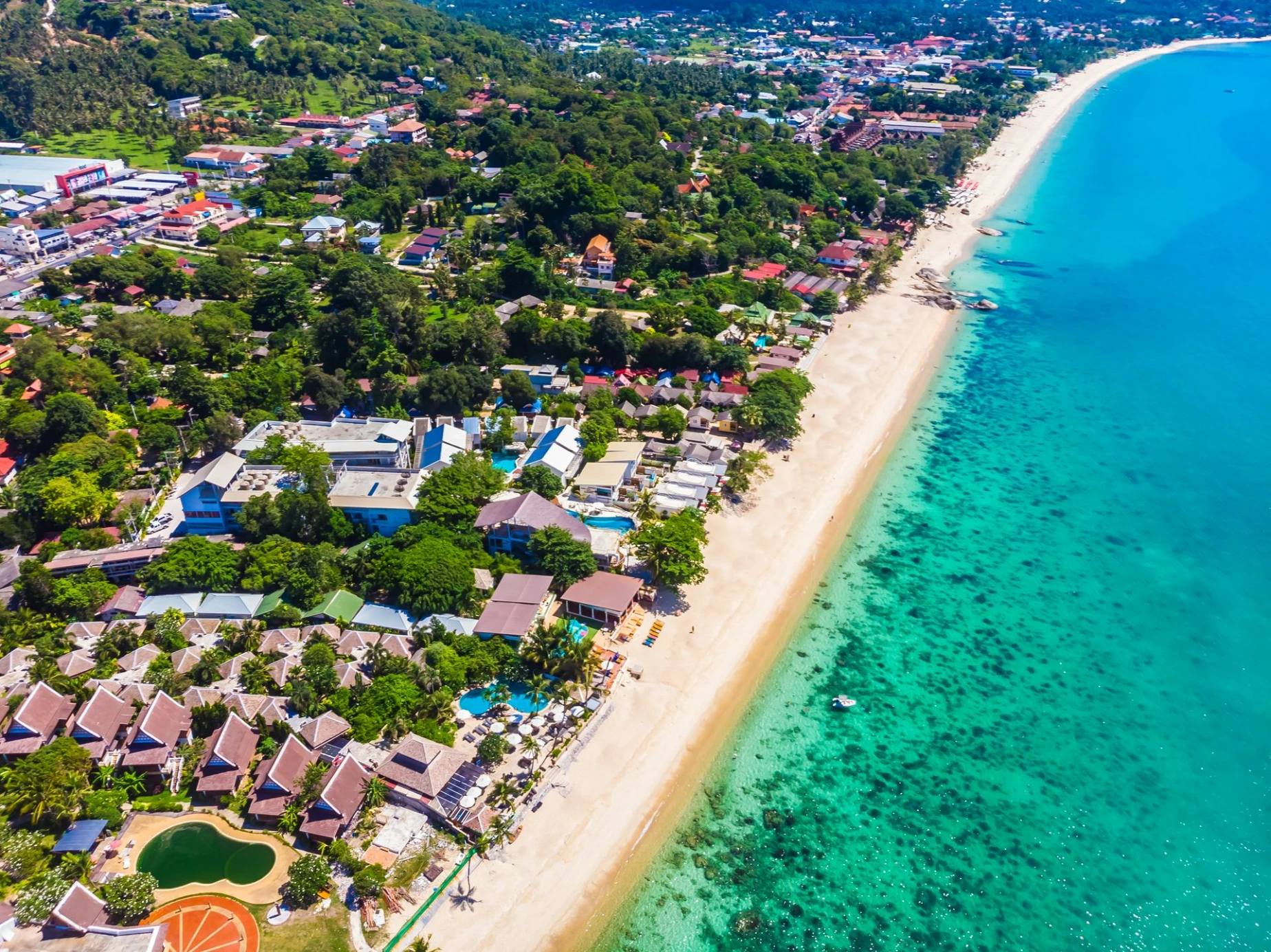
Koh Samui sits in the Gulf of Thailand, not the Andaman Sea, and that geography produces a different seasonal calendar, different water character, and different infrastructure logic from Phuket or Krabi. This is the most consequential planning factor for travelers choosing between coasts rather than within Koh Samui itself.
The Gulf of Thailand is warmer and less clear than the Andaman Sea year-round. Water visibility is lower, particularly after rainfall. Travelers who arrive expecting Andaman-quality water encounter a specific and predictable disappointment. The island's value does not lie in water clarity. It sits in resort infrastructure, accessibility, and the combination of a direct flight from Bangkok with a strong concentration of high-end properties.
The dry season peaks from December through April, with a secondary clear window around June and July. The northeast monsoon affects the island from October through December, with November carrying the highest rainfall risk. For the full Gulf Coast seasonal breakdown across Koh Samui, Koh Phangan, and Koh Tao, the Southern Thailand Gulf Coast Travel Guide covers the regional weather logic in detail.
Access: Getting to Koh Samui
Bangkok Airways direct flight from Suvarnabhumi takes approximately 1 hour 20 minutes. Samui Airport is a private facility operated exclusively by Bangkok Airways, which effectively removes budget-carrier competition and keeps fares higher than on equivalent mainland routes. Return tickets typically run THB 3,000 to 6,000, depending on the advance booking window. No alternative airline serves the route.
Surat Thani alternative: Fly to Surat Thani on the mainland (approximately 1 hour from Bangkok, served by multiple carriers including budget options at THB 800 to 2,000 return), then take a ferry to Koh Samui (1.5 to 2 hours, THB 150 to 200 per person). Total journey time is approximately 3.5 to 4 hours door-to-door. The cost savings run THB 2,000 to 4,000 per person, depending on the flight booked. The time cost is approximately 2 additional hours. For a full breakdown of how flight choice affects overall Thailand routing, the Thailand Airports Guide explains why this decision matters before you book.
Koh Samui is the only major Thai resort island where the airport is operated by a single airline, and that fact shapes the cost structure of every trip before a hotel is booked. The access premium makes the island the most cost-effective option at the upper end of the accommodation market, where the time-saving justifies the price difference.
Koh Samui Travel Guide to Beaches: North Shore
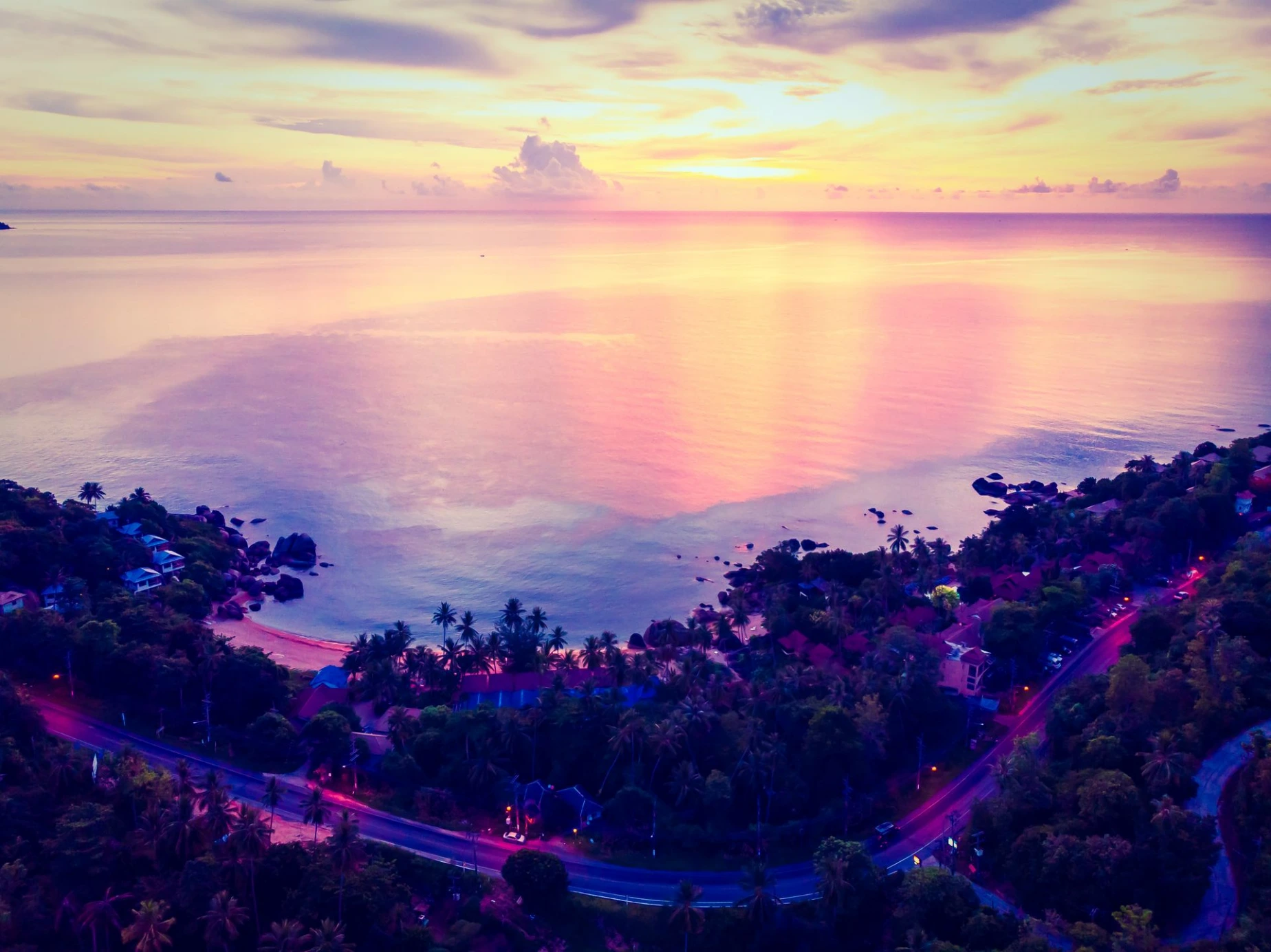
The north shore is where Koh Samui's strongest luxury positioning concentrates. The Four Seasons Koh Samui and Vana Belle are located on or near this coastline, each occupying elevated hillside or headland positions, with pool-villa configurations and Gulf views. Conrad Koh Samui sits apart from this cluster, on the island's southwest tip in Taling Ngam, a position chosen for its west-facing sunset views rather than proximity to the north shore. The overall setting across these hillside properties consistently prioritizes privacy and elevation over beachfrontage. Guests spend more time above the water than on it.
Bophut is the most characterful settlement on the island. A preserved Chinese-Thai shophouse street runs parallel to the beach with independent restaurants, wine bars, and a Friday walking market. Beach quality is moderate: wide at low tide, calm water, functional rather than photogenic. The combination of resort access and a genuine local village atmosphere within walking distance is unusual on Koh Samui.
Maenam is the quietest of the three north shore beaches. Wide, long, and consistently low in visitor density, it suits longer-stay travelers and repeat visitors who prioritize consistency and space over activity density. It also works well for travelers who mix resort stays with remote work or longer-duration travel, thanks to its consistent pace and lower noise levels. Infrastructure is thinner than in Bophut, but the environment makes up for it.
Bangrak (Big Buddha Beach) sits closest to the airport, approximately 5 kilometers from the terminal. This is a practical advantage for arrivals and early departures. It also introduces flight-path noise during operating hours, affecting the northern end of the beach and some nearby properties. Factor this in when selecting a specific resort within the area.
North shore beaches are not the visual highlight of Koh Samui. The value is the property environment, the dining quality in Bophut, and a pace that the east coast does not offer.
East Coast: Chaweng and Lamai
Chaweng is the most developed beach on Koh Samui and the most frequently recommended in general travel content. It has the widest range of accommodation across all tiers, the most accessible beach road, the strongest nightlife infrastructure, and the easiest access to services and transport connections. Much of this activity is concentrated along a single beach road, which compresses traffic, commercial frontage, nightlife venues, and pedestrian flow into a narrow strip. The result is convenient and consistently busy.
Beach quality at Chaweng declines noticeably toward the southern end of the strip. Water clarity is lower than in parts of the north shore and significantly lower than on the Andaman coast. The north end of Chaweng Beach holds better quality during peak season. For travelers whose primary goal is resort privacy and a considered beach environment, Chaweng does not deliver it.
Lamai sits 10 kilometers south of Chaweng. It has a smaller central strip, lower commercial density, and a slightly more residential character in the surrounding areas. It suits mid-range travelers better than luxury ones. The beach is comparable to Chaweng in water quality, marginally quieter in atmosphere, and better suited to travelers who want east-coast convenience without the full Chaweng density.
Koh Samui's beaches rarely feel isolated because road access exists along most of the coastline. Unlike Railay or Koh Yao Noi, where physical access constraints create natural separation, Koh Samui's connectivity is total. Seclusion here is a product of property positioning, not geography. Koh Samui is not a discovery island. It is a designed one.
Koh Samui Areas Compared
| Area | Crowd Level | Luxury Tier | Beach Quality | Convenience | Best For |
|---|---|---|---|---|---|
| Bophut | Low to medium | High | Moderate | Medium | Couples, resort stays, dining |
| Maenam | Low | Medium to high | Moderate | Low | Long stays, quiet, repeat visitors |
| Bangrak | Low to medium | High | Moderate | High (near airport) | Luxury, easy arrival and departure |
| Chaweng | High | Mixed | Low to moderate | High | Mid-range, nightlife, activity range |
| Lamai | Medium | Medium | Moderate | Medium | Mid-range, quieter East Coast |
Seasonality: What the Weather Calendar Means in Practice
Koh Samui's weather pattern is the inverse of the Andaman coast. Peak season, December through April, aligns with the Andaman dry season, so travelers choosing between the two coasts during this window face no seasonal disadvantage either way. The secondary clear window in June and July is Koh Samui-specific and genuinely underused, offering lower prices and reduced visitor volume without a significant weather trade-off.
October and November carry the highest rainfall risk. In particular, sustained rain in November can affect boat transfers to Koh Phangan or Koh Tao, reduce usable beach time over consecutive days, and limit visibility for marine activities. This is not a temporary interruption. A week in Koh Samui in November has a realistic chance of 4 to 5 days of heavy rain. Travelers who cannot accept that risk should not book this window.
December through February is the most reliable period, with the strongest combination of dry weather, calm water, and full availability of resorts and restaurants.
Planning summary:
- Peak dry season: December to April
- Secondary window: June to July (underused, lower prices)
- Highest rain risk: November (avoid for beach-focused trips)
- Typical stay length: 3 to 5 nights (shorter stays increase the importance of location choice)
- Flight to Koh Samui: THB 3,000 to 6,000 return (Bangkok Airways only)
- Surat Thani alternative: THB 800 to 2,000 flight plus THB 150 to 200 ferry
- North shore luxury resorts: Four Seasons, Vana Belle. Conrad Koh Samui sits separately, on the southwest tip in Taling Ngam.
- Best area for couples: Bophut or Maenam
- Worst area for luxury travelers: Chaweng
Who Koh Samui Is Not For
Travelers who prioritize water clarity and beach scenery over the overall setting will find the Gulf of Thailand a consistent disappointment compared to the Andaman. This applies regardless of which part of the island they stay in.
Travelers who want to minimize flight costs and are flexible about journey time should factor in Bangkok Airways's monopoly before committing. The Surat Thani alternative reduces costs significantly but adds 2 hours to the journey. Koh Samui generates its best value-to-cost ratio at the upper accommodation tier, where the direct flight and resort concentration justify the access premium.
Travelers expecting Chaweng to deliver a luxury beach experience, given its prominence in general travel content, will find a commercialized strip that serves a different market entirely.
FAQ
Is Koh Samui worth visiting for a luxury traveler?
Yes, particularly on the north shore and at select properties elsewhere on the island. The Four Seasons Koh Samui and Vana Belle anchor the north shore's luxury tier, while Conrad Koh Samui, on the island's southwest tip in Taling Ngam, offers a comparable villa standard built around west-facing sunset views rather than north shore proximity. Outside these properties, the luxury case weakens quickly. Travelers who book Chaweng at the luxury tier and expect a premium beach environment will find a mismatch between cost and delivery.
What is the best area to stay in Koh Samui?
The north shore for luxury and quiet. Bophut combines resort access with the island's strongest independent dining scene. Maenam suits longer stays and travelers who want genuine low density. Bangrak suits those with early or late flights and no tolerance for transfer friction. Chaweng suits travelers who want convenience, activity range, and nightlife access at the cost of environment and crowd density.
How do you get to Koh Samui from Bangkok?
Two practical options. Bangkok Airways flies direct from Suvarnabhumi in approximately 1 hour 20 minutes (THB 3,000 to 6,000 return). Alternatively, fly to Surat Thani on the mainland with a budget carrier (THB 800 to 2,000 return), then take a ferry to Koh Samui (1.5 to 2 hours, THB 150 to 200). The Surat Thani route saves THB 2,000 to 4,000 per person and adds approximately 2 hours to the total journey. For travelers planning to extend their Gulf Coast itinerary beyond Koh Samui, the Koh Samui to Hua Hin transfer guide provides detailed onward routing.
What is the best time to visit Koh Samui?
December through February is the most reliable window: dry conditions, calm water, and full availability across resorts and restaurants. June and July offer a secondary clear period with lower prices and fewer visitors. Avoid October and November. November, in particular, carries a high probability of sustained multi-day rainfall that limits beach time and marine activities throughout the week.
How does Koh Samui compare to Phuket for a beach holiday?
Different coast, different water, different infrastructure logic. Phuket sits on the Andaman Sea, with clearer water, more scenic beaches, and a broader range of island day trips. Koh Samui sits on the Gulf of Thailand with warmer, less-clear water, a stronger resort concentration, and a direct flight from Bangkok that Krabi cannot match. Phuket suits travelers who prioritize beach and ocean quality. Koh Samui suits travelers who prioritize resort environment and access efficiency. For couples planning a Thailand trip that covers both coasts, the Luxury Couple Experiences in Thailand guide explains how to sequence a visit to Koh Samui within a broader itinerary.
Conclusion
Koh Samui rewards the traveler who understands its internal geography before booking. The North Shore delivers a genuinely strong luxury resort experience, with dining and environmental quality that the East Coast does not match. The East Coast offers convenience and a wide range of activities at the cost of a lack of setting and exclusivity. The airport pricing structure means the island generates its clearest value at the upper accommodation tier. At the mid-range level, comparable value is often easier to find on the Andaman coast.
The decision is not complicated once the within-island location logic is clear. North shore for resort quality, privacy, and pace. East coast for convenience, range, and nightlife access. The two are not interchangeable, and treating them as such is the most consistent planning error on the island.
For travelers still building their broader Thailand itinerary, the Best Places to Visit in Thailand guide shows how Koh Samui fits within the full range of destinations before you confirm your routing.
Koh Samui is a well-built resort island. It works best when you know which half of it you are staying in.