
How the ancient capital works, how to access it, and who it rewards most
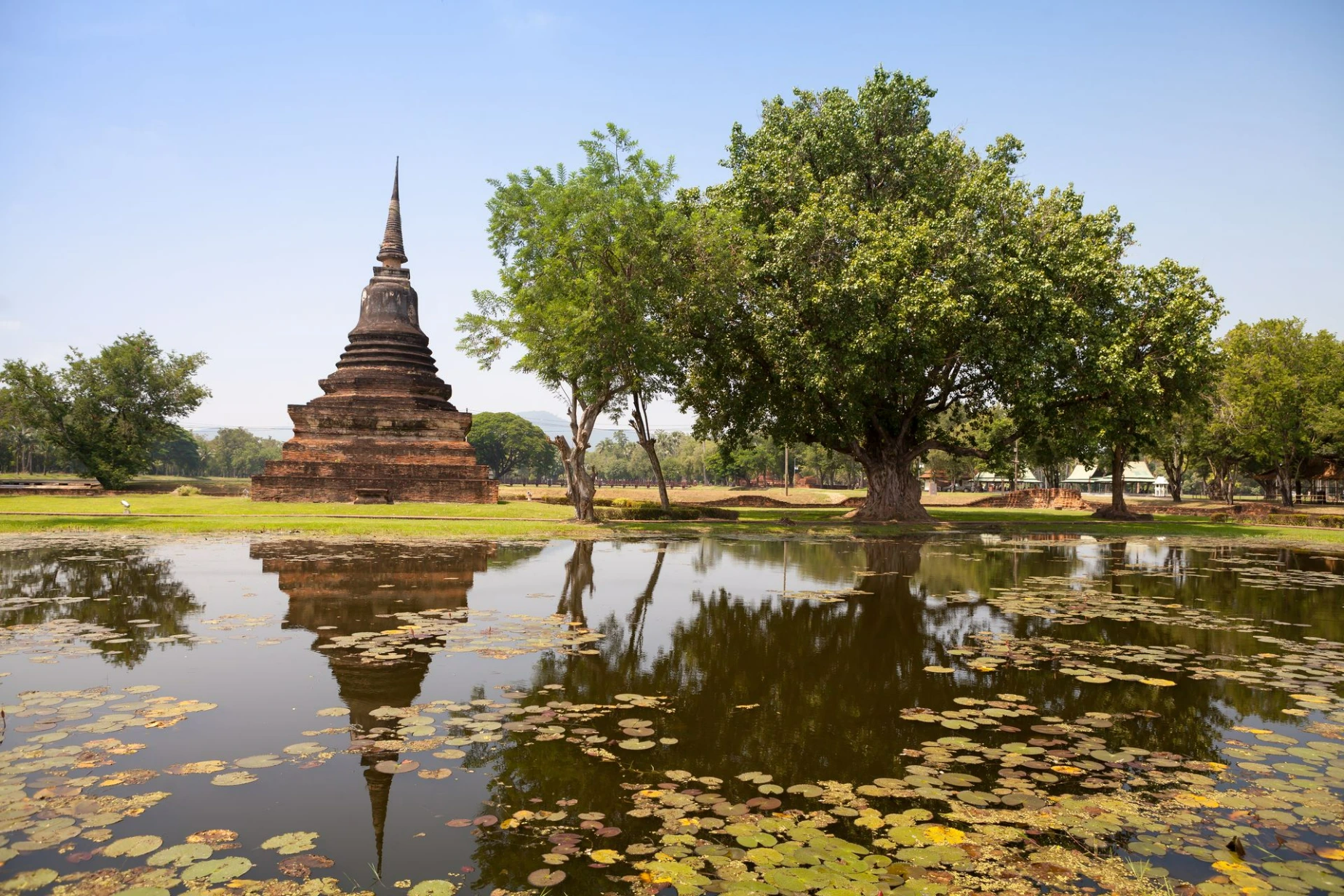
Sukhothai and Ayutthaya are both ancient Thai capitals and both UNESCO World Heritage Sites, but they operate as destinations in fundamentally different ways. Ayutthaya is a dense island of ruins navigated between traffic and active town infrastructure. Sukhothai's historical park is a managed open-air landscape of temples, lotus ponds, and tree-lined paths spread across several square kilometers and best covered by bicycle. The experience is quieter, more spacious, and more deliberately paced.
Most travelers skip Sukhothai because it feels out of the way. In practice, it fits more naturally into the Bangkok-to-Chiang Mai route than most assume.
This Sukhothai travel guide answers the planning question directly: Is Sukhothai worth the journey? How do you get there? And what does a well-structured visit actually look like?
The Short Answer
Sukhothai rewards travelers with a genuine interest in Thai Buddhist architecture and early Siamese history, or those routing between Bangkok and Chiang Mai who can absorb a one to two-night stop without significant backtracking. It is not a destination for travelers seeking a quick heritage fix or those without real curiosity about pre-Ayutthaya Thailand. The historical park rewards slow movement. Cycling across three zones takes a full day. A half-day produces a surface visit that leaves most travelers wishing they had stayed longer.
Sukhothai Quick Take
- Best for: heritage travelers, Bangkok to Chiang Mai routing, cycling
- Not ideal for: short itineraries, beach-focused trips with a token heritage stop
- Access: fly to Sukhothai Airport (TKH) or bus via Phitsanulok
- Time needed: 1 full day minimum, 2 days for complete three-zone coverage
- Zone entry fee: THB 100 per zone (three zones total)
- Bicycle rental: THB 30 to 50 per day
- Best months: November to February
- Avoid: March to May midday cycling (temperatures above 35 degrees Celsius)
See how Sukhothai fits into a broader central Thailand route in the Central Thailand Beyond Bangkok guide, which covers how it sits alongside Ayutthaya, Kanchanaburi, and the river plains before you confirm your routing.
How Sukhothai Differs From Ayutthaya
This is the most consequential planning comparison for Thai heritage travelers, because most choose one or the other rather than both.
Ayutthaya was the Ayutthaya Kingdom's capital from 1351 to 1767, located on a river island 80 kilometers north of Bangkok, with ruins set amid active roads, food stalls, and commercial town infrastructure. Sukhothai was Thailand's first independent kingdom from approximately 1238 to 1438. Its historical park is a deliberately managed heritage landscape, physically separated from the modern town and designed for quiet, self-paced navigation.
The parks differ in character as much as in historical period. Ayutthaya feels embedded in a living city. Sukhothai feels removed from one. Neither is the stronger destination in absolute terms. They serve different traveler profiles and produce fundamentally different experiences. For travelers who have already visited Ayutthaya, Sukhothai offers a distinct, non-duplicative layer. For travelers who can only visit one, the choice depends on whether they prioritize accessibility and density or space and atmosphere.
For a full breakdown of the Ayutthaya planning decision, including transport options and temple priorities, the Ayutthaya Day Trip from Bangkok guide covers the logistics and site selection in detail.
Access: Getting to Sukhothai
The flight to Sukhothai Airport (TKH) is the most underused yet efficient option on this route. Nok Air operates from Bangkok's Don Mueang Airport in approximately 1 hour and 15 minutes. Fares run THB 1,200 to 3,000 depending on advance booking. The airport sits 27 kilometers from the historical park, requiring a songthaew or arranged transfer at approximately THB 100 to 150. At the lower end of the fare range, the flight eliminates 12 to 14 hours of total bus travel and is consistently overlooked by itinerary planners in favor of the overland default.
The bus from Bangkok departs from the Northern Bus Terminal (Mo Chit). Air-conditioned services take approximately 6 to 7 hours and cost THB 300 to 450. The bus arrives at Sukhothai's new town terminal, 12 kilometers from the historical park. A songthaew or tuk-tuk covers the final leg for approximately THB 50 to 80. The journey is long but straightforward and suits budget travelers or those who prefer not to use domestic airports.
Via Phitsanulok is the most practical route for travelers combining a Sukhothai visit with a Bangkok-to-Chiang Mai journey. Phitsanulok is a major rail hub with regular train and bus connections from Bangkok (approximately 5 to 6 hours by train, 4 to 5 hours by bus). From Phitsanulok, a local bus to Sukhothai takes approximately 1 hour and costs THB 40-60. This routing avoids full backtracking and suits travelers building a central Thailand stop into a longer north-south itinerary.
Bangkok to Sukhothai: Transport Compared
| Option | Journey Time | Cost (approx) | Best For |
|---|---|---|---|
| Flight (TKH) | 1 hr 15 min | THB 1,200 to 3,000 | Efficiency, time-limited trips |
| Bus (direct) | 6 to 7 hrs | THB 300 to 450 | Budget, no schedule pressure |
| Via Phitsanulok | 3 to 5 hrs total | THB 400 to 800 | Bangkok to Chiang Mai routing |
The Historical Park: Three Zones
The Sukhothai historical park is divided into three zones, each requiring a separate entry ticket at THB 100 per zone, plus THB 50 per zone for bicycle entry. The central zone is the non-negotiable starting point. The north and west zones reward travelers with a second day or a committed full-day bicycle circuit.
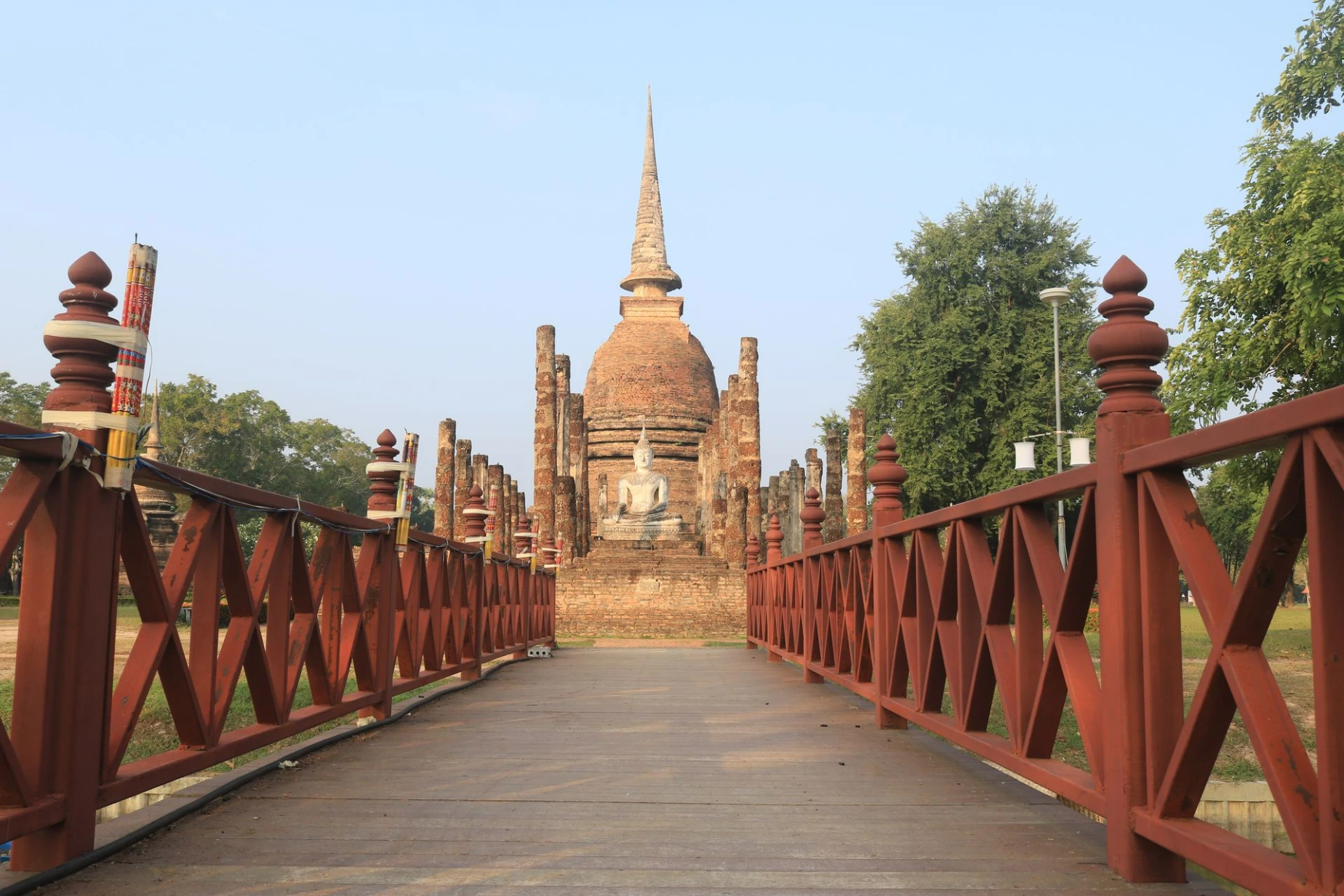
The central zone contains the park's primary temples and the Ramkhamhaeng National Museum. Wat Mahathat is the largest and most significant temple complex in the park, with distinctive lotus-bud chedis, a large mondop housing a standing Buddha, and a surrounding moat. Arriving before 8:00 AM gives access before the light flattens and before the tour group minibusses arrive. By late morning, tour groups concentrate around Wat Mahathat, while the outer areas of the central zone remain noticeably quieter. Wat Sa Si occupies an island in a reflective pond, producing the most photographed composition in the park. The Ramkhamhaeng National Museum covers the history and epigraphy of the Sukhothai Kingdom. Visiting the museum before the temple circuit provides context that the ruins themselves do not supply.
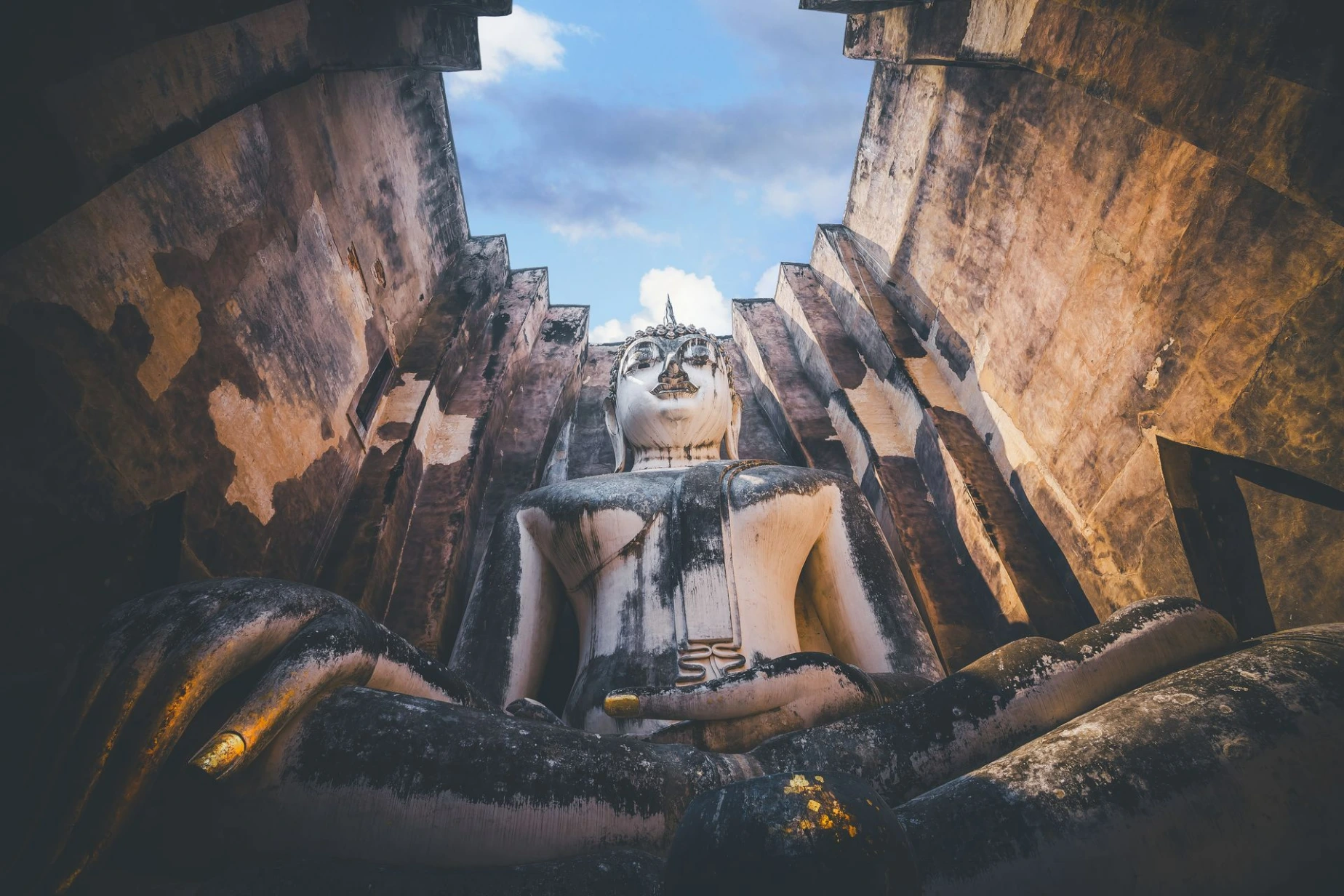
The north zone contains Wat Si Chum, a large mondop with an enormous seated Buddha visible through a deliberately narrow slit in the exterior wall. The composition forces a specific framing that produces one of the most striking single images in Thai heritage architecture. Less visited than the central zone and is worth the short bicycle detour.
The west zone contains Wat Saphan Hin, which is reached via a laterite stone path that ascends a low hill. A standing Buddha at the summit overlooks the surrounding plains and forest. The climb takes approximately 10 minutes on foot from the bicycle parking area. The west zone sees the fewest visitors of the three and provides the clearest sense of the park's scale and quietness.
Sukhothai is the only major Thai heritage site designed to be navigated primarily by bicycle rather than by road.
Getting Around the Park
Bicycle rental is available at the park entrance and at several guesthouses near the historical park. The cost is THB 30 to 50 per day for a standard bicycle. The terrain across the central zone is flat throughout. The north and west zones require slightly longer cycling distances of 2 to 4 kilometers between key sites but remain flat. Electric bicycle rental is available from some operators near the entrance for approximately THB 100 to 150 per day and suits travelers who want reduced exertion in the warmer months.
Tuk-tuk tours covering the main circuit run approximately THB 200 to 300 for a half-day and suit travelers who cannot cycle or who are visiting during peak heat months.
The sequence of the visit matters more here than at Ayutthaya. Starting at the Ramkhamhaeng Museum, moving directly to Wat Mahathat before 8:30 AM, then cycling north to Wat Si Chum by mid-morning produces the strongest single-day experience. Leaving the west zone for late afternoon, when the light is lower and the park is quieter, completes the circuit at the best time of day for both temperature and atmosphere.
Practical summary:
- Flight Bangkok to Sukhothai: 1 hr 15 min, THB 1,200 to 3,000
- Bus Bangkok to Sukhothai: 6 to 7 hrs, THB 300 to 450
- Airport to historical park: 27 km, THB 100 to 150 by transfer
- New town to historical park: 12 km, THB 50 to 80 by songthaew
- Zone entry: THB 100 per zone, plus THB 50 per zone for bicycles
- Bicycle rental: THB 30 to 50 per day
- Park opens: 6:00 AM daily
- Best arrival at Wat Mahathat: before 8:30 AM
- Si Satchanalai: 55 km north, THB 100 entry, local bus approximately 1 hour
Si Satchanalai: The Extension Worth Knowing
Si Satchanalai historical park sits approximately 55 kilometers north of Sukhothai and forms part of the same UNESCO World Heritage designation. It contains a separate complex of Sukhothai- and Khmer-period temples in a forest setting along the Yom River, with significantly fewer visitors than the main park and no comparable bicycle-rental infrastructure at the entrance.
Accessible by local bus from Sukhothai (approximately 1 hour, THB 40) or private transport. Entry costs THB 100 per zone. Worth including for travelers staying two nights in Sukhothai who want a complete picture of the kingdom's architectural range. Not worth a dedicated trip from Bangkok or Chiang Mai without the main Sukhothai park as the primary purpose.
Seasonality and the Loy Krathong Factor
November through February is the optimal window: manageable cycling temperatures, clear skies, and full access across all three zones. March through May brings temperatures above 35 degrees Celsius across the open park. Full-day cycling during this period is genuinely difficult, not merely uncomfortable. Midday visits in peak heat months significantly reduce the usable on-site window.
November carries a specific additional consideration. Sukhothai is historically recognized as the origin of the Loy Krathong festival, and the park hosts a week-long light-and-sound event during the full moon period. The atmosphere is exceptional. Accommodation near the historical park books out 2 to 3 months in advance for this window. Travelers who plan to visit during the festival and do not book early will find themselves staying in the new town and navigating crowded road access to the park each evening.
Who Sukhothai Is Not For
Travelers visiting Thailand primarily for beaches and islands who are considering a heritage detour should carefully weigh Sukhothai against the travel time it entails. The distance from Bangkok is greater than that from Ayutthaya, the onward routing options are more limited, and the schedule cost is proportionally higher for a comparable heritage objective.
Travelers who found Ayutthaya underwhelming due to heat, crowds, or limited interest in Buddhist ruins will not find Sukhothai a corrective. The experience is quieter and more spacious, but it remains a Buddhist archaeology destination. What changes between the two parks is atmosphere and physical layout, not the fundamental nature of the experience.
Travelers planning a Bangkok-to-Chiang Mai overland route are the most natural fit. Sukhothai sits close enough to that corridor to function as a genuine stop rather than a detour, particularly when routed via Phitsanulok.
FAQ
Is Sukhothai worth visiting?
Yes, for the right traveler profile. Sukhothai rewards those with a genuine interest in Thai heritage, early Buddhist architecture, or the historical context of the Sukhothai Kingdom. It also works well as a stopover on a Bangkok-to-Chiang Mai overland route via Phitsanulok. For travelers whose primary focus in Thailand is beaches, islands, or Chiang Mai, the required travel time makes it a difficult fit for a standard itinerary.
How do you get to Sukhothai from Bangkok?
There are three practical ways to reach Sukhothai from Bangkok, each suited to a different travel style. The flight from Don Mueang to Sukhothai Airport takes approximately 1 hour 15 minutes (THB 1,200 to 3,000) and is the most time-efficient option. A direct bus from Mo Chit terminal takes 6 to 7 hours (THB 300 to 450). The Phitsanulok routing combines a train or bus to Phitsanulok with a 1-hour local bus onward, totaling 3 to 5 hours and suiting travelers on the Bangkok-to-Chiang Mai route.
How is Sukhothai different from Ayutthaya?
The two sites differ in layout, atmosphere, and historical period. Ayutthaya is an island of ruins embedded within a functioning town, best explored by tuk-tuk or bicycle across a concentrated area. Sukhothai's historical park is a managed heritage landscape physically separated from the modern town, best explored by bicycle across three zones with open paths between temples. Ayutthaya suits travelers who want density and convenience. Sukhothai suits travelers who want space and atmosphere. For the full Ayutthaya planning decision, the Ayutthaya Day Trip guide covers logistics and site priorities in detail.
How many days do you need in Sukhothai?
One full day covers the central zone comfortably and allows a detour to the north zone for Wat Si Chum. Two days cover all three zones, the Ramkhamhaeng Museum at a considered pace, and Si Satchanalai as a half-day extension. A half-day visit covers the central zone only and leaves most travelers feeling the site deserved more time.
What is the best time to visit Sukhothai?
November through February is the optimal window for comfortable cycling and clear conditions. November specifically offers the Loy Krathong festival, which transforms the park into a genuinely exceptional experience but requires accommodation booked 2 to 3 months in advance. Avoid the March to May peak heat period when cycling for full days. The park opens at 6:00 AM, and arriving at Wat Mahathat before 8:30 AM consistently yields the best combination of light quality and crowd levels.
Conclusion
Sukhothai is consistently described as less visited than Ayutthaya, as though that is a minor footnote. For travelers who find Ayutthaya's crowd density and embedded town infrastructure a deterrent, the difference in atmosphere between the two parks is not incidental. It is the reason to come.
The historical park rewards preparation: an early start, a bicycle, a visit to the museum before the temples, and enough time to reach the west zone in the late afternoon. Travelers who arrive with those four elements leave with a different understanding of Thailand's heritage landscape than the one most southern itineraries provide.
For travelers deciding where Sukhothai fits into a broader Thailand itinerary, the Thailand 2-Week Itinerary shows how a central Thailand heritage stop fits into a full two-week route. For travelers still at the destination-selection stage, compare destinations in the Best Places to Visit in Thailand guide before confirming your routing.
Sukhothai does not announce itself. It reveals itself slowly, across three zones, on a bicycle, between lotus ponds.