
A practical planning guide for the Andaman coast's low-density alternative
Koh Lanta appears regularly on Andaman shortlists as the quieter option. That framing is accurate, but it sets up a planning misconception. Travelers who choose Koh Lanta based on that framing alone often arrive underprepared for what it actually offers. The island's quiet is a direct consequence of its access constraints and a service ceiling that stops well short of Phuket or Koh Samui. That distinction matters before you book.
This Koh Lanta travel guide resolves the planning question directly: is Koh Lanta the right choice for your travel style, how do you reach it, and what does it actually deliver?
The Short Answer
Koh Lanta Yai suits travelers who want a slower pace in the Andaman, can travel between November and April, and don't need resort-scale infrastructure throughout their stay. Divers and snorkelers have a particularly strong case for including it in a southern Thailand itinerary, given its proximity to Koh Rok, Koh Haa, and the Hin Daeng seamounts.
It does not suit travelers arriving with Phuket-level amenity expectations, anyone booking between May and October when a significant portion of the island closes, or those with tight onward connections who cannot absorb ferry timing variability.
Koh Lanta Quick Take
- Best for: slow travel, divers, repeat Thailand visitors
- Not ideal for: first-time trips, luxury-only stays
- Access: 2 car ferry crossings required from the mainland
- Best months: December to March
- Weak point: infrastructure ceiling is low; limited options when services close
If you are still deciding between Koh Lanta and the other main Andaman destinations, the Phuket vs Krabi vs Koh Samui comparison covers the full trade-off structure across traveler profiles.
At a Glance: Koh Lanta by Traveler Type
| Traveler Type | Verdict | Key Consideration |
|---|---|---|
| Couples (quiet focus) | Strong fit | North-south beach progression offers genuine variation |
| Divers | Strong fit | Strong staging point for southern Andaman dive sites |
| Families | Moderate fit | Klong Dao suits families; facilities are limited |
| First-time Thailand visitors | Weak fit | Limited infrastructure; narrow range of experiences |
| Luxury-only stays | Moderate fit | Four luxury-tier properties spread across the island's beaches; still a thinner concentration than Samui or Phuket |
| Low-season travelers | Not recommended | Significant service closures from May to October |
What Makes Koh Lanta Different From the Rest of Krabi Province
Koh Lanta Yai is the larger of two adjacent islands and, administratively, part of Krabi province. That shared geography does not mean shared logistics. The island is about 30 kilometers long, oriented north to south, with the main west-coast beaches running continuously from Saladan pier to Koh Lanta National Park at the southern tip.
The defining operational fact: there is no road connection to the mainland without crossing open water twice. Access requires two car ferry crossings, both of which are included in most overland transfer tickets. That physical constraint, not deliberate tourism planning, explains everything else about Koh Lanta's character: its pace, its crowd density, and the service ceiling that frustrates some travelers.
Koh Lanta Old Town, at the southeastern corner of the island, is a working fishing community with Chinese-Thai shophouse architecture and stilted buildings extending over the water. It receives a fraction of the visitor attention that the West Coast beaches do. For travelers with an extra half-day, the 45-minute drive from Saladan offers one of the clearest contrasts between the island's tourist layer and its functional core.
Koh Lanta Travel Guide to Beaches: What They Actually Deliver
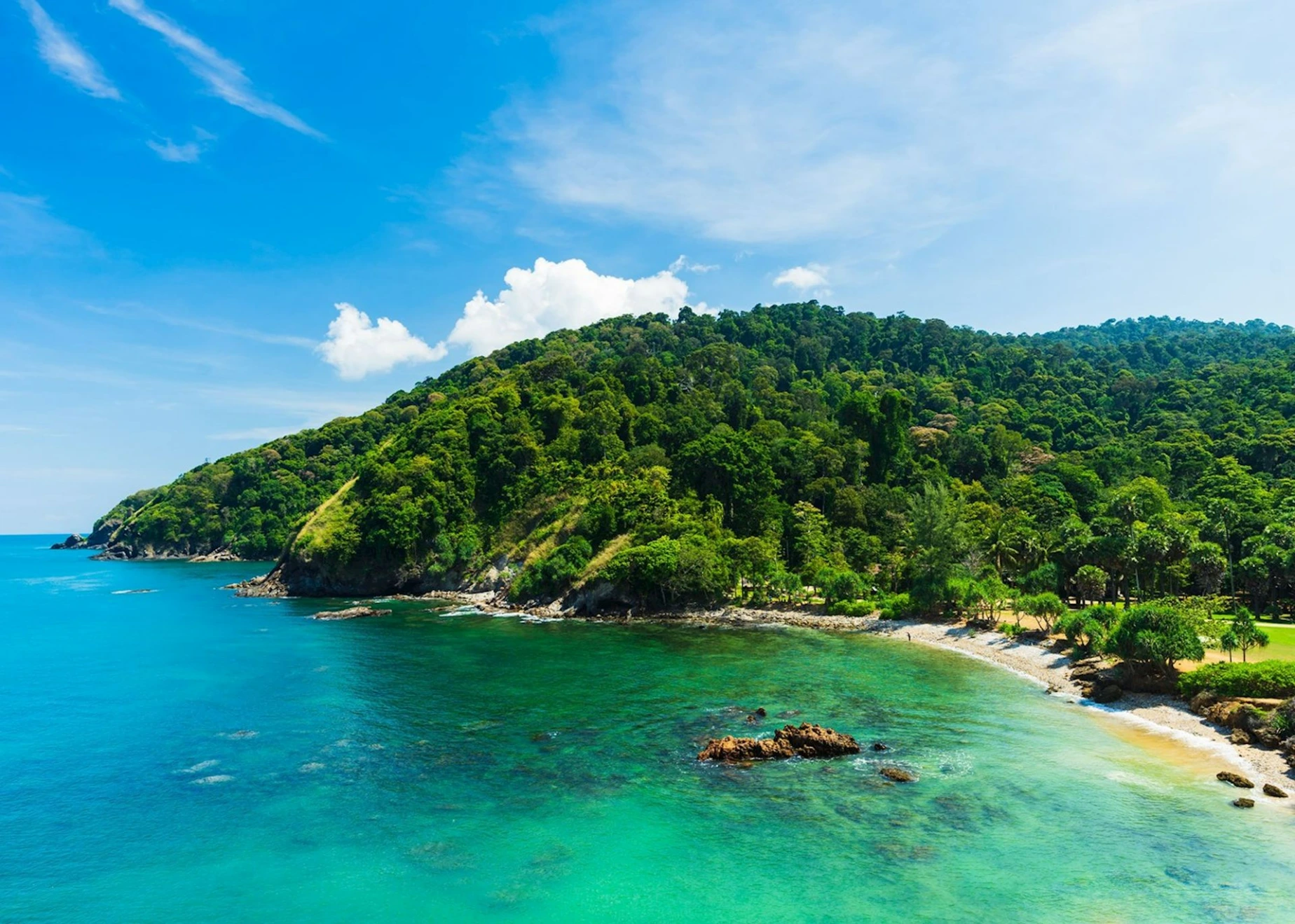
Unlike Railay or Phuket's west coast, Koh Lanta's beaches are continuous and road-accessible, with no headlands or limestone cliffs separating them. The Andaman's most photographed coastlines lack this visual drama. The value is consistently space and pace.
Hat Khlong Dao (Long Beach) is the most developed beach on the island, located closest to Saladan pier. It suits families and first-time visitors to Koh Lanta, with the greatest density of restaurants and guesthouses within walking distance. The sand is wide and flat; the water is calm in peak season.
Klong Khong has the broadest stretch of sand on the west coast and the strongest case for snorkelers, with coral formations accessible by longtail from the beach. The low tide reveals tide pools along the southern section. More spread out than Klong Dao, with longer gaps between guesthouses.
Klong Nin sits further south and draws longer-stay travelers and repeat visitors. Quieter than the northern beaches, with a smaller cluster of restaurants and a noticeably slower rhythm. This is where the island's unhurried character becomes most apparent.
Kantiang Bay is the furthest developed beach from Saladan, approximately 25 kilometers south by road. It has the lowest foot traffic of the four main beaches and is home to Pimalai Resort, one of four luxury-tier properties on the island. The bay is sheltered with calm water. The road passes through dense jungle for the final 10 kilometers south.
Access: Getting There and the Real Travel Time
From Krabi town: Shared minivan plus two car ferry crossings. Total journey time is approximately 2 to 2.5 hours under normal conditions. Shared transfers cost THB 350 to 450 per person. Both ferry crossings are included in most ticket prices and require no separate booking. The road south from Saladan Pier is paved and navigable by scooter or rented motorbike.
From Phuket: High-season speedboat services operate between Ao Po Grand Marina or Rassada Pier and Saladan. The journey takes about 1.5 to 2 hours. Cost ranges from THB 700 to 1,200 per person. These services depend on the weather and operate primarily between November and April.
From Bangkok: Fly to Krabi International Airport (approximately 1 hour 15 minutes direct), then transfer to Koh Lanta by minivan and ferry. Total door-to-door time from Bangkok is about 4 to 5 hours, depending on airport connection timing.
There are no overnight ferries to Koh Lanta. All sea transfers operate during daylight hours. In practice, ferry timing variability matters more during peak season than most travelers expect. For travelers routing through Phuket first, the Phuket to Krabi transfer guide breaks down speedboat vs. van options before you plan your onward connection to the island.
Key logistics at a glance:
- Access from Krabi town: 2 to 2.5 hours by minivan and ferry, THB 350 to 450
- Access from Phuket: 1.5 to 2 hours by high-season speedboat, THB 700 to 1,200
- Island length north to south: approximately 30 km, fully paved
- Snorkeling day trip cost (shared): THB 1,200 to 1,800 per person
- Luxury accommodation: 4 properties across the island's beaches (Pimalai at Kantiang Bay, Layana at Long Beach, Rawi Warin at Klong Nin, Avani+ near Saladan)
- No night ferries; road access requires crossing open water twice
Diving and Snorkeling: Where Koh Lanta Earns Its Place
For underwater-focused travelers, Koh Lanta's argument is stronger than its beach case. The island's southern tip has shore-accessible dive sites with reasonable visibility in the dry season. The more compelling draw is offshore.
Day trips to Koh Rok Nok and Koh Rok Nai, two uninhabited islands approximately 45 kilometers south, offer some of the clearest water on the Andaman coast, with visibility regularly exceeding 20 meters in peak season. The speedboat ride takes about 1.5 hours each way. Shared day trips cost THB 1,200 to 1,800 per person and typically include two snorkel stops.
Koh Haa, a cluster of five limestone islands southwest of Koh Lanta, is a dedicated dive site with caves, swimthroughs, and consistently dense marine life. Hin Daeng and Hin Muang, two deep-water seamounts approximately 60 kilometers from the island, rank among the best dive sites in Thai waters and offer the most reliable manta ray sightings on the Andaman coast. Koh Lanta is one of two practical staging points for both seamounts, the other being Koh Ngai.
This is where Koh Lanta consistently outperforms its general reputation. For travelers combining beach time with serious diving, the island's position relative to these sites gives it a logistical edge over both Krabi town and Ao Nang.
For full Andaman coast sequencing and how Koh Lanta fits within a broader southern Thailand routing, the Southern Thailand Andaman Coast travel guide covers Phuket, Phang Nga, and Krabi province in detail.
Seasonality: The Low-Season Problem
High season runs from November through April, peaking in December and January. During this window, the island operates at full capacity: beaches are accessible, sea conditions are calm, dive trips run daily, and a full range of restaurants and accommodations are open.
The low season is not a quieter version of the same experience. By May, guesthouses begin closing. By June, a significant portion of the island's tourist infrastructure, including restaurants, dive operators, and tour services, suspends operations for the season. Unlike Phuket, which maintains a year-round service base, Koh Lanta in the low season means genuinely reduced options across every category.
The southwest monsoon brings heavy rain and rough seas to the outer Andaman from June through September. Sea transfers from Phuket are suspended entirely. The ferry crossings continue, but offshore day trips do not. October is the most viable shoulder-season window, with some operators reopening in the final two weeks of the month.
Travelers planning shoulder-season Andaman travel will find Koh Lanta has fewer services than Krabi town or Ao Nang, which retain more year-round services. The Things to Do in Krabi guide covers mainland Krabi options that remain operational when island services are reduced.
Who Koh Lanta Is Not For
First-time travelers to Thailand looking for variety, convenience, and contrast should not start with Koh Lanta. The island lacks the depth or variety to serve as a primary introduction to the Andaman coast.
Travelers who prioritize consistent luxury-tier accommodation throughout a trip will find fewer options than on Koh Samui or Phuket. Four properties now operate at that standard: Pimalai, Layana, Rawi Warin, and Avani+, each on a different beach, but the drop from any of them to the next tier is still wider here than on the more developed islands. For a side-by-side look at how the four compare, see our Koh Lanta luxury hotels comparison.
Travelers with fixed onward connections should factor in ferry-crossing variability. The car ferries operate on a schedule, but delays during peak-season periods in December and January are not uncommon. A missed afternoon crossing creates a 1 to 2-hour wait for the next departure, which can affect flights booked the same evening.
FAQ
Is Koh Lanta worth visiting for a first-time Thailand traveler?
As a standalone first destination, it is not the strongest choice. The infrastructure is limited, and the beaches, while pleasant, do not represent the Andaman coast at its most distinctive. As a second stop after Phuket or Krabi, it makes considerably more sense, providing contrast and a genuinely slower pace. First-time travelers building a 10 to 14-night itinerary who want a quieter island stop often find Koh Lanta fits well in that position.
How do you get from Krabi to Koh Lanta?
The standard route is a shared minivan from Krabi town that includes two car ferry crossings. The total journey time is approximately 2 to 2.5 hours. Tickets cost THB 350-450 per person and are available through most guesthouses and travel agencies in Krabi town. The ferry crossings are included in the transfer and require no separate booking. High-season speedboats from Ao Nang to Saladan are also available and take approximately 1 hour.
What is the best time to visit Koh Lanta?
December through February is the peak window: dry conditions, calm seas, full service availability, and the best diving and snorkeling visibility. November and March are viable shoulder months with fewer crowds and most services still running. Avoid May through September for any trip structured around beach time or offshore activities. October is borderline, with the final two weeks being more reliable than the first two.
Is Koh Lanta good for diving?
Yes, specifically for travelers targeting the southern Andaman's offshore sites. Koh Rok and Koh Haa are accessible as day trips. Hin Daeng and Hin Muang are reachable on extended day trips or liveaboards, and Koh Lanta is one of the closest staging points for both. The island has a well-established network of dive shops, mostly based in Long Beach and Klong Dao. For general snorkeling rather than diving, offshore day trips to Koh Rok are the highlight.
How does Koh Lanta compare to Phuket and Krabi for a quiet holiday?
Koh Lanta is quieter than both, though for structural rather than design reasons. Phuket has more development and significantly higher visitor volume. Krabi's Ao Nang is a busy logistics hub. Koh Lanta's access friction keeps volume lower. The trade-off is fewer dining options, no nightlife, and a thinner luxury tier. Travelers who have already visited Phuket or the Railay area and want a different pace on a return trip often find Koh Lanta sits in exactly the right position.
Conclusion
Koh Lanta answers one planning question clearly: it is the right Andaman destination for travelers who want pace over polish and access to serious offshore diving without Phuket's infrastructure density. It is the wrong choice for anyone prioritizing consistent luxury-tier facilities, low-season flexibility, or a convenient first introduction to the coast.
The beaches are wide and quiet. The diving is genuinely strong. Access is manageable once you factor in the ferry crossings, rather than treating them as a surprise on arrival.
For travelers building a southern Thailand itinerary across multiple stops, the Best Places to Visit in Thailand guide covers how Koh Lanta compares against the full range of destinations before you confirm your routing.
Koh Lanta works because it is harder to reach. That same friction is exactly why it will not work for everyone.