
Phuket, Phang Nga, and Krabi sit within roughly 150 kilometers of each other. On a map, the distances look manageable. In practice, they operate on entirely different access structures, privacy levels, and movement logic.
Phuket is the regional logistics hub: international airport, developed road network, the widest range of accommodation on the coast. Phang Nga is almost entirely boat-access, defined by a sheltered inland bay of limestone karst and mangrove channels that rewards planning and punishes assumptions. Krabi has its own domestic airport, but its most compelling destinations, including Railay Beach and Koh Lanta, require an additional boat leg that most itineraries underestimate.
Treating the three as interchangeable stops on a single beach holiday is what produces crowded days, rushed transfers, and a trip that covers ground without delivering the experience the cost implied.
This guide covers how each zone functions, how to move between them efficiently, and how to sequence them based on your actual travel priorities.
What This Southern Thailand Andaman Coast Travel Guide Covers
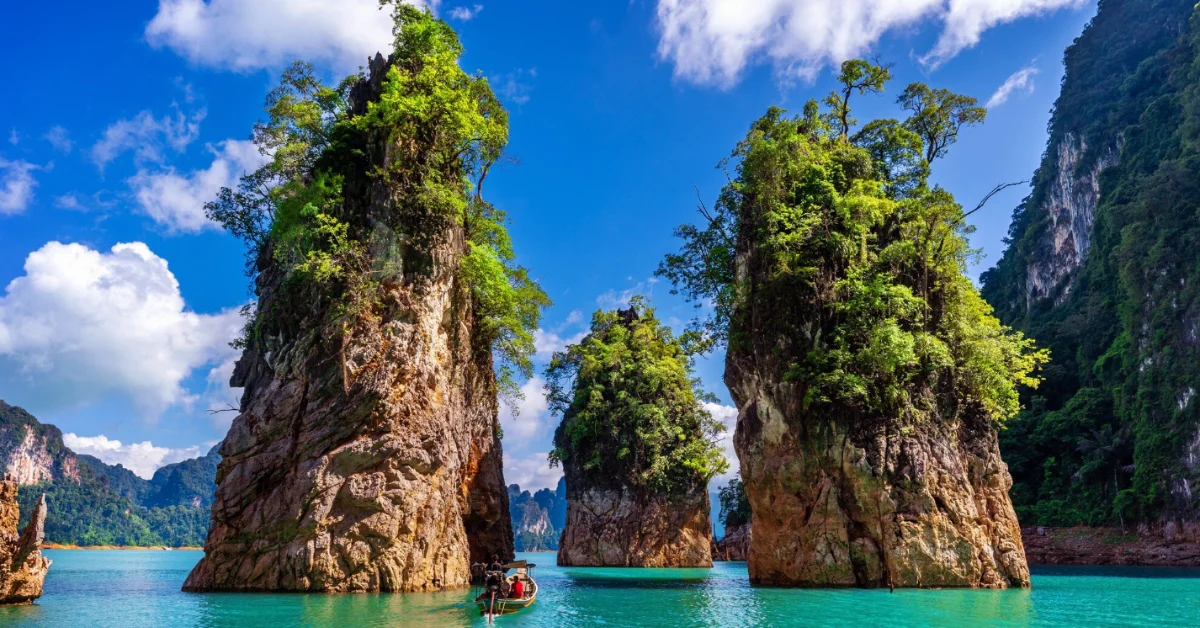
The Andaman Coast in southern Thailand spans three provinces: Phuket, Phang Nga, and Krabi. Each has a distinct geographic identity.
Phuket is the only one of the three with an international airport and a fully developed road network. It functions as the primary arrival and logistics hub for the region. Its beaches face west toward the Andaman Sea, and the west coast receives the full force of the southwest monsoon from May through October.
Phang Nga province borders Phuket to the north and east. Its coastline is dominated by Phang Nga Bay, a protected inland sea of limestone karst formations, mangrove channels, and low-density islands. Most of Phang Nga is accessible only by boat. There is no commercial airport within a practical distance of the bay.
Krabi province sits southeast of Phuket and shares a maritime border with Phang Nga Bay. It has a domestic airport with connections to Bangkok. Its landscape is defined by dramatic limestone cliffs, a fragmented coastline, and several key destinations, including Ao Nang, Railay, Koh Lanta, and Koh Phi Phi, that each require different access strategies.
All three provinces are affected by the southwest monsoon between May and October, but the impact varies. Phang Nga Bay, sheltered by its geography, retains viability longer into the monsoon season than Phuket's exposed west coast.
Early Answer
For most travelers spending 7 to 14 days on the southern Thailand Andaman Coast, the most effective sequence is a Phuket arrival, a Phang Nga Bay access point mid-trip, and Krabi or Railay as a final base, structured around at least one private charter day on the water.
Quick Picks by Traveler Priority
- Best base for first-time visitors: Phuket west coast, specifically Surin, Bang Tao, or Kamala
- Best for seclusion without true remoteness: Koh Yao Noi, Phang Nga Bay
- Best for dramatic scenery and slower pace: Railay Beach or Koh Lanta, Krabi province
- Best single experience on the coast: Private charter through Phang Nga Bay limestone formations
- Best shoulder-season base: Krabi town or Ao Nang, which are more weather-resilient than Phuket's west coast
- Best for a short trip focused on one area: Phuket with a Phang Nga Bay day charter, no inter-island transfers required
At a Glance: Phuket, Phang Nga, and Krabi Compared
| Phuket | Phang Nga | Krabi | |
|---|---|---|---|
| Access | International airport, road | Boat from Phuket or Krabi | Domestic airport, road, boat |
| Landscape | Developed bays, west coast beaches | Karst bay, mangrove, island clusters | Limestone cliffs, peninsula beaches |
| Privacy level | Low to moderate | High, island-dependent | Moderate, location-specific |
| Best for | Arrival base, beach clubs, day trips | Seclusion, scenery, slow travel | Couples, Railay access, longer stays |
| Key weakness | Crowds in peak season | Requires boat logistics and advanced planning | Ao Nang is functional, not scenic |
| Ideal stay | 3 to 4 nights | 1 to 3 nights | 3 to 5 nights |
Decision Shortcut
- Choose Phuket as your primary base if you want reliable infrastructure, airport proximity, and day-trip range across the bay and surrounding islands
- Choose Krabi or Railay as your final base if natural scenery, a slower pace, and separation from resort density matter more than logistical convenience
Phuket on the Andaman Coast: What It Offers and Where It Falls Short
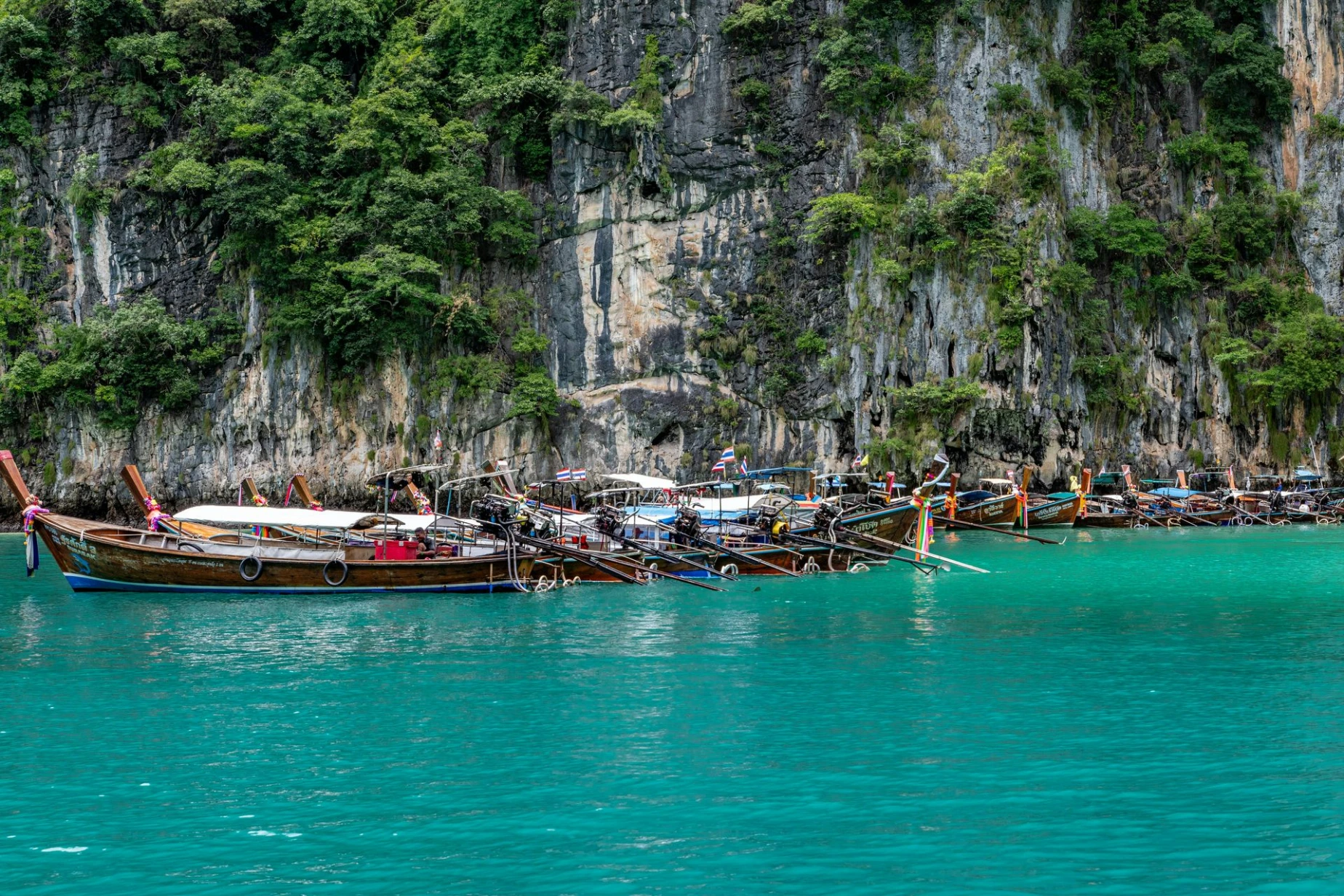
Phuket's value on the Andaman Coast is primarily logistical. It has the region's only international airport, the most developed marina infrastructure, the widest range of accommodation, and the easiest access to Phang Nga Bay by charter.
Its beaches vary considerably by location. Surin Beach is quieter and tends toward an upscale local crowd. Bang Tao is a long, wide stretch with significant resort density, suitable for families and travelers who want variety. Kamala sits between the two in character and crowds. Patong is the most developed and most crowded beach on the island, and it is not a meaningful consideration for travelers at the luxury tier.
Phuket's honest limitation is this: its beaches are rarely the most scenic on the Andaman Coast. The west coast is pleasant and swimmable in peak season, but the raw visual quality of Phang Nga Bay or Railay surpasses it. Phuket earns its place in an itinerary through access, not scenery.
Luxury accommodation on Phuket's west coast ranges from approximately 15,000 to 60,000 THB per night for private villa or top-tier resort options (estimate, peak season). Rates vary significantly by property and booking window.
To compare Phuket and Krabi across privacy, scenery, and beach quality before committing to a base, this guide covers the full trade-off structure for luxury travelers.
Where this fits in your trip: Phuket (arrival, Phang Nga charter day) → Koh Yao Noi (mid-trip seclusion) → Krabi or Railay (final base)
Phang Nga Bay: The Andaman Coast's Most Distinctive Environment
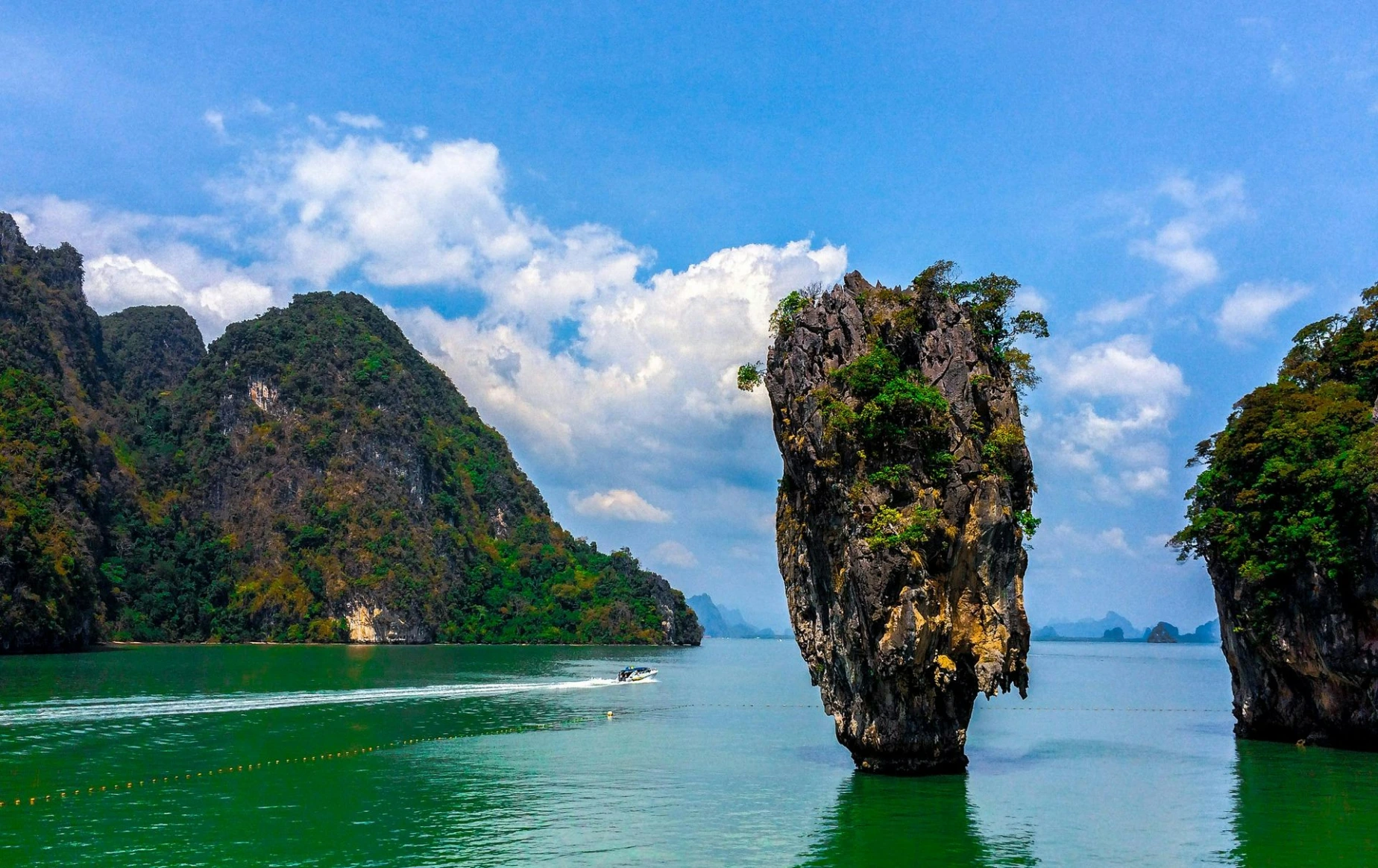
Phang Nga Bay covers approximately 400 square kilometers of protected water between Phuket, Phang Nga province, and Krabi. It contains over 40 islands, limestone karst formations rising up to 300 meters from the water, cave systems accessible by kayak, mangrove channels, and the floating Muslim fishing village of Ko Panyi.
This is the most visually distinctive environment on the southern Thailand Andaman Coast. Nothing else on the coast replicates it.
Key points of access within the bay include Koh Yao Noi and Koh Yao Yai, the two largest islands, both of which offer accommodation and a significantly lower tourist density than Phuket or Krabi. James Bond Island (Khao Phing Kan) is the most visited single site in the bay and functions as the centerpiece of most group tour routes.
The trade-off between group tours and private charters is the central planning decision for Phang Nga Bay. Group tours run from approximately 900 to 1,800 THB per person and cover the main sites alongside 30 to 50 other travelers. Private speedboat charters from Phuket range from approximately 8,000 to 18,000 THB for a half-day (estimate), giving full control over route, timing, and stops.
James Bond Island receives several thousand visitors per day in peak season, regardless of transport method. Arriving before 9 am or after 3 pm reduces crowd exposure substantially. A private charter makes those timing decisions possible. A group tour does not.
The bay's sheltered geography makes it one of the more weather-resilient destinations on the coast. When Phuket's west coast beaches become unreliable in the shoulder season, Phang Nga Bay often remains calm. The bay's scale also means poor route planning results in long idle cruising time between stops, which is the most common complaint from travelers who arrive without a confirmed itinerary.
If Phang Nga Bay is a priority in your itinerary, the difference between a well-timed private charter and a standard group route will define your experience. Plan the route, timing window, and departure pier before locking accommodation. For a complete breakdown of how to plan your time on Koh Yao Noi and within Phang Nga Bay, including the quietest access points and what to expect on the island itself, that guide covers the full operational detail.
The bay does not reward urgency. It rewards preparation.
Krabi and Railay: Access Structure and Honest Expectations
Krabi province is not one destination. Ao Nang, Railay, Koh Lanta, and Koh Phi Phi operate differently and require separate planning logic. Treating them as variations of the same place is a common and costly planning assumption.
Ao Nang is Krabi's primary mainland beach town. It functions as a logistics base and ferry hub. Its beach is average, crowded in peak season, and not a reason to include Krabi in an itinerary. Its value is proximity to longtail departures for Railay and access to Krabi town services.
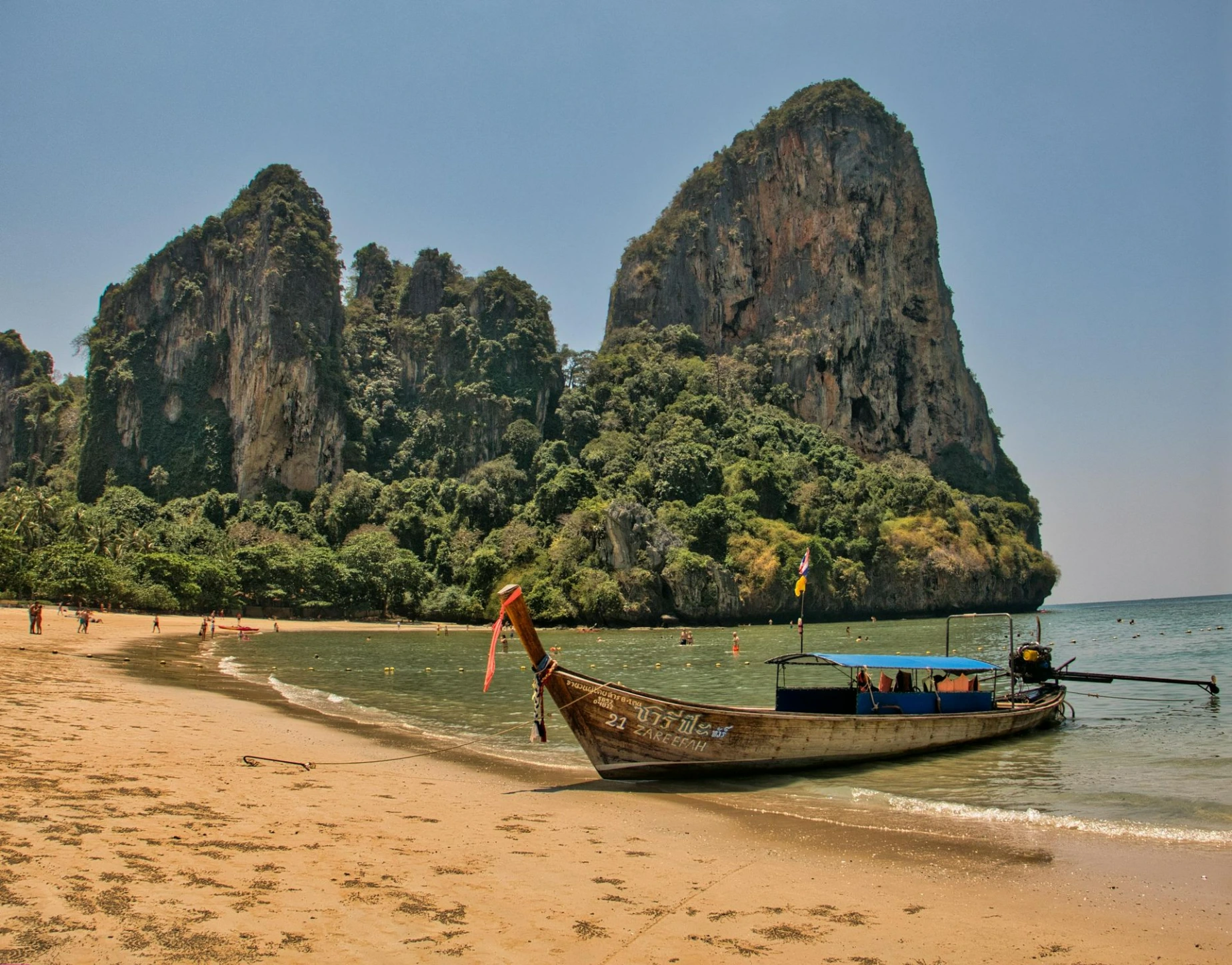
Railay is accessible only by longtail boat from Ao Nang (approximately 15 minutes, 100 to 150 THB per person) or from Krabi town (approximately 45 minutes). There is no road access. This isolation is the defining feature of the destination and also its primary constraint.
Railay has two main beaches. Railay West faces a calm bay suitable for swimming and is where most longtails arrive. Phra Nang Beach, a 10-minute walk across the peninsula, is widely considered one of the most scenic beaches on the Andaman Coast, flanked by limestone cliffs and containing a cave shrine at the far end.
Railay is small. Two to three nights is sufficient for most travelers. Longer stays suit rock climbers specifically, or travelers who want complete detachment from itinerary and schedule.
Koh Lanta offers a quieter, more extended-stay alternative within Krabi province. It is road-accessible by ferry from the mainland, has a longer strip of west-facing beaches, and suits travelers who want a slower pace without the boat-dependency of Railay. Koh Lanta is also more viable in the shoulder season than Phuket's open west coast.
Koh Phi Phi is visually compelling and logistically crowded. Maya Bay on Phi Phi Leh is one of the most photographed beaches in Southeast Asia. It is worth a day trip from either Phuket or Krabi. It is not a practical overnight destination for travelers prioritizing privacy.
Luxury accommodation in Railay and Koh Lanta ranges from approximately 8,000 to 25,000 THB per night (estimate, peak season). For a detailed comparison of beach quality and privacy levels across both provinces, the luxury beaches in Phuket and Krabi guide covers the key distinctions by location before you commit to a base.
How to Move Between Phuket, Phang Nga, and Krabi
Movement logistics are where most Andaman Coast itineraries lose time, money, or both.
Phuket to Krabi by road takes 2.5 to 3 hours via Highway 4, subject to traffic near Phuket town. This is the most reliable transfer option and requires no weather consideration. Private transfers cost approximately 2,500 to 4,000 THB (estimate).
Phuket to Krabi by private speedboat takes 1.5 to 2 hours on open water. The route passes through the outer edge of Phang Nga Bay and offers strong scenery. Cost by private charter is approximately 12,000 to 20,000 THB (estimate). This option is weather-dependent and not viable during rough sea conditions.
Phuket to Koh Yao Noi departs from Bang Rong Pier on Phuket's northeast coast, roughly 30 minutes from the airport. A public ferry takes approximately 30 minutes and costs 80 THB. Private longtail arrangements are available through most Koh Yao Noi properties. This is the most underused transfer route on the coast and the most direct path to the bay's low-density island experience.
Krabi to Railay by longtail from Ao Nang takes 15 minutes. From Krabi town, the crossing takes approximately 45 minutes. Longtails operate throughout the day in peak season; service reduces in monsoon and rough weather.
For a detailed breakdown of every transfer option between these two provinces, including speedboat timing and what to expect by season, the Phuket to Krabi transfer guide covers the full comparison before you confirm any booking.
The key friction point across all boat transfers is luggage. Longtail boats have limited storage, and oversized bags create problems at most piers. If moving between two or more boat-access destinations, consider sending luggage ahead via hotel transfer or packing to a soft bag. Not all operators will accept large hard-sided cases.
Speedboat transfers between islands are suspended or significantly limited during the southwest monsoon from June through September. Always confirm current sea conditions and operator availability before booking.
Transfer sequence by trip length: 7 nights: Phuket base with Phang Nga Bay day charter. 10 nights: Add a Koh Yao Noi overnight. 14 nights: Full sequence, Phuket to Koh Yao Noi to Krabi or Railay.
Most delays on this coast are not distance-related. They are sequencing failures.
Seasonal Timing on the Andaman Coast
Peak season: November to April. Dry conditions, calm seas, and full access to all areas, including open-water island destinations. This is also the highest-demand booking window. Accommodation on Koh Yao Noi, in particular, requires three to four months' advance booking for quality options.
Shoulder season: May and October. Reduced crowds, occasional rainfall, and most areas are still accessible. Phang Nga Bay and Koh Lanta retain the most reliability during this window. Some Phuket west coast resorts begin reducing services in May.
Monsoon season: June to September. The southwest monsoon brings heavy rainfall and rough seas to Phuket's west coast and the open Andaman. Boat-dependent destinations become unreliable, and several inter-island charter operators suspend services entirely. Phang Nga Bay, sheltered by its inland position, remains partially viable, though conditions should be confirmed with local operators before arrival.
Krabi's east-facing beaches, including Klong Muang and Tubkaek, are marginally more sheltered than the open Andaman coast and can extend the viable window by three to four weeks into the monsoon season.
The Tourism Authority of Thailand publishes current regional travel advisories and seasonal guidance on its official site.
Who This Itinerary Is Not For
Travelers choosing Phuket and expecting seclusion. Phuket's west coast in peak season is one of the most visited coastlines in Southeast Asia. Privacy is achievable through deliberate property selection and timing, not through geography alone.
Travelers choosing Railay and expecting convenience. No road exists. Every movement requires a boat. This is part of the destination's appeal, and it is also a genuine constraint for anyone with mobility limitations, large luggage, or a tight onward schedule.
Travelers are treating Ao Nang as a beach destination. Ao Nang has a crowded, average beach and a functional town infrastructure. It is a logistics base. Travelers who base themselves there, expecting a scenic beach experience, consistently leave disappointed.
Travelers arriving at Phang Nga Bay without a confirmed charter. Independent arrival without a pre-arranged private boat defaults to a group tour. The experience is operationally different and cannot be upgraded on arrival.
Planning Help
If you are structuring a multi-stop itinerary across Phuket, Phang Nga, and Krabi, sequence decisions affect every part of the trip. Transfers, charter timing, and accommodation availability need to align before any single booking is confirmed.
Most itineraries fail at the transfer layer, not the destination choice.
Use the guides linked throughout this article to map routes, then confirm accommodation and boat logistics in that order. If you are working across a 10 to 14-night window and want to cover all three zones, the 2 Weeks in Thailand luxury itinerary provides a full sequence with confirmed transfer logic and accommodation tier guidance. For hidden access points and less-visited experiences across southern Thailand, the luxury Thailand travel experiences guide covers destinations beyond the standard Andaman route.
Suggested Itinerary: Southern Thailand Andaman Coast
| Days | Base | Key Experiences |
|---|---|---|
| Days 1 to 3 | Phuket west coast | Surin or Bang Tao Beach, Big Buddha, Phang Nga Bay private charter day |
| Day 4 (transfer) | Bang Rong Pier to Koh Yao Noi | Ferry or private longtail, east-coast sunset, no itinerary |
| Days 5 to 6 | Koh Yao Noi | Sea kayaking in mangrove channels, cycling, and Phang Nga Bay views |
| Day 7 (transfer) | Koh Yao Noi to Krabi | Speedboat or ferry connection to Ao Nang |
| Days 7 to 10 | Railay or Koh Lanta | Phra Nang Beach, longtail day trip to Koh Rok or Koh Phi Phi Leh |
Booking notes: Six Senses Yao Noi and Koyao Island Resort are the primary luxury options on Koh Yao Noi. Both have limited room inventory. Book three to four months ahead for peak season travel. Railay accommodation is limited in the luxury tier; Rayavadee is the principal property and books out early in the November to February window.
Frequently Asked Questions
What is the best southern Thailand Andaman Coast travel guide itinerary for 10 days?
The most effective 10-day sequence covers three zones: 3 nights in Phuket (west coast base, Phang Nga Bay charter day), 2 nights on Koh Yao Noi (bay access and seclusion), and 4 nights in Krabi province (Railay or Koh Lanta, depending on pace preference). One transfer day is built into this structure. Travelers who want to simplify logistics can reduce to two zones, spending 4 nights in Phuket and 5 nights in Krabi with a Phang Nga Bay day trip from either base.
When is the best time to visit the Andaman Coast in southern Thailand?
The best time is November through April. Seas are calm, rainfall is minimal, and all inter-island and open-water transfers operate normally. December through February represents peak demand and peak pricing. October is a reliable shoulder-season alternative with noticeably fewer crowds and most services still operating. June through September brings the southwest monsoon; Phuket's west coast beaches and open-water transfers are the most affected.
How do you get from Phuket to Krabi?
There are two practical options: road transfer or private speedboat. Road transfer via Highway 4 takes 2.5 to 3 hours by private car and costs approximately 2,500 to 4,000 THB (estimate). It is weather-independent and suits travelers with large luggage or fixed schedules. A private speedboat takes 1.5 to 2 hours, costs approximately 12,000 to 20,000 THB (estimate), and is weather-dependent. The boat route passes through the outer Phang Nga Bay formation and is the more scenic option for travelers who can build flexibility into their transfer day.
Is Phang Nga Bay worth visiting on a private charter?
Yes, for most travelers at the luxury tier. The difference between a group tour and a private charter in Phang Nga Bay is not primarily scenic. Both cover similar geography. The difference is timing control. A private charter allows arrival at James Bond Island before the group tour boats, access to smaller cave systems and mangrove channels not included in standard routes, and a pace that suits the environment. Group tours cover the highlights adequately. Private charters deliver the experience that the photographs suggest.
Is this southern Thailand Andaman Coast travel guide suitable for a luxury trip?
The Andaman Coast supports a well-structured luxury itinerary, but luxury on this coast is not uniformly distributed. Phuket has the widest selection of high-tier resorts and villas. Koh Yao Noi has two primary luxury properties with limited inventory. Railay has one flagship luxury property, Rayavadee, with the remainder of accommodation sitting in the mid-range tier. Travelers who prioritize consistent luxury-tier accommodation throughout should plan their base sequence around property availability, not only destination preference.
What is the difference between Phuket, Krabi, and Koh Samui for luxury travelers?
Phuket offers infrastructure, range, and logistics control. Krabi, specifically Railay, offers stronger natural scenery, lower development density, and a more contained environment. Koh Samui sits on the Gulf of Thailand rather than the Andaman Coast, operates on a different seasonal calendar, and suits travelers who want resort comfort over raw landscape. For a full comparison across all three, the Phuket vs Krabi vs Koh Samui guide covers the decision in detail.
Conclusion
This southern Thailand Andaman Coast travel guide presents three provinces that are geographically close and operationally distinct. Phuket functions best as an arrival hub and logistics base, not as the scenic centerpiece of a trip. Phang Nga Bay is the most singular natural environment on the southern Thailand Andaman Coast and justifies the planning effort required to access it properly. Krabi, specifically Railay, delivers the natural drama and separation that many travelers assume they will find across the coast, but often do not.
The traveler who sequences these three zones correctly, with confirmed boat arrangements, advance accommodation bookings, and a clear understanding of seasonal constraints, experiences a genuinely different coast from the one most visitors see.
The Andaman Coast does not require a larger budget to improve. It requires a better sequence.
Plan your Andaman Coast itinerary with the precision it requires. Contact Southeast Asia Simplified to build a private, logistics-first travel plan across Phuket, Phang Nga, and Krabi.