
Bangkok to Chiang Mai is Thailand's highest-volume domestic route. Three fundamentally different transport options serve it, and they are not interchangeable. The flight is not always the fastest option door-to-door. The overnight train is not the budget fallback most travelers assume it to be. The bus suits a narrower traveler profile than either. The planning error on this route is not choosing the wrong option. It is choosing based on headline cost or time without accounting for departure airport and arrival logistics.
Chiang Mai is one of the few major Thai cities where the railway station is closer to the Old City than the airport. That single geographic fact reverses the usual arrival advantage structure, and once Bangkok airport transfer logistics are fully accounted for, the overnight train can match or outperform budget flights in total door-to-hotel efficiency for travelers starting from the wrong Bangkok terminal.
The Short Answer
The direct flight from Bangkok to Chiang Mai takes 1 hour 10 minutes and costs THB 600 to 2,500 return, depending on the carrier and booking window. The overnight train takes 11 to 13 hours, costs THB 600 to 1,500 for a sleeper berth one way, and replaces one night of accommodation on a one-way journey. The bus takes 9 to 11 hours at THB 400 to 700 one way, and suits a specific traveler profile; the other two do not serve.
For most itineraries, the flight is the time-efficient default. For travelers on one-way journeys with flexible schedules, the overnight train produces a better cost-to-experience ratio. The decision simplifies to two questions: which Bangkok airport does the journey start from, and is the trip one-way or return?
Quick decision snapshot
- Fastest option: Flight (1 hour 10 minutes in the air, 3 to 4.5 hours door-to-hotel)
- Best city-center arrival: Overnight train (2km from Old City, no taxi queue)
- Best budget efficiency: Train for one-way, flight for return
- Best for short stays of 4 nights or fewer: Flight
- Best for one-way or island-hopping itineraries: Overnight train
- Narrowest use case: Bus (suits flexible-schedule budget travelers only)
Bangkok to Chiang Mai: Route Comparison at a Glance
| Factor | Flight | Overnight Train | Bus |
|---|---|---|---|
| Travel time | 1 hr 10 min (flight only) | 11 to 13 hours | 9 to 11 hours |
| Departure point | BKK or DMK | Bang Sue Grand Station | Northern Bus Terminal (Mo Chit) |
| Arrival point | CNX, 4 to 5km from the city | Station, 2km from Old City | Arcade Terminal, 3km from Old City |
| Return cost | THB 600 to 2,500 | THB 1,200 to 3,000 (two berths) | THB 700 to 1,400 |
| Replaces accommodation | No | Yes, on one-way journeys | No |
| Best for | Short stays, time priority | Solo travelers, one-way, experience | Budget, flexible schedule |
| Worst friction point | Two-airport departure decision | Fixed schedule, approximate arrival | Longest journey, comfort variables |
The Flight
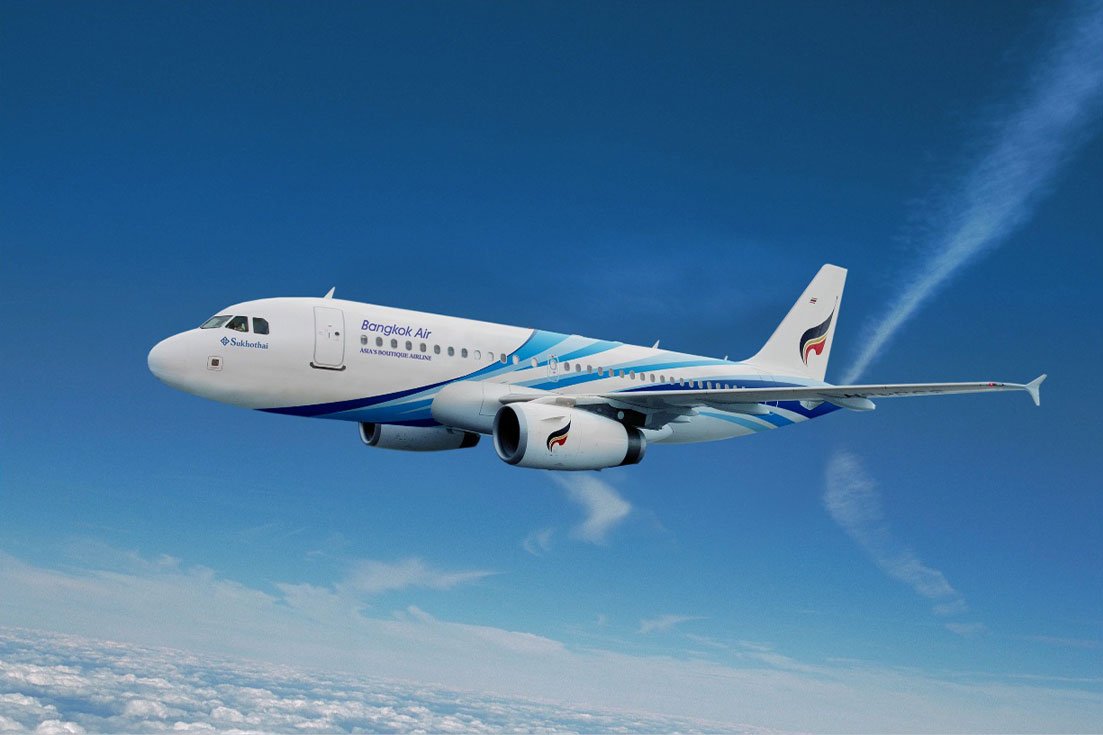
Two departure airports, two materially different experiences. The flight option to Chiang Mai is not a one decision. It is two.
From Suvarnabhumi (BKK): Suvarnabhumi Airport is Bangkok's main international hub and the arrival point for most long-haul international flights. Thai Airways and Bangkok Airways operate the Chiang Mai route from here. Fares run THB 1,500 to 3,000 return. Flight time is approximately 1 hour 10 minutes. The Airport Rail Link connects central Bangkok to Suvarnabhumi in approximately 30 minutes. Total door-to-hotel time from central Bangkok is typically 3 to 3.5 hours under normal conditions.
From Don Mueang (DMK): Don Mueang International Airport handles the majority of budget domestic and regional departures. AirAsia, Nok Air, and Thai Lion Air offer competitive fares to Chiang Mai from here, starting at THB 600 to 1,800 return with advance booking. Same flight time. Don Mueang has no direct rail link equivalent to the Airport Rail Link at Suvarnabhumi. Road transfer from central Bangkok to Don Mueang takes 45 to 90 minutes, depending on traffic. Total door-to-hotel time ranges from 3 to 4.5 hours, depending on departure time and road conditions.
The decision within the decision: Travelers already at Suvarnabhumi on a long-haul international arrival should weigh whether the fare saving from Don Mueang justifies a 25-kilometer inter-airport road transfer. A taxi between the two airports costs THB 300 to 500, and the minimum realistic buffer is 4 to 5 hours. For travelers already positioned at Don Mueang, the budget carrier connection to Chiang Mai is a clean continuation with no additional transfer.
Chiang Mai Airport arrival: CNX sits approximately 4 to 5 kilometers from the city center. No rail link exists. Fixed-rate taxis from the airport to the Old City or the Nimmanahaeminda area cost approximately THB 150-200. Journey time is 15 to 20 minutes under normal conditions.
Booking window: Budget carrier fares on this route drop significantly with 3 to 6 weeks' advance booking. Same-day or next-day fares on budget carriers regularly exceed THB 3,000 return, eliminating the cost advantage over full-service carriers entirely.
Who this route is for: Travelers on stays of 4 nights or fewer in Chiang Mai, those connecting from a Suvarnabhumi international arrival who are not also transiting through Don Mueang, and travelers whose time has a clear value relative to the fare difference.
Where the flight becomes less effective: The flight is the only option on this route that requires two airport decisions rather than one. Departure airport, fare timing, and ground transfer logistics interact in ways not visible in the headline fare. Allow at least 2 hours before a domestic departure for check-in and security at either Bangkok airport under normal conditions. Travelers who optimize for the cheapest published fare without accounting for the departure airport can find that the total door-to-hotel journey time approaches that of the overnight train.
Flight: quick summary
- Fastest in the air: 1 hour 10 minutes
- Two departure airports with different logistics and different carriers
- Total door-to-hotel: 3 to 4.5 hours, depending on departure point
- Best value with 3 to 6 weeks advance booking from Don Mueang
The Overnight Train
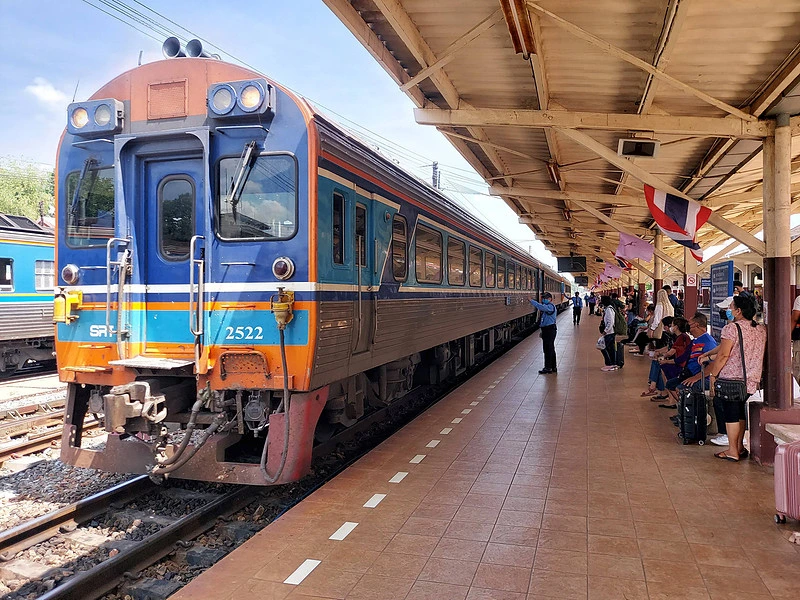
The overnight train from Bangkok to Chiang Mai combines a competitive cost structure with a city-center arrival that no flight on this route can match.
Departure: Bang Sue Grand Station in northern Bangkok replaced Hua Lamphong as the primary departure point for northern routes. It is accessible via the MRT Blue Line (Bang Sue Grand Station). Multiple daily services operate, but the relevant departure for most travelers is the evening train, typically leaving between 18:00 and 19:00 and arriving in Chiang Mai between 07:00 and 09:00 the following morning.
Classes and cost:
Second-class air-conditioned sleeper is the standard choice for most travelers. Upper and lower berths convert from day seats after departure. Lower berths are slightly wider and cost approximately THB 50-100 more than the upper berths. Curtain privacy separates berths. One-way fares run THB 600 to 800 per berth.
Lights are dimmed shortly after departure, and berths are made up by staff, making the transition from day seating to overnight travel straightforward. Most travelers are settled within 30 to 45 minutes of leaving Bangkok.
The first-class sleeper provides a two-berth, private, lockable cabin. One-way fares run THB 1,200 to 1,500. Limited availability per train, and first class books out earliest during peak season (November to February). For couples or two travelers moving together, a first-class cabin at THB 2,400 to 3,000 total replaces both a hotel night and provides genuine privacy on the journey.
The accommodation substitution logic: A second-class sleeper berth at THB 700 to 800 one way, combined with the saving on one mid-range Chiang Mai hotel night at THB 800 to 2,000, produces a total cost that competes directly with advance budget airline fares while eliminating a hotel booking entirely. For solo travelers on a one-way Bangkok-to-Chiang Mai leg, this is often the financially stronger option, not just an experiential preference.
Arrival: Chiang Mai Railway Station sits approximately 2 kilometers east of the Old City moat. A tuk-tuk to most Old City-area hotels costs THB 60 to 100. A red songthaew (shared truck) costs approximately THB 30-50. This is the closest arrival point to the city center among all transport options on this route.
The morning approach: The train passes through the foothills north of Lampang from approximately 05:30, with improving scenery as it enters the northern valleys. Travelers who wake before arrival get the better half of the journey. The segment between Lampang and Chiang Mai is the most visually rewarding stretch of the northern rail line.
Booking: The State Railway of Thailand (SRT) operates this service. Advance booking is recommended 2 to 4 weeks ahead for first-class and 1 to 2 weeks for second-class sleeper during the November to February peak. Booking is available through the SRT online system, though the interface rewards patience over speed.
Who this route is for: Solo travelers on one-way journeys, couples willing to take a first-class cabin, travelers arriving in Chiang Mai without fixed early-morning commitments, and anyone who wants to arrive two kilometers from their hotel without a taxi queue.
Operational constraint: The train runs to a fixed schedule with an approximate, not guaranteed, arrival window. A delay of 30 to 60 minutes is not unusual. Travelers with pre-booked morning tours, early check-in agreements, or onward connections should not build a tight morning schedule around a 07:00 train arrival.
Train: quick summary
- Departs central Bangkok, arrives 2km from Old City
- Replaces one hotel night on one-way journeys
- First-class private cabin books earliest in peak season
- Arrival window 07:00 to 09:00, subject to schedule variance
The Bus
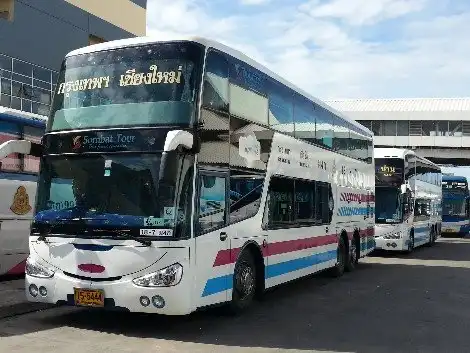
The bus serves a narrower traveler profile on this route than either the flight or the train, and the section is kept proportionately brief.
Departure: Northern Bus Terminal (Mo Chit), accessible by BTS Skytrain to Mo Chit station or MRT to Chatuchak Park. Multiple operators run daily services. The VIP bus configuration (32 seats, reclining seats, blanket, light snack) is the relevant option for travelers who prioritize comfort on a 9- to 11-hour road journey. Standard buses cover the same route at a lower cost.
Journey time and cost: 9 to 11 hours, depending on stops and traffic on the main northern highway. VIP bus fares run THB 550 to 700 one way. Standard bus THB 350 to 450 one way. No overnight sleeper configuration exists equivalent to the train.
Arrival: Chiang Mai Arcade Bus Terminal sits approximately 3 kilometers from the Old City. Songthaew or taxi adds 15 to 20 minutes to the journey to the center.
Traveler fit: Budget travelers with genuinely flexible schedules, travelers who have missed the overnight train booking window, and those who prefer road travel over both rail and air. VIP configuration seats recline to approximately 150 degrees, which is functional for rest but not equivalent to a flat berth. On a 9 to 11-hour overnight journey, fatigue on arrival is a realistic factor, particularly for travelers unused to extended road travel in Southeast Asia.
Where this breaks down: The bus has the longest total journey of the three options and the least schedule precision. Day buses arrive in Chiang Mai in the late afternoon or evening and do not carry the accommodation that the overnight train provides.
The Don Mueang Variable (Why Airport Choice Changes Everything)
This is the planning detail that most Bangkok-to-Chiang Mai comparisons omit, and it changes the outcome for a significant share of travelers.
Bangkok Airways and Thai Airways depart from Suvarnabhumi. AirAsia, Nok Air, and Thai Lion Air depart from Don Mueang. Travelers who book a budget carrier to Chiang Mai after arriving at Suvarnabhumi on a long-haul international flight are committing to a cross-Bangkok airport transfer before their domestic departure. That transfer is 25 kilometers by road, costs THB 300 to 500 by taxi, and requires a minimum 4 to 5 hour buffer accounting for traffic, Don Mueang check-in, and security.
In that specific scenario, a traveler who arrives at Suvarnabhumi before 16:00 has a realistic alternative: take the evening overnight train from Bang Sue Grand Station directly. The total cost is one train berth at THB 700 to 800. No hotel night required. Arrival in Chiang Mai at 07:00 to 09:00, 2 kilometers from the Old City.
If arriving at Suvarnabhumi and considering a Don Mueang budget flight onward, the overnight train is often the cleaner and more efficient choice. The flight is no longer the faster option once the inter-airport transfer is fully accounted for.
Key takeaway: The fastest option on paper is not always the fastest arrival into Chiang Mai. Total door-to-hotel time, not flight duration, is the correct metric for this decision.
For the full Suvarnabhumi to Don Mueang transfer breakdown, the Thailand Airports Guide covers the inter-airport decision before any domestic connection is booked.
Cost by Journey Type
The headline fare comparison changes depending on whether the trip is one-way or return, and how many travelers are involved.
Solo traveler, one way: Second-class sleeper (THB 700 to 800) is typically cheaper than a same-booking-window budget airline one-way fare (THB 700 to 1,200), and replaces a hotel night. The train wins clearly on total cost for one-way solo travel.
Solo traveler, return: Advance budget airline return fares (THB 1,200 to 1,800 from Don Mueang) compete strongly with two one-way train berths (THB 1,400 to 1,600 total). The flight wins or draws on return cost, while saving approximately 24 hours of total travel time across both legs.
Two travelers, one way: First-class private cabin (THB 2,400 to 3,000 total for two) replaces a hotel night and provides a private, lockable space for the journey. Against two budget airline seats at THB 1,400-2,400 in total, the train remains cost-competitive once the saved accommodation night is factored in.
Two travelers, return: The flight return becomes the clear cost winner when accommodation savings no longer apply to the return leg.
The train's financial advantage concentrates on one-way journeys. The flight's advantage lies in return trips and short stays, where speed justifies the fare.
The Ayutthaya Stop
Travelers using the northbound train have one option unavailable on any other mode: an intermediate stop at Ayutthaya, approximately 1.5 hours north of Bangkok. Ayutthaya is one of Thailand's most significant historical sites, and stopping there before continuing to Chiang Mai on a later service adds a half day or full day without backtracking or changing transport modes.
This is the only routing on the Bangkok-to-Chiang Mai journey that allows a meaningful intermediate stop within the same transport booking.
For timing, temple priorities, and how to structure the Ayutthaya stop before continuing north, the Ayutthaya day trip guide covers the planning detail before a train ticket is confirmed.
Seasonal Considerations
February to April (burning season): Chiang Mai's air quality deteriorates significantly during this period, as agricultural burning in the surrounding provinces reduces visibility and raises particulate matter levels. This does not affect transport operations but affects the experience from the moment of arrival, regardless of how the journey is made. Travelers sensitive to air quality should avoid this window entirely or plan Chiang Mai for a different part of the itinerary.
November to February (peak season): First-class sleeper berths book out earliest. Budget airline fares rise during Songkran (mid-April) and Chinese New Year windows. Advance booking of 3 to 6 weeks is a reliable buffer for all three options during peak months.
May to October (rainy season): All three transport options operate normally. The flight approach into CNX can pass through cloud cover during this period, but flight operations are rarely disrupted. Train schedules are unaffected by rain on the northern route.
Who Each Option Is Not For
Flight is not the right option for:
- Travelers connecting from a Suvarnabhumi international arrival who have not accounted for the 4 to 5 hour buffer required before a Don Mueang budget carrier departure
- Travelers booking within 48 hours of departure, where budget carrier fares regularly exceed THB 3,000 one way, and the cost advantage over full-service carriers disappears
Overnight train is not the right option for:
- Travelers with fixed early-morning Chiang Mai commitments, where a 30 to 60 minute arrival delay would cause downstream disruption
- Travelers who need a guaranteed arrival time for pre-booked tours, guides, or onward transport connections
Bus is not the right option for:
- Travelers on 4 nights or fewer in Chiang Mai, where a 9 to 11 hour journey represents a disproportionate share of available trip time
- Travelers who have not used a Thai long-distance road service before and are uncertain about extended-duration road travel comfort levels
How This Transfer Fits the Broader Itinerary
Bangkok to Chiang Mai is typically the first or second domestic leg in a Thailand itinerary. The mode chosen determines the arrival condition as much as the arrival time. A budget flight from Don Mueang after a cross-Bangkok transfer on a short night produces a materially different first day in Chiang Mai than an overnight train that delivers a rested traveler at 08:00, two kilometers from the Old City.
For travelers planning a full northern Thailand routing, the Thailand 2-week itinerary guide explains how the Bangkok-to-Chiang Mai leg fits into a broader trip before any transfers are confirmed.
For those still deciding whether Chiang Mai belongs on their itinerary at all, the best places to visit in Thailand guide explains how the north compares to other destinations across travel styles and trip lengths.
FAQ
How long does it take to get from Bangkok to Chiang Mai?
By direct flight: 1 hour 10 minutes in the air. Total door-to-hotel time is typically 3 to 3.5 hours from central Bangkok via Suvarnabhumi Airport, or 3 to 4.5 hours via Don Mueang Airport, depending on traffic. By overnight train: 11 to 13 hours, departing in the evening and arriving early morning. The total journey to the hotel is minimal, given the hotel's central location. By bus: 9 to 11 hours on the road, with arrival at an outlying terminal requiring a further 15 to 20 minutes into the city.
What is the cheapest way to get from Bangkok to Chiang Mai?
For return trips with advance booking, budget airline fares from Don Mueang (THB 600 to 1,800 return) are typically the lowest headline cost. For one-way travel, a second-class sleeper train berth at THB 700 to 800, combined with the savings on one hotel night, produces a lower total outlay than most airline options. The bus has the lowest headline fare (THB 350 to 700 one way) but the longest journey time.
Is the overnight train from Bangkok to Chiang Mai worth it?
Yes, for the right traveler. It is worth it for solo travelers on one-way journeys where the accommodation saving applies, for couples taking a first-class private cabin, and for travelers who want to arrive close to the Old City without a taxi queue. It is not worth it for travelers with fixed early-morning commitments on the day of arrival, given that the arrival window is approximate rather than guaranteed.
Which Bangkok airport should I fly from to Chiang Mai?
The departure airport is determined by the carrier, not by preference. Thai Airways and Bangkok Airways depart from Suvarnabhumi. AirAsia, Nok Air, and Thai Lion Air depart from Don Mueang. If connecting from a Suvarnabhumi international arrival, factor in the 4- to 5-hour minimum buffer required before a Don Mueang departure. If already positioned at Don Mueang, the budget carrier connection is a clean continuation.
How far is Chiang Mai Airport from the city center?
Approximately 4 to 5 kilometers from the Old City moat and Nimmanahaeminda Road. No rail link exists. A fixed-rate taxi from the terminal costs THB 150 to 200, with a journey time of 15 to 20 minutes under normal conditions. By comparison, Chiang Mai Railway Station is 2 kilometers from the Old City, making it the closest arrival point of any transport option on this route.
What is the best time of year to visit Chiang Mai?
November to February. Dry air, clear skies, and temperatures of 15 to 25 degrees Celsius produce the strongest conditions for Old City walking, temple visits, and day trips into the surrounding hills. February to April carries a significant air-quality risk due to agricultural burning in the wider Chiang Mai province. May to October is the rainy season, but operationally functional for most activities.
Conclusion
Bangkok to Chiang Mai is a domestic route in Thailand where the transport decision directly affects the first day at the destination, not just the journey between them. The flight wins on elapsed time when the departure airport logistics are clean, and the booking window is right. The overnight train wins on total cost and city-center arrival for one-way travel, and delivers a traveler two kilometers from their hotel without a taxi queue. The bus suits a specific budget and schedule profile that the other two do not serve.
The decision is not complicated once the variables are clear. Which Bangkok airport does the journey start from? Is the trip one way or return. How much does the first morning in Chiang Mai matter?
For a return trip, fly. For a one-way journey, take the train.
For the operational layer that applies throughout the full Thailand trip, the Thailand travel tips guide covers booking windows, transport decisions, and the planning details that most itineraries skip. For how this transfer fits into a full routing, the Thailand 2-week itinerary guide shows where the Bangkok-to-Chiang Mai leg fits in before the rest of the trip is confirmed.
On Thailand's most-traveled domestic route, the right option is the one that gets you to Chiang Mai with energy left to use.