
For most trips to Thailand, a comprehensive travel insurance plan with at least 300,000 USD in medical coverage is sufficient for itineraries in Bangkok and Chiang Mai. If your trip includes islands, diving, or motorbike use, increase that to 500,000 USD and confirm evacuation scope, activity inclusion, and cashless hospital access before purchasing.
Policy tier matters less than whether your coverage matches how you actually travel in Thailand.
Coverage failures in Thailand rarely come from being uninsured. They come from mismatched coverage: a policy that excludes the activities you plan, caps evacuation below what the geography requires, or defaults to reimbursement when Thai hospitals expect payment upfront. For a broader planning context, see the practical logistics in the Thailand Travel Tips guide before finalizing your coverage decisions.
What Thailand Actually Exposes You To
Travel insurance is typically framed around cancellations, lost luggage, and generic medical events. In Thailand, those are rarely the problem. The real exposure falls into three specific areas.
Quick risk summary:
- Medical cost exposure is high due to payment-first private hospitals
- Motorbike accidents are the leading cause of foreign traveler injury claims
- Island evacuation is consistently under-covered in baseline policies
- Activity exclusions catch travelers who assume "adventure sports" coverage is comprehensive
Hospital Payment Expectations
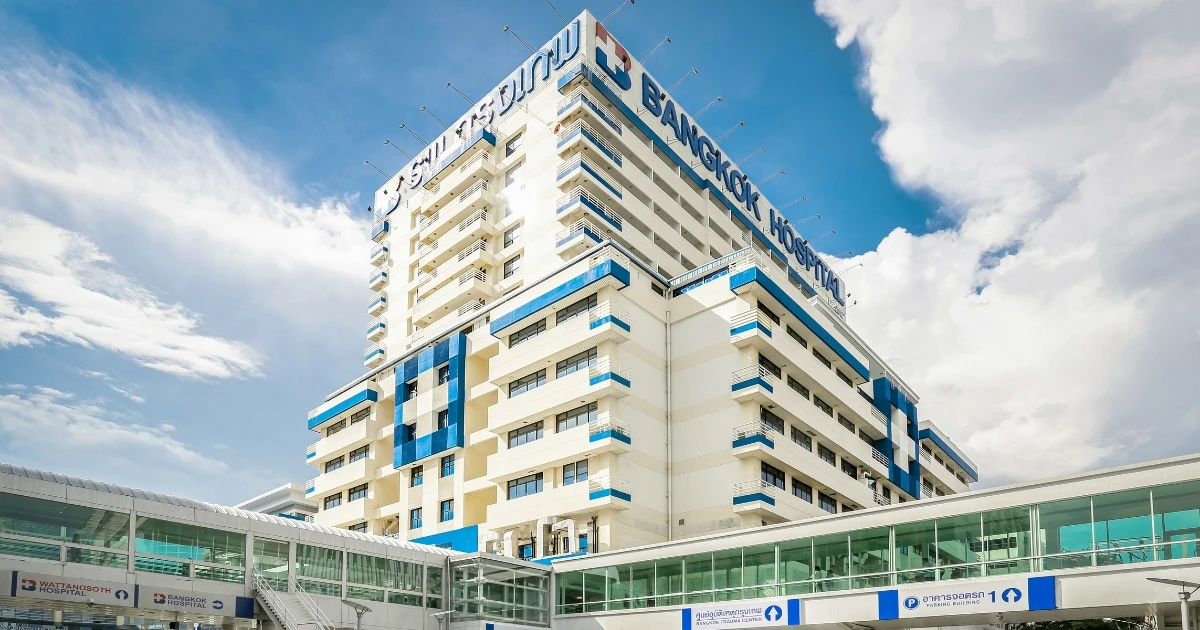
Thailand's leading private hospitals, including the BDMS network (Bangkok Hospital, Samitivej, BNH) and Bumrungrad International, are clinically excellent. They also expect either an upfront payment or a direct guarantee letter from your insurer before non-emergency treatment begins.
Without a cashless billing arrangement, a serious incident can require 300,000 to 800,000 THB out of pocket before reimbursement is processed. A fracture requiring surgery at a private hospital in Bangkok costs 150,000 to 400,000 THB. A road accident with ICU involvement can exceed 1,000,000 THB. Reimbursement-only policies technically cover these events. In practice, they create cash-flow exposure that is rarely anticipated at the time of purchase.
Activity Risk in Practice
The leading cause of foreign traveler injury claims in Thailand is motorbike accidents, not food illness, not diving, not crime. Travelers rent scooters in Chiang Mai, Koh Samui, and Koh Lanta without Thai motorcycle licenses, crash on wet roads or unfamiliar terrain, and discover their policy excludes unlicensed motorbike operation.
Water-based activity claims follow a predictable pattern: Jet Ski damage liability (operators frequently claim pre-existing damage), diving decompression incidents, and boat transfer accidents during the rough sea season. Rock-climbing injuries at Railay Beach constitute a smaller but consistent category.
Thailand's risk profile is unusual because world-class private hospitals exist alongside island infrastructure that requires self-managed evacuation, often across open water, before reaching them.
Contrarian insight: The risk profile of a 12-day Bangkok and Chiang Mai trip with no motorbikes and no islands is genuinely close to a European city break. A comprehensive conventional policy is adequate. The coverage gap kicks in the moment the itinerary includes outer islands or adventure activities.
Island Access and Evacuation
Koh Tao, Koh Lipe, the Similan Islands, and the Surin Islands share one logistical constraint: they have no hospitals. A serious injury requires evacuation by boat or helicopter to a facility on the mainland or on Koh Samui.
A sea transfer from Koh Tao to Koh Samui for a decompression incident runs 30 to 90 minutes, depending on sea conditions, with transfer costs of 3,000 to 8,000 THB. Hyperbaric chamber treatment for decompression sickness costs approximately 500 to 1,500 USD per session, and most incidents require multiple sessions. Air evacuation from outer islands, when required, can cost more than 15,000 USD.
Many typical policies include an evacuation benefit but apply sub-limits that do not cover island-to-hospital transfers as a distinct category. Confirming the specific evacuation wording, not just the headline benefit, is essential for any island-based itinerary. For a clear comparison of access and logistics across Thailand's main island groups, review the Thailand Islands Guide before confirming your route, since destination choice directly changes your risk exposure.
The Five Coverage Factors That Actually Matter in Thailand
Before evaluating any specific provider, apply this framework.
| Factor | What to Verify | Practical Threshold |
|---|---|---|
| Medical coverage limit | Overall ceiling, not just sub-limits | USD 300,000 min; USD 500,000 for islands |
| Payment method | Cashless billing vs reimbursement only | Cashless preferred; confirm hospital network |
| Evacuation scope | Island-to-hospital transfers included | Must appear explicitly in policy wording |
| Activity schedule | Motorbikes, scuba, and water sports are named | Listed specifically, not just "adventure sports." |
| Trip duration | Default limit vs actual itinerary length | Verify 30-day vs 45-day vs 90-day caps |
One practical test before purchasing: ask your insurer whether you are covered if you ride a motorbike in Thailand without a Thai motorcycle license and are injured. The answer reveals more about real-world coverage than any benefits summary.
Insurance Categories: Which Type Fits Your Trip
Basic and Budget Plans
Suitable for short urban itineraries in Bangkok or Chiang Mai with no planned adventure activities. Medical limits typically sit at 50,000 to 100,000 USD. Trip cancellation and baggage are usually included. These plans do not cover island travel, motorbike use, or stays beyond 21 days.
Comprehensive Plans
The appropriate tier for 2- to 3-week Thailand itineraries across multiple regions. Medical limits run from 250,000 to 500,000 USD, with evacuation, cancellation, and baggage included. The remaining gap usually involves activity exclusions and sub-limits for island evacuation. Review the exclusions schedule before the benefits page.
Adventure-Focused Plans
Designed for travelers whose itinerary includes diving, trekking, rock climbing, or motorbike travel. These plans explicitly name covered activities and typically carry evacuation ceilings of 500,000 USD or higher. If your trip involves Koh Tao diving or Pai-area motorbike routes, this is the correct starting tier, not an upgrade from the comprehensive tier.
Long-Stay and Digital Nomad Plans
Travelers staying 30 to 180 days face a structural problem: baseline trip policies default to a 30-day single-trip limit. Long-stay plans (SafetyWing, Genki, Insured Nomads) offer continuous or monthly coverage without per-trip purchases, typically starting at 45-56 USD per month. Trip cancellation is excluded from these plans. Outpatient coverage is often included, which matters for anyone staying long enough to contract dengue, develop a foodborne illness, or sustain minor injuries.
Thailand Inbound Health Policies
A separate category for long-term residents and holders of retirement visas. Pacific Cross, AXA Thailand, and Cigna Thailand offer locally underwritten health policies with medical limits ranging from 100,000 to 500,000 USD, depending on plan tier, that cover ongoing care within Thailand. These are not internationally portable and do not include trip cancellation or international evacuation. They function as domestic health insurance, not travel insurance.
Regional Breakdown: How Coverage Varies by Origin
Quick regional takeaway:
- North America requires the highest medical limits and explicit evacuation coverage
- Europe often underestimates medical cost exposure due to home-system familiarity
- Australia and New Zealand face reimbursement-heavy policy structures
- Asian markets vary widely in medical ceilings and activity exclusion terms
North America (USA and Canada)
US domestic health plans do not cover international care. Canadian provincial plans provide nominal overseas coverage, typically capped at 100-200 CAD per day, well below Thailand's private hospital rates. North American travelers face the largest structural gap and should target at least 500,000 USD in medical coverage, with confirmed cashless access at private hospitals in Bangkok. Medical evacuation flights from Bangkok to the US can cost more than 80,000 USD and must be explicitly listed in the policy.
Providers with reasonable Thailand performance include World Nomads (Explorer plan for adventure coverage), Travelex, and GeoBlue for US travelers. Manulife CoverMe and Blue Cross provincial plans serve Canadian travelers but vary by province. World Nomads is functional but carries per-incident sub-limits on evacuation that require review before island itineraries.
Europe (Schengen and UK)
EHIC and GHIC cards are valid only within the European Economic Area and do not provide coverage in Thailand. European travelers are generally aware they need insurance abroad, but frequently underestimate appropriate medical limits, having normalized lower out-of-pocket costs at home.
AXA Schengen, Allianz Travel, and Europ Assistance are widely used across European markets. True Traveler (UK) offers one of the more explicit adventure activity schedules for Thailand, including motorbike coverage with a valid local license and reasonable scuba diving cover. Cashless billing access in Thailand varies by insurer and by specific hospital. Confirm your insurer's hospital network before travel, not upon arrival.
Australia and New Zealand
Medicare does not apply outside Australia. ANZ travelers are among the better-insured internationally, but reimbursement-only models remain common in this market, creating the same cash flow exposure at Thai private hospitals.
Cover-More has cashless billing arrangements with several Bangkok hospital groups, but applies sub-limits for island evacuation that require review for outer-island itineraries. 1Cover offers competitive adventure coverage. For New Zealand travelers, Southern Cross Travel Insurance provides solid, comprehensive cover with reasonable medical limits for Thailand itineraries.
Asia (Singapore, Hong Kong, South Korea, Japan, India)
Singapore and Hong Kong travelers generally have strong domestic health coverage and higher awareness of international medical costs. FWD Travel Insurance and AXA Hong Kong cover Thailand itineraries effectively for most trip types.
Indian travelers face a tighter constraint: many Indian travel insurance policies have medical limits of 100,000 to 250,000 USD, which are insufficient for complex surgical procedures or extended ICU care at private hospitals in Bangkok. HDFC ERGO and Tata AIG are common choices but require limit verification before purchase. South Korean and Japanese travelers are generally well covered, but should confirm activity inclusion for diving and motorbike itineraries, as exclusions vary by policy.
Global and Nomad-Oriented Options
SafetyWing Nomad Insurance operates on a monthly subscription starting at approximately 45-56 USD per month, depending on age and home country. The 250,000 USD medical ceiling adequately covers most scenarios in Thailand. Trip cancellation is not included. Coverage begins 24 hours after purchase when the purchase is made outside your home country.
Genki Explorer offers higher medical limits of up to 500,000 EUR, with strong outpatient coverage, making it well-suited for longer stays. Insured Nomads sits at a premium tier with higher limits and a more responsive claims process. None of these plans is optimized for short-trip travelers with complex cancellation exposure.
Where Travel Insurance Falls Short in Thailand
- Assuming adventure coverage includes motorbike riding. It frequently does not. A home-country car license does not cover motorcycles in Thailand. The Thai motorcycle license is a separate category. Without it, motorbike-related injuries are excluded under most policies unless named as covered, regardless of license status.
- Choosing coverage based on trip cost rather than medical exposure. A 2,000 USD trip can generate a 50,000 USD medical claim. The two numbers are unrelated. The medical limit is the primary variable to evaluate.
- Underestimating island evacuation costs. A sea transfer from Koh Lipe to Hat Yai Regional Hospital runs approximately 1,500 to 3,000 USD. An air evacuation from a Gulf island to Bangkok adds 5,000 to 15,000 USD. These costs sit outside standard medical benefit calculations in many policies.
- Hitting a 30-day default limit mid-trip. Slow travelers and multi-country itineraries in Southeast Asia regularly encounter this. Baseline single-trip policies often default to 30 days. Review how Thailand trip durations are typically structured in the 2-week itinerary guide before confirming your coverage window.
- Assuming cashless billing is available at any private hospital. Cashless arrangements are specific to hospital groups. Bumrungrad, the Bangkok Hospital BDMS network, and Samitivej have the broadest insurer partnerships. A smaller private clinic on Koh Samui or in Chiang Mai may not have a direct billing arrangement with any insurer.
- Treating a stable pre-existing condition as irrelevant. Thai hospitals document patient history on admission as standard practice. A pre-existing condition clause can affect claim outcomes even when the current incident is unrelated, depending on how the policy defines the triggering event. Review pre-existing condition wording before purchase, not after a claim.
Matching Coverage to Your Trip Profile
Short-trip urban traveler (7 to 14 days, Bangkok or Chiang Mai, no islands, no adventure activities). A comprehensive plan with a 300,000 USD medical limit is appropriate. Confirm cashless billing at private hospitals in Bangkok. Focus on cancellation terms and medical ceiling. Adventure activity coverage is not needed.
Island-focused traveler (Koh Tao, Koh Lipe, Similan Islands, Phang Nga Bay). An adventure-focused plan with confirmed language for island evacuation is required. Diving coverage should be explicit. A 500,000 USD medical limit is the appropriate floor. Confirm whether hyperbaric treatment is covered as a distinct benefit. Compare logistics across island groups in the Thailand Islands Guide to understand how evacuation distance and access difficulty vary by destination.
Multi-region traveler (Bangkok, Chiang Mai, Khao Sok, Andaman coast, 2 to 3 weeks). A comprehensive plan that includes adventure activities and explicit evacuation coverage. Confirm that the maximum trip duration covers the full itinerary. For travelers, including those visiting Khao Sok, note that Cheow Lan Lake is approximately 90 minutes from the nearest fully equipped hospital. Review remoteness and access realities in the Khao Sok National Park guide before assessing evacuation coverage for that leg.
Digital nomad or long-stay traveler (30 to 180 days). Conventional trip insurance is the wrong product. A nomad plan (SafetyWing, Genki, Insured Nomads) provides continuous coverage without per-trip gaps. If based in Bangkok or Chiang Mai for an extended period, a locally underwritten inbound health policy from Pacific Cross or AXA Thailand may offer better outpatient access at a more competitive premium for purely domestic coverage needs.
Luxury traveler (private villas, chartered transfers, Phuket, Koh Samui, Phang Nga Bay). Operationally, the priority at this level is high-limit medical coverage, private medical repatriation, private room guarantee at the hospital, and a responsive claims concierge service. A premium comprehensive plan with a medical limit of 1,000,000 USD or higher and confirmed direct billing at BDMS and Bumrungrad is the appropriate tier. A policy requiring reimbursement for a 500,000 THB hospital stay creates entirely avoidable administrative friction.
Family traveler Pediatric coverage terms, confirmed access to children's hospital facilities in Bangkok (Bangkok Hospital and Samitivej Sukhumvit both carry strong pediatric departments), and clear cancellation terms for child illness are the priority variables. Verify whether the family rate covers the actual number of children traveling. Some providers offer free coverage for children under 12 when parents are insured on the same policy.
Frequently Asked Questions
Is travel insurance required to enter Thailand? No, travel insurance is not required to enter Thailand. Coverage is not mandatory for tourist entry. It is strongly advisable, given private hospital payment expectations and the evacuation logistics involved in island itineraries.
What is the minimum medical coverage for Thailand? 300,000 USD is a practical minimum for Bangkok-based itineraries. Island or adventure activity trips warrant 500,000 USD with explicit evacuation coverage. Luxury travelers and anyone whose repatriation involves a long-haul flight home should target 1,000,000 USD.
Does travel insurance cover motorbike accidents in Thailand? Policies generally prohibit operating motorized vehicles without a valid local license. A home-country car license does not cover motorcycles in Thailand. Adventure-focused plans are more likely to include motorbike coverage with appropriate license documentation confirmed.
Which hospitals in Thailand offer cashless billing? Bumrungrad International, the full BDMS network (Bangkok Hospital, Samitivej, BNH, and regional branches), and Bangkok Dusit Medical Services properties have the broadest direct billing relationships with international insurers. Coverage varies by individual policy. Confirm your insurer's specific hospital list before travel.
Can I buy travel insurance after arriving in Thailand? Yes, but options narrow considerably. SafetyWing allows post-arrival purchase with a 24-hour waiting period for illness claims. Traditional insurers generally require purchase before departure. If you are already in Thailand without coverage, nomad-oriented plans are the most accessible option available.
Does travel insurance cover dengue fever in Thailand? Yes, in most cases. Dengue is not a pre-existing condition and falls under standard medical benefits. Hospitalization for a typical uncomplicated dengue case runs 30,000 to 80,000 THB. In practice, the key issue is access to cashless billing at the treating facility, not the benefit category itself.
Is scuba diving covered by travel insurance? Baseline plans often exclude scuba diving or apply a depth limit of 30 meters. Adventure-focused plans explicitly cover recreational diving and sometimes require a current PADI certification or equivalent. Technical diving is excluded from most consumer-level policies. Confirm coverage before booking liveaboards or dive itineraries around Koh Tao or the Similan Islands.
Conclusion
The framework for choosing travel insurance in Thailand is not complicated once the actual risk profile is clear. Bangkok itineraries are manageable on a comprehensive plan. Islands, adventure activities, and long stays each create specific gaps that require deliberate coverage decisions rather than a general upgrade.
The five factors that determine whether a policy works in Thailand are medical limit, payment method, evacuation scope, activity inclusion, and trip duration. Everything else is secondary.
In Thailand, insurance rarely fails due to missing coverage. It fails because it does not match the trip.