
The Gulf Coast's three main islands share a ferry network and a broadly similar climate. Beyond that, they operate on entirely different logics.
Koh Samui is built for comfort, infrastructure, and flexible access. Koh Phangan is building a slower identity around wellness and lower density, but it asks more of you logistically. Koh Tao is not a beach destination with diving on the side. It is a diving island with small beaches, and the experience only delivers if you arrive knowing that.
Booking before understanding those distinctions is where Gulf Coast trips go wrong. The traveler who wants seclusion ends up in Chaweng. The one who wants seamless access books a remote villa on Koh Phangan's north coast without accounting for the ferry. By the time the mismatch becomes obvious, the itinerary is already fixed.
This guide helps you resolve that decision before you book.
Southern Thailand Gulf Coast Travel Guide: Key Differences
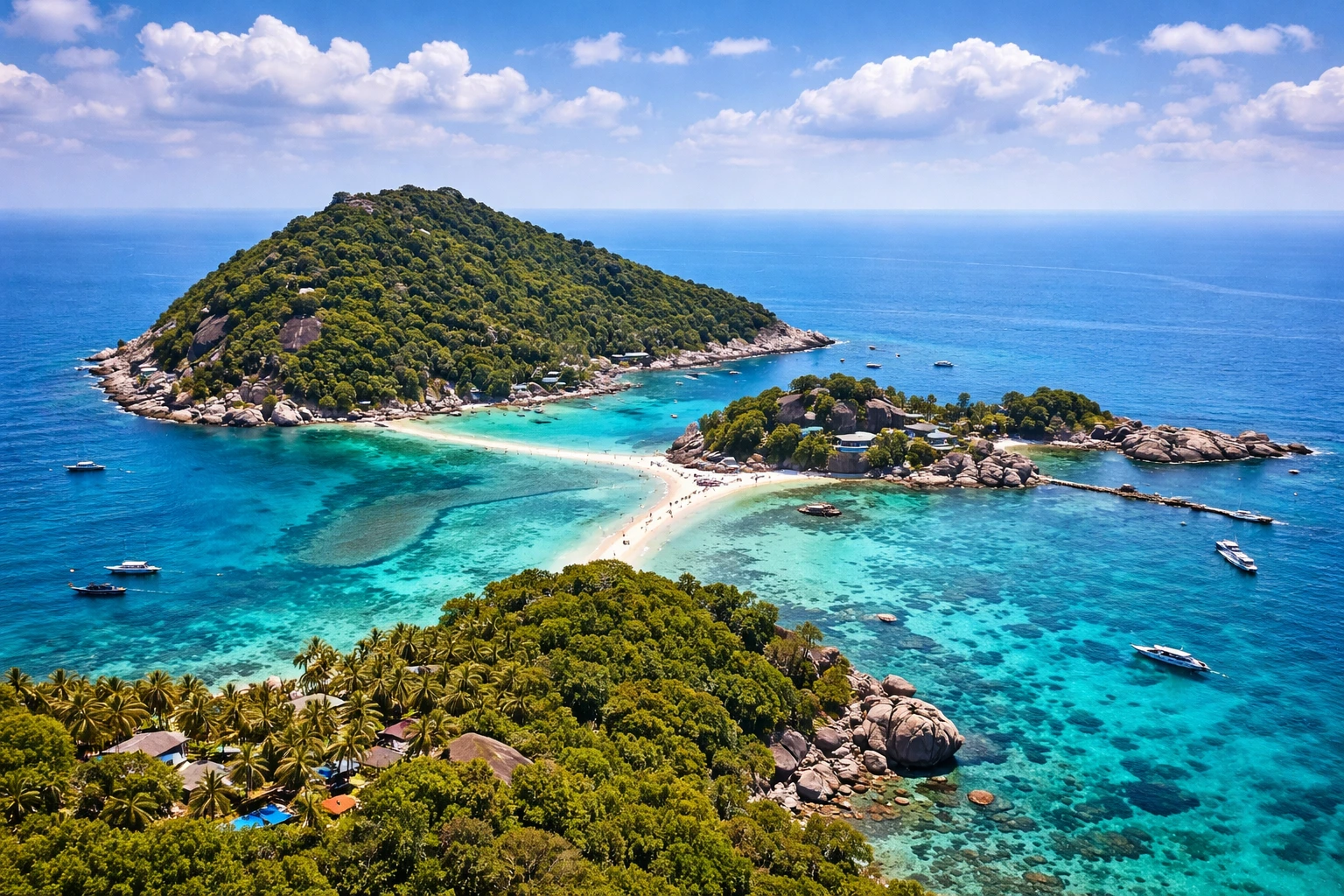
The Gulf Coast sits on Thailand's eastern seaboard, facing the Gulf of Thailand rather than the Andaman Sea. That geography shapes everything: the scenery, the timing of the monsoon, the access structure, and the type of experience available on each island.
Koh Samui, Koh Phangan, and Koh Tao are connected by ferry and share a broadly similar climate, but they serve different traveler profiles. Understanding those differences before booking is the purpose of this guide.
For travelers comparing the Gulf Coast with the Andaman Coast, the Phuket vs Krabi vs Koh Samui comparison covers the cross-coast decision in detail.
The Short Answer: What Each Island Is For
For first-time Gulf Coast visitors using this southern Thailand Gulf Coast travel guide as a planning reference, Koh Samui is the correct base for luxury infrastructure, privacy at scale, and flexible access. Koh Phangan suits travelers willing to trade convenience for lower density, particularly on the island's quieter northern and western coasts. Koh Tao is not a conventional beach destination. It is a diving island with small beaches, and the experience it delivers is organized around that fact.
Quick Picks
- Best for luxury infrastructure and ease of access: Koh Samui
- Best for seclusion without the Andaman price point: Koh Phangan (north and west coast)
- Best for underwater experience: Koh Tao
- Best for first-time Gulf Coast visitors: Koh Samui
- Best two-island combination: Koh Samui plus Koh Tao
- Best for wellness-focused itineraries: Koh Phangan (Srithanu area)
At a Glance: Gulf Coast Island Comparison
| Koh Samui | Koh Phangan | Koh Tao | |
|---|---|---|---|
| Style | Developed luxury | Low-density, wellness-oriented | Dive-first, simple |
| Access | Direct flight from Bangkok | Ferry from Samui or Surat Thani | High-speed ferry from Samui or Surat Thani |
| Luxury ceiling | High (branded resorts, private villas) | Moderate (boutique villas, retreat centers) | Low to moderate |
| Best for | Comfort, couples, families | Slow travelers, wellness seekers | Divers, snorkelers |
| Weakness | Overdeveloped in parts | Logistics-heavy, monthly party disruption | Limited beach quality, small island confinement |
| Ideal stay | 3 to 5 nights | 2 to 4 nights | 2 to 3 nights |
Decision Shortcut
If you are choosing one island for a standalone Gulf Coast trip:
- Choose Koh Samui if you want reliable luxury, direct international connections, and the flexibility to move between beach zones without friction.
- Choose Koh Phangan if you want lower density, a wellness-oriented rhythm, and are prepared to manage ferry transfers and variable road quality.
- Choose Koh Tao if diving or snorkeling is the primary purpose of the trip and beach quality is secondary.
How to Reach the Gulf Coast Islands
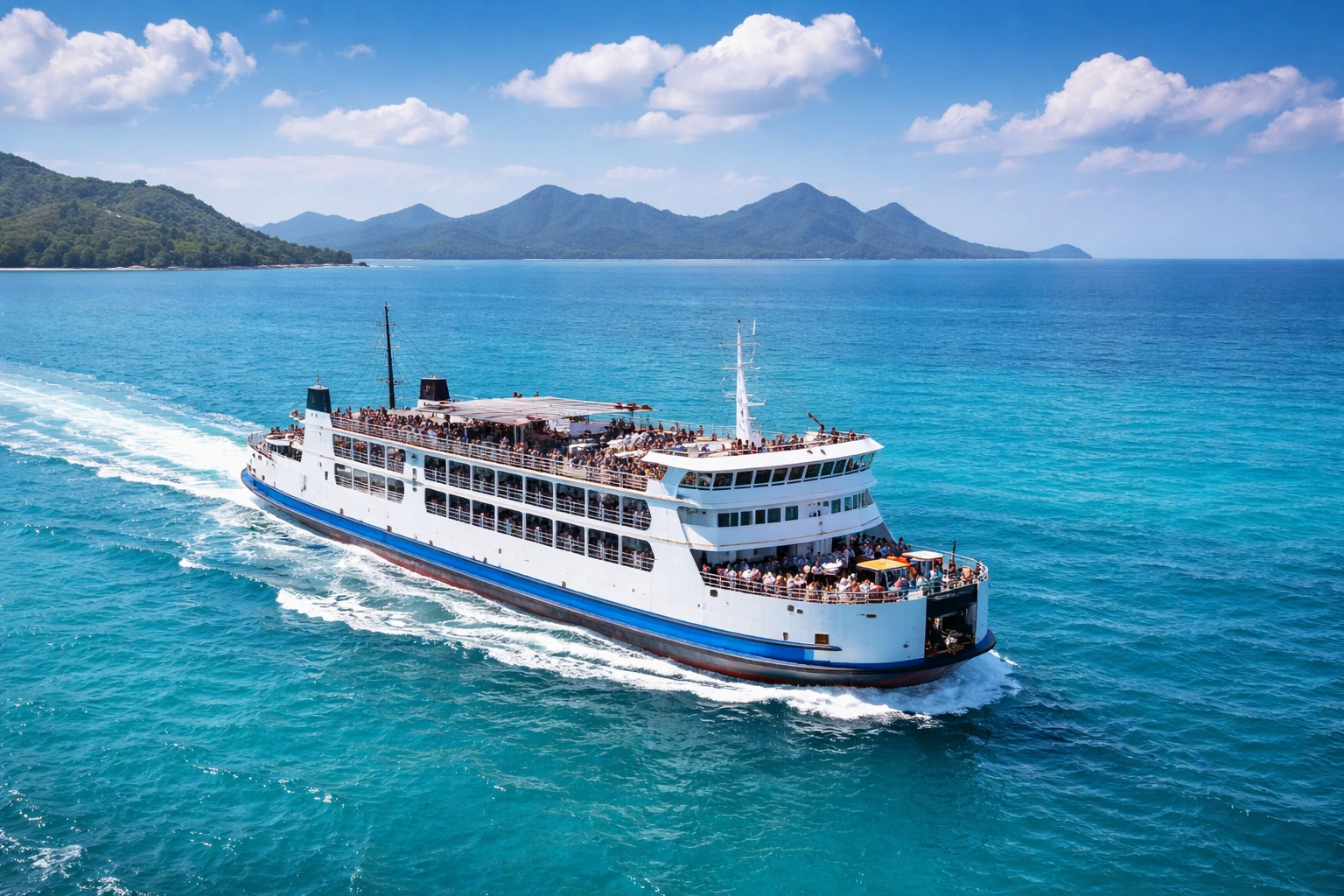
Bangkok to Koh Samui is the most direct routing. Bangkok Airways operates flights from both Suvarnabhumi and Don Mueang to Samui Airport, a private airport owned and operated by Bangkok Airways. Flights take approximately 80 minutes. Because the airport is privately operated, ticket prices are consistently higher than those on routes served by low-cost carriers. Budget roughly 3,000-6,000 THB per person each way, though prices vary by booking window and season. This is the clearest path to the Gulf Coast for travelers prioritizing time over cost.
Bangkok to Koh Phangan requires an additional ferry leg. The standard routing is a flight to Samui, followed by a 30-minute high-speed ferry crossing from Nathon or Bangrak pier. Alternatively, travelers can fly to Surat Thani on the mainland and connect via a longer ferry crossing of approximately 2.5 hours. Neither route is difficult, but the ferry dependency means Koh Phangan never quite matches Samui's ease of access.
The Bangkok-to-Koh Tao route involves the longest transfer chain of the three. From Samui, a high-speed catamaran to Koh Tao takes approximately 90 minutes under good sea conditions. From Surat Thani by night ferry, the crossing takes six to eight hours. For most luxury travelers, the Samui-to-Tao catamaran is the practical option, with the Samui flight serving as the entry point to the cluster. The Thailand Airports Guide covers entry-point decisions for the country as a whole in greater detail.
The overland option via Surat Thani adds six to ten hours to the journey each way. It is not a meaningful trade-off for travelers whose time has value.
Seasonal note: The Gulf Coast follows an inverse monsoon pattern to the Andaman side. The wet season on the Gulf runs from late September through November, with October being the most disrupted month. The Andaman coast (Phuket, Krabi, Koh Lanta) experiences its monsoon from May through October. A traveler visiting Thailand in October is better placed on the Andaman side. A traveler in May or June often finds the Gulf Coast in reasonable condition, while the Andaman coast is under its own monsoon. This pattern makes the two coastlines complementary for itinerary planning across longer trips.
For official ferry and marine condition updates, refer to the Marine Department of Thailand, which publishes seasonal advisories relevant to Gulf crossings.
Koh Samui
What Kind of Experience Does It Deliver
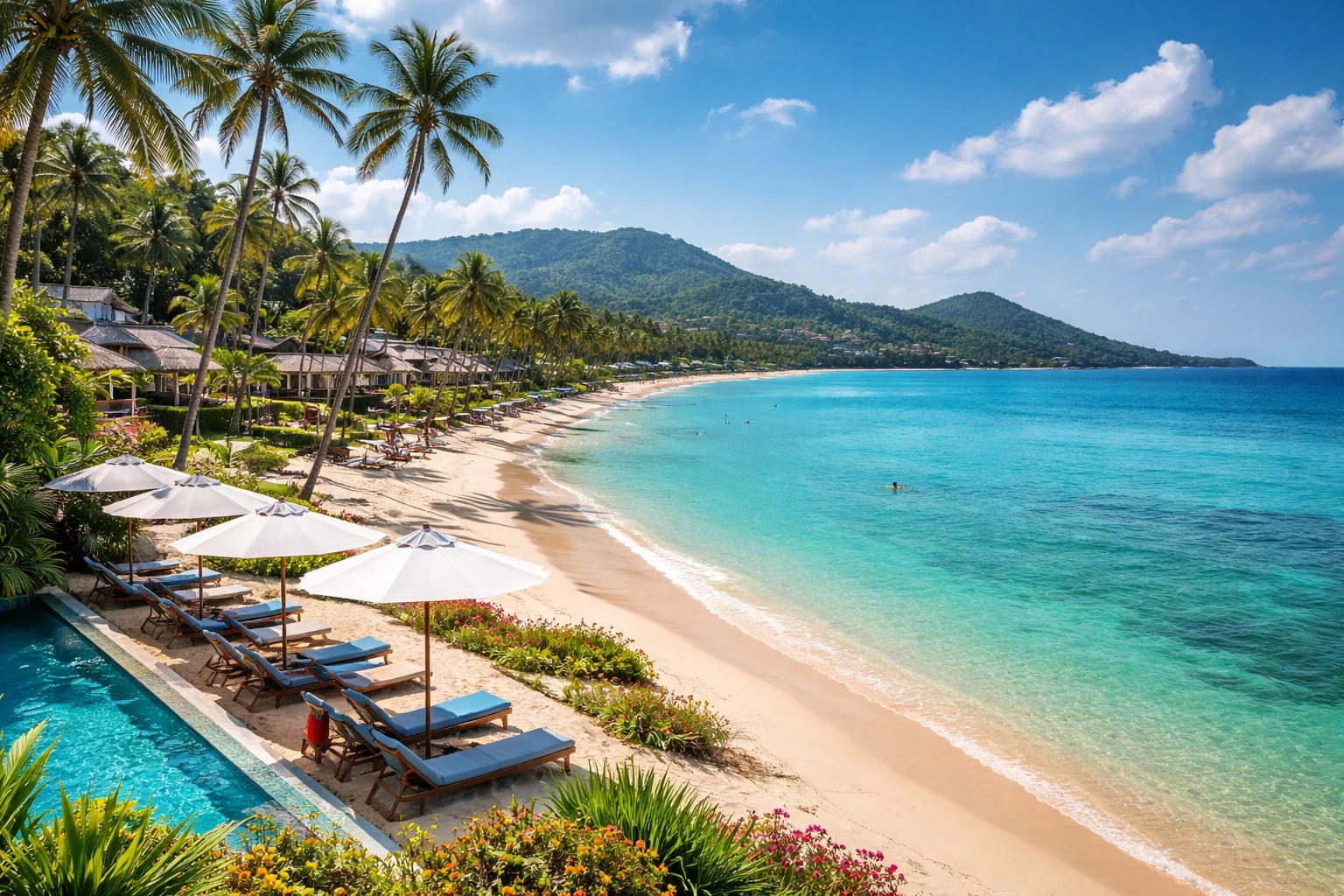
Koh Samui is the most developed of the three Gulf Coast islands and the one with the widest range of luxury accommodation. It has the infrastructure of a destination that has handled international visitors for four decades: a private airport, international-standard medical facilities, consistent road access around most of the island, and a villa and resort market large enough to absorb demand even in peak season.
That development is the island's greatest asset and, depending on where you stay, its most visible limitation.
Where to Stay on Koh Samui
The island divides into distinct zones, and the choice of zone shapes the experience more than the choice of property.
The north coast (Bophut, Maenam, Bang Po) is quieter, less densely populated, and better suited to couples and travelers who want to be on Samui without being in its commercial center. Bophut's Fisherman's Village offers a walkable strip of restaurants and boutiques without the volume of Chaweng. Maenam's beach is long, wide, and rarely crowded.
The east coast (Chaweng, Lamai) is where most of the hotel inventory is concentrated. Chaweng is the island's commercial hub: active, loud in parts, and well-served by restaurants, nightlife, and beach clubs. For travelers who want resort amenities and proximity to activity, it functions well. For travelers expecting quiet, it is not.
The west coast (Lipa Noi, Nathon) is sunset-facing, low in density, and home to some of the island's strongest villa rental inventory. Access to the east coast beaches from here requires a 20 to 30-minute drive, but the trade-off is a notably quieter environment and, in the evening, the best natural light on the island.
For travelers interested in how quiet, privacy-forward travel can be integrated into a luxury trip to Thailand, the Introvert Luxury Travel section covers the relevant frameworks in detail.
Honest Trade-offs
The Chaweng corridor has become generic in parts. Budget guesthouses, convenience stores, and high-volume beach clubs occupy the same stretch as some of the island's better hotels. Travelers expecting the visual environment of curated travel photography should carefully review the exact property locations before booking.
The best luxury properties book out well in advance during the December to February high season. Last-minute availability at the upper end of the market is limited. Samui's villa market at the premium tier operates with a small inventory and a concentrated demand window. This is not a warning that can be ignored.
Choosing Koh Samui, expecting Koh Yao Noi-level seclusion, is the clearest misalignment in planning on the Gulf Coast. For travelers weighing that exact comparison, the Koh Yao Noi luxury travel guide sets out what genuine seclusion at the Andaman standard entails.
Where this fits in your trip: Bangkok, Koh Samui, (optional: Koh Tao or Koh Phangan), return
Koh Phangan
What Kind of Experience Does It Deliver
Koh Phangan's reputation is built almost entirely around the Full Moon Party, a monthly beach event at Hat Rin on the island's southern tip that draws tens of thousands of visitors. That event is real, and its impact on the island during the surrounding days is significant. Room rates rise, ferry schedules fill, and the island's ambient noise level increases substantially.
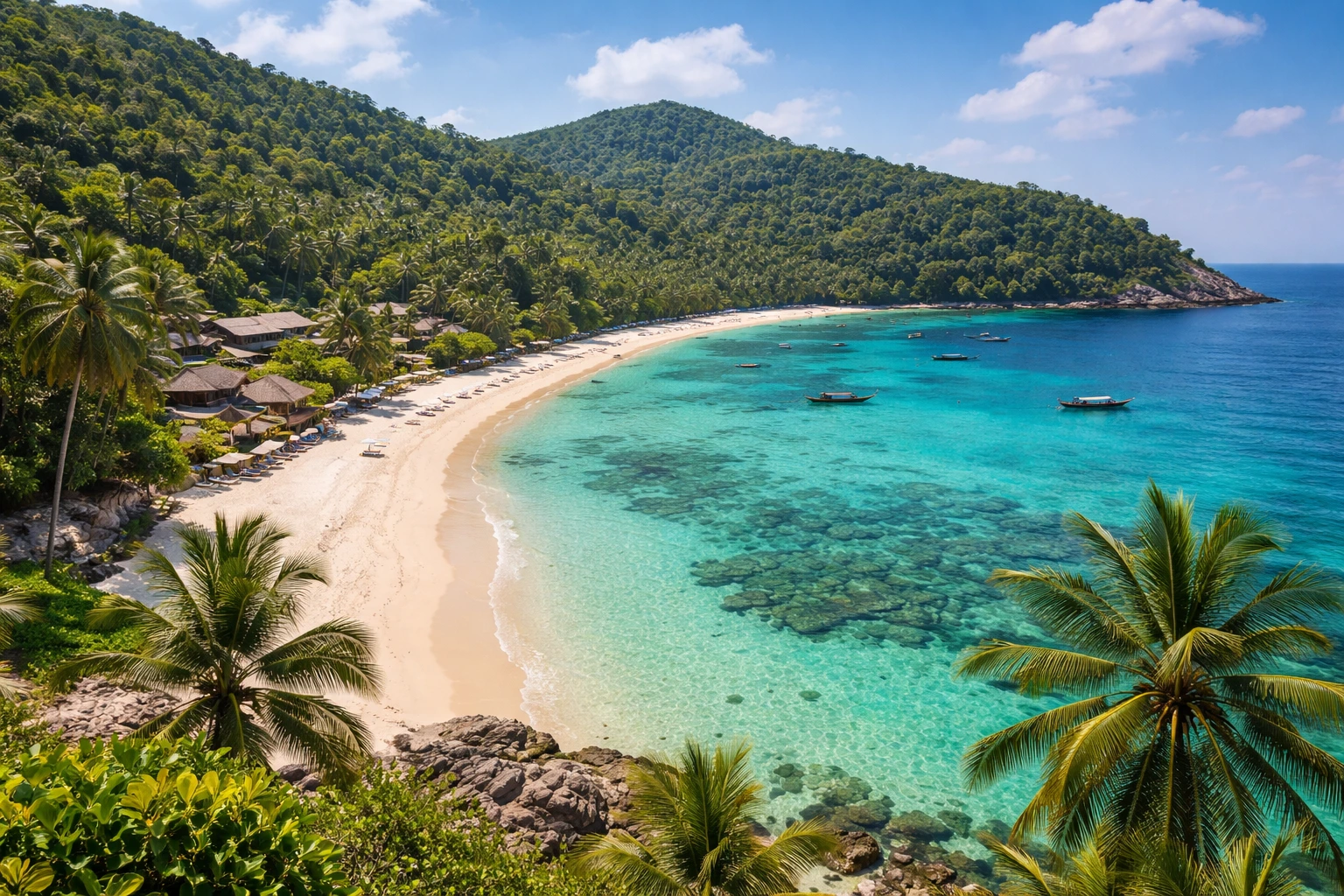
What the reputation obscures is that, most of the time, Koh Phangan is a quiet, low-density island with a growing infrastructure of wellness resorts, boutique villas, and retreat centers.
The northern coast (Chaloklum, Haad Salad, Haad Yao) and the western coast are the parts of the island that bear no resemblance to the Full Moon Party narrative. These areas are genuinely calm, visually undeveloped compared to Samui, and increasingly well-served by quality accommodation.
Where to Stay on Koh Phangan
Haad Salad and Haad Yao on the northwest coast are the clearest options for travelers seeking seclusion. Both beaches are small, scenic, and quiet outside of party weekends. Villa and boutique resort inventory here is limited but of reasonable quality for the price point.
Srithanu, on the west coast, has consolidated into the island's wellness hub. Yoga studios, raw food cafes, holistic retreat centers, and a small cluster of thoughtfully designed accommodations make this the most coherent neighborhood on the island for slow travelers. It is not luxurious in the conventional sense, but it is well-matched to a particular type of intentional travel.
Thong Sala is the island's main town and ferry arrival point. Practical for logistics, not scenic for stays. It functions better as an orientation point than a base.
Honest Trade-offs
The Full Moon Party affects the entire island, not just Hat Rin. During the 48 hours surrounding the event, accommodation prices at the upper end can double, road traffic on an island with limited road capacity increases, and the general atmosphere shifts. Travelers who plan to avoid the Full Moon Party should check the lunar calendar before confirming any dates.
The luxury ceiling on Koh Phangan is measurably lower than on Samui. There are no branded five-star properties. The best options are boutique villas and retreat-style resorts, most priced between mid-range and upper mid-range. Travelers expecting Samui-level resort infrastructure on Koh Phangan will be disappointed.
Road quality on the northern coast is variable, particularly after heavy rain. Some properties require a short stretch of unpaved road to access. This is worth confirming directly with a property before arrival, particularly for guests with heavy luggage or limited mobility.
Where this fits in your trip: Bangkok, Koh Samui, Koh Phangan (ferry, 30 min), return via Samui
Koh Tao
What Kind of Experience Does It Deliver
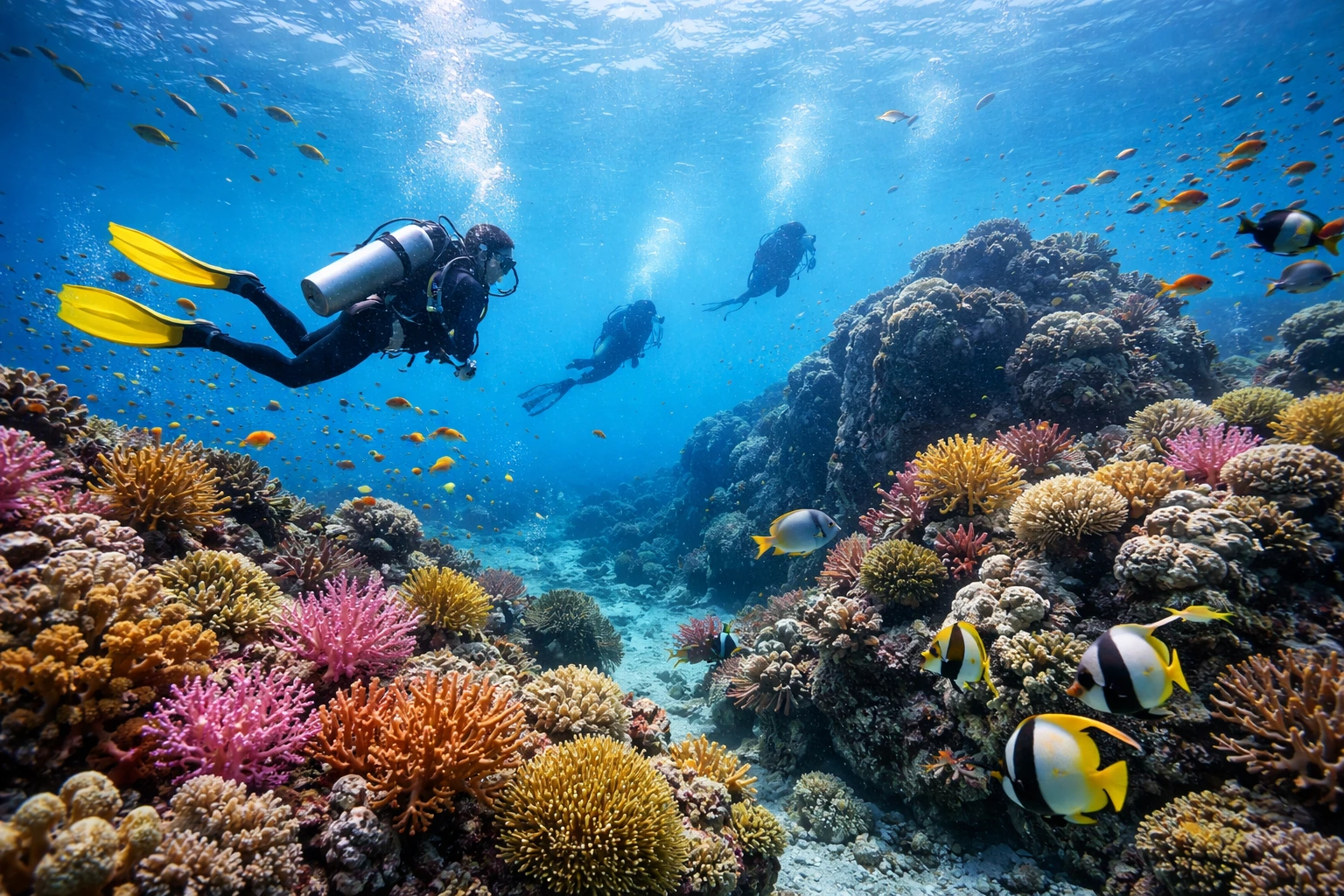
Koh Tao is the smallest of the three islands and the one with the clearest singular identity. It is a diving island. The quality and accessibility of its dive sites, particularly around the northwest (Chumphon Pinnacle, Sail Rock) and the sheltered bays on the west coast, represent the primary reason to visit.
The beaches are small, cove-based, and pleasant without being exceptional. Sairee Beach, the longest stretch on the island, is functional rather than scenic. The underwater environment, by contrast, is among the most accessible in Southeast Asia for both certified divers and those completing open water training.
This distinction matters. Travelers who book Koh Tao for beach photography often find the above-water experience underwhelming. Those who arrive for the water leave satisfied.
Where to Stay on Koh Tao
Sairee Beach is the main accommodation corridor. It has the widest selection of restaurants, dive schools, and accommodation types, ranging from budget guesthouses to small boutique hotels. It is convenient but lacks the quiet of the island's southern bays.
Chalok Ban Kao, on the south coast, is calmer, less trafficked, and better suited to non-divers or travelers wanting a quieter experience. The bay here is sheltered and visually pleasant.
Mae Haad is the ferry arrival point. There is accommodation here, but limited reason to stay beyond the first night if the rest of the island is accessible.
Honest Trade-offs
Koh Tao has limited luxury inventory. The island does not have the size, the infrastructure, or the visitor volume to support the kind of resort development found on Samui. The best properties are comfortable, well-positioned boutique stays rather than five-star operations.
The island's small size, which is part of its appeal, becomes a constraint after several days for travelers who are not diving. There are limited roads, limited dining variety outside Sairee, and limited activities beyond water-based experiences. Two to three nights is the optimal stay for most travelers who combine Koh Tao with Samui.
Koh Tao is not suited as a standalone luxury destination for travelers whose primary interest is not diving or snorkeling.
Where this fits in your trip: Bangkok, Koh Samui, Koh Tao (catamaran, 90 min), return via Samui
Who the Gulf Coast Is Not For
Travelers arriving expecting the visual drama of the Andaman side will find the difference significant. The Gulf Coast has no karst limestone formations, no towering sea stacks, and no equivalent to Phang Nga Bay. The scenery is pleasant. It is not as spectacular as the Andaman coast, particularly around Krabi and Koh Yao Noi.
Travelers seeking absolute seclusion by Maldivian standards will not find it here. The Gulf Coast islands are real working islands with ferry traffic, local communities, and varying levels of commercial development. The privacy available is relative, not absolute. For destinations that offer a higher seclusion ceiling, the luxury Thailand hidden gems guide covers the options in detail.
Travelers planning around the Full Moon Party period without accounting for the island-wide effect on Koh Phangan should adjust their expectations or their dates. The party is one night. The elevated prices, transport congestion, and ambient noise extend across several days in each direction.
Travelers who treat Chaweng as a quiet beach rather than a commercial hub will find it busier and more developed than they anticipated. It functions well as a service base. It is not a secluded destination.
How to Sequence the Gulf Coast Islands
The three islands connect in a logical chain, and the sequencing follows a clear logic.
Koh Samui serves as the entry and exit point for all Gulf Coast itineraries. It has the only commercial airport in the cluster and the best ferry connections onward. Every multi-island Gulf Coast trip begins and ends here.
From Samui, the two onward options are Koh Phangan (30 minutes by ferry) and Koh Tao (90 minutes by catamaran). These can be done individually or in sequence. All three islands in one trip is possible, but requires a minimum of 9 to 10 nights to avoid spending more time transferring than staying.
For travelers building a broader Thailand trip around the Gulf Coast, the 2-week luxury Thailand itinerary shows how the Gulf Coast can be sequenced alongside Bangkok and northern Thailand.
Visual anchor: Bangkok, Koh Samui, Koh Phangan (30 min ferry), Koh Tao (60 min catamaran from Phangan), return via Samui
Planning Your Gulf Coast Booking Sequence
Secure the Samui flight first. Bangkok Airways operates with limited capacity on this route, and prices increase substantially as departure dates approach. Once the flight is confirmed, the rest of the itinerary can be organized around it.
For December through February travel, villa bookings at the upper end of the market should follow the flight within 24 to 48 hours. The premium inventory on Samui is limited, and the December to February window is the tightest booking period on the Gulf Coast calendar.
Ferry bookings for Koh Tao and Koh Phangan crossings can generally be made closer to the time of travel. High-season crossings in late December and around Songkran (mid-April) are the exceptions; these fill earlier than the rest of the year.
For travelers extending their Gulf Coast trip toward the mainland, the Koh Samui to Hua Hin transfer guide covers routing options and timing in detail.
Ideal Gulf Coast Itinerary Structures
7-Night Gulf Coast Itinerary
| Days | Location | Key Experiences |
|---|---|---|
| Days 1 to 4 | Koh Samui (north or west coast base) | Bophut Fisherman's Village, west coast sunset, Ang Thong Marine Park day charter |
| Transfer day | Samui to Koh Tao via catamaran (90 min) | Book a high-speed catamaran via Lomprayah or Songserm |
| Days 5 to 7 | Koh Tao | Diving or snorkeling, Chumphon Pinnacle, Ao Leuk Bay, Sairee evening |
Booking note: Confirm the catamaran transfer before finalizing accommodation on Koh Tao. Departure times vary seasonally and may require an early start from Samui.
10-Night Gulf Coast Itinerary
| Days | Location | Key Experiences |
|---|---|---|
| Days 1 to 4 | Koh Samui | West coast villa base, Ang Thong charter, Bophut |
| Transfer day | Samui to Koh Phangan (30 min ferry) | Ferry from Bangrak or Nathon pier |
| Days 5 to 7 | Koh Phangan (Srithanu or Haad Salad) | Wellness programming, sunset views, low-density exploration |
| Transfer day | Koh Phangan to Koh Tao (60 min catamaran) | Check the lunar calendar before confirming dates |
| Days 8 to 10 | Koh Tao | Diving, snorkeling, Chalok Ban Kao bay |
Booking note: Verify Full Moon Party dates before fixing Koh Phangan nights. The island operates differently in the 72 hours surrounding the event.
If you are building a Gulf Coast itinerary and want the sequencing, transfers, and booking priorities structured around how you travel, plan your luxury travel with Southeast Asia Simplified before confirming any arrangements.
Conclusion
The Southern Thailand Gulf Coast is not a single destination with three interchangeable entry points. It is three islands with distinct identities, distinct access structures, and distinct trade-offs. Samui is built for comfort and convenience. Phangan suits those willing to trade logistics ease for calm. Tao is built for what happens below the surface.
Travelers who align their choices with their actual priorities, rather than with name recognition or aggregated reviews, leave the Gulf Coast with experiences that hold up. Those who arrive with misaligned expectations find exactly what the negative reviews describe.
The itinerary does not need to be complicated. It needs to be correctly assembled.
FAQ: Southern Thailand Gulf Coast Travel Guide
What is the best island to start with when using a Southern Thailand Gulf Coast travel guide?
Koh Samui is the correct starting point for most travelers. It is the only island in the cluster with a commercial airport, it has the widest luxury accommodation inventory, and it serves as the ferry hub for onward connections to Koh Phangan and Koh Tao. For first-time Gulf Coast visitors, Samui also offers the most reliable infrastructure and the most flexible base for adjusting plans if needed.
How do I get to the Gulf Coast islands from Bangkok?
The most efficient route is a direct flight to Koh Samui Airport. Bangkok Airways operates this route from both Suvarnabhumi and Don Mueang airports, with a flight time of approximately 80 minutes. From Samui, Koh Phangan is accessible by a 30-minute high-speed ferry, and Koh Tao by a 90-minute catamaran. Surat Thani on the mainland is an alternative entry point via flight or train, though it adds two to three hours to the onward journey.
Is Koh Samui worth visiting for a luxury trip in 2026?
Yes, with accurate expectations. Koh Samui offers the most developed luxury infrastructure on the Gulf Coast, including private pool villas, international medical facilities, and a private airport. The island's best properties, particularly those on the north and west coasts away from the Chaweng corridor, deliver a genuinely high-quality experience. The caveat is that the island's most commercial areas have lost much of their natural character. Travelers seeking raw scenic beauty will find the Andaman coast more visually dramatic.
What is the difference between Koh Samui and Koh Phangan?
The primary differences are access, infrastructure, and atmosphere. Koh Samui has a private airport, a large luxury resort and villa market, and consistent road infrastructure across the island. Koh Phangan requires a ferry transfer, has a lower luxury ceiling, and operates at a slower, less commercial pace outside of Full Moon Party periods. Samui suits travelers who want reliable comfort and ease of movement. Phangan suits those who want lower density and a more deliberate pace, particularly on the island's quieter northern and western coasts.
When should you use a Southern Thailand Gulf Coast travel guide to plan your trip?
This travel guide for southern Thailand's Gulf Coast is most useful in the early planning stage, before flights and accommodation are confirmed. The key planning variables are: the arrival airport (Samui is the only option with direct flights), the island sequence (all itineraries begin and end on Samui), and the calendar (Full Moon Party dates on Koh Phangan and Gulf monsoon timing from September to November directly affect which dates work). The best months to visit are December through April. November and May are workable shoulder months. October carries the highest risk of ferry disruption.
Can I visit Koh Samui, Koh Phangan, and Koh Tao in one trip?
Yes, but only with sufficient time. The minimum practical duration is 9 to 10 nights to avoid spending more time in transit than on each island. The recommended sequence is Samui first as the flight arrival point, followed by Phangan or Tao depending on priorities. Ferry connections between all three islands are regular, and the transfer logistics are manageable with advance planning. Attempting all three islands in fewer than 8 nights reduces each stay to a surface-level experience and adds transfer fatigue to every day.
Based on real-world routing constraints, operator availability, and seasonal booking patterns across Koh Samui, Koh Phangan, and Koh Tao. Cost estimates are indicative and subject to change by season and provider.