
Phuket, Krabi, and Koh Samui are not interchangeable destinations, each at a different level of polish. They serve fundamentally different travel profiles, and choosing the wrong one does not produce a lesser version of what you intended. It produces a different trip entirely.
The distinction starts with geography. Phuket and Krabi sit on the Andaman coast, facing west. Koh Samui sits on the Gulf of Thailand, facing east. That separation means a different monsoon calendar, different scenery logic, and a different access structure from Bangkok. A traveler choosing Koh Samui in January is not making the same type of decision as one choosing Phuket in January, even if the dates look identical on a calendar.
The Phuket vs Krabi vs Koh Samui decision comes down to three variables: how you want to move, how much logistical friction you are prepared to manage, and whether you are traveling toward infrastructure or away from it. This guide addresses each of those variables with honest trade-offs, pricing context, and a clear recommendation for each traveler type.
The Direct Answer: Which Destination Suits You?
For most luxury travelers, the choice breaks down as follows. Phuket suits those who want the widest range of luxury options, reliable direct international access, and the flexibility to build a varied multi-island itinerary. Krabi suits travelers for whom raw scenery, karst formations, and access to quieter islands matter more than logistical convenience. Koh Samui suits those who want a self-contained, resort-anchored trip with less movement and Gulf-side seasonality that differs meaningfully from the Andaman coast.
No single destination is objectively best. Each one is best for a specific type of traveler.
Quick Picks: Best Choice by Traveler Type
- Best for first-time luxury travelers in Thailand: Phuket
- Best for scenery, privacy, and island seclusion: Krabi
- Best for resort immersion with minimal logistics: Koh Samui
- Best for island-hopping across the Andaman chain: Krabi
- Best for direct long-haul access from Europe or the Middle East: Phuket (Phuket International Airport, HKT)
- Best for combining with a Bangkok stopover: Koh Samui (Bangkok Airways operates a near-monopoly on Samui Airport routes)
- Best for a two-destination Andaman itinerary: Phuket combined with Krabi or Koh Yao Noi
At a Glance: Phuket vs Krabi vs Koh Samui
| Variable | Phuket | Krabi | Koh Samui |
|---|---|---|---|
| Access | International airport, direct long-haul flights | Domestic via Krabi Airport or transfer from Phuket | Samui Airport (USM), Bangkok Airways near-monopoly |
| Coastline style | Developed, varied, multiple beach zones | Raw, karst-framed, boat-access dependent | Curved bays, lush interior, resort-concentrated |
| Luxury tier | High, broad range | Selective, boutique-led | High, concentrated along the north and northeast coast |
| Privacy level | Moderate, varies significantly by beach zone | High on the islands and Railay, lower at Ao Nang | Moderate, largely villa-dependent |
| Best season | November to April | November to April | December to August (Gulf timing differs) |
| Ideal traveler | Infrastructure-first, variety seekers | Scenery-first, experience-led | Resort-immersion, ease-focused |
| Key weakness | Crowd density at several beaches, development saturation | Logistics-heavy, Ao Nang is a base, not a beach | Flight cost premium, limited raw or undeveloped scenery |
Decision Shortcut
- Choose Phuket if you want the widest range of luxury options, reliable international access, and the flexibility to build a varied Andaman itinerary without having to manage significant boat logistics.
- Choose Krabi if scenery, karst formations, and proximity to quieter islands matter more than convenience, and you are prepared to manage the transfer and pier logistics that come with boat-access destinations.
- Choose Koh Samui if you want a resort-anchored, self-contained trip with Gulf-side seasonality and are traveling between December and August, when the Andaman coast is in low season.
Simple rule: Phuket for access, Krabi for scenery, Koh Samui for seasonality.
Phuket: Infrastructure, Access, and Variety
Who Phuket Suits
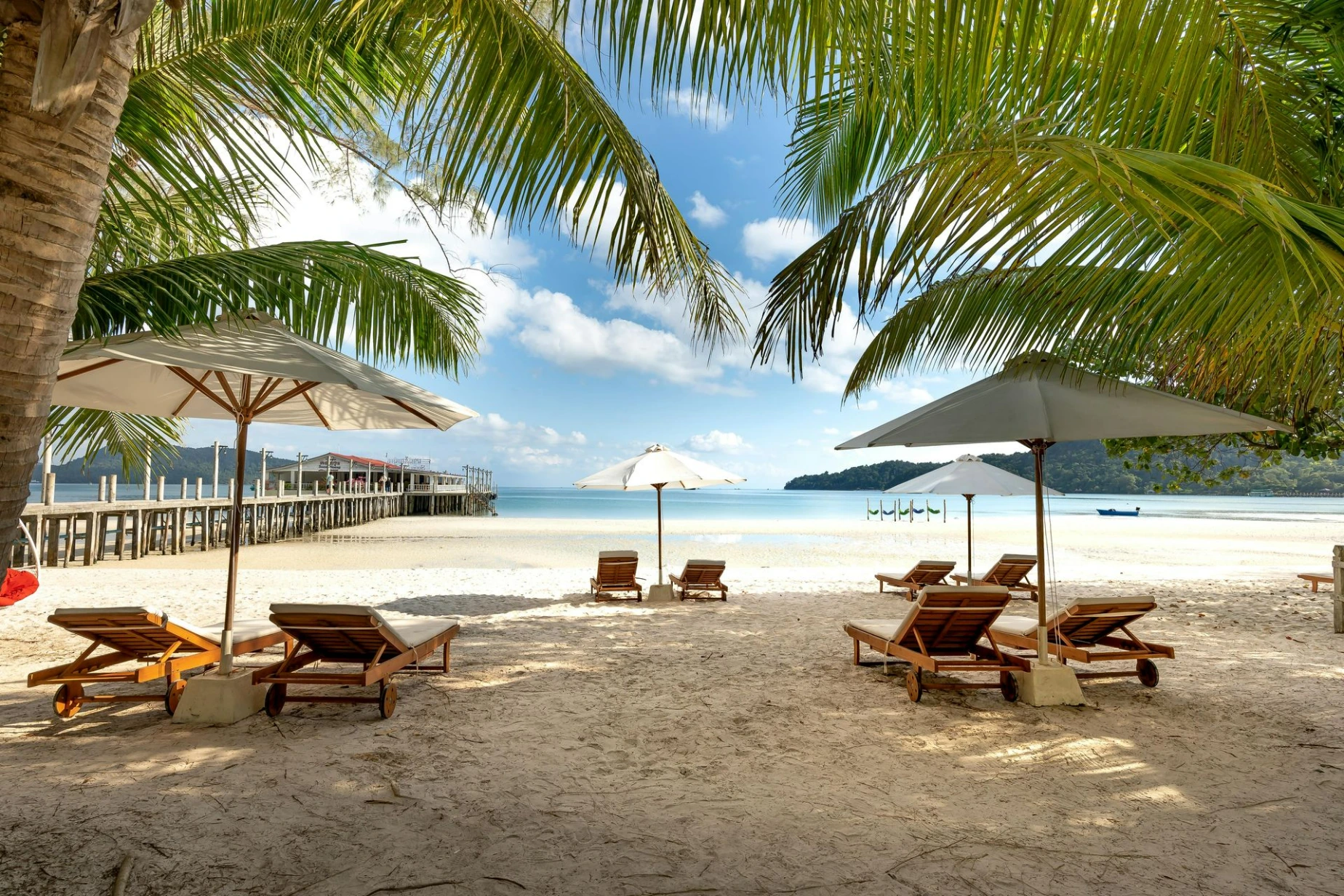
Phuket functions as the operational hub of southern Thailand's luxury travel. It is the entry point for most international arrivals, the base for Phang Nga Bay charters, and the destination with the broadest spectrum of luxury options across hotels, private villas, beach clubs, and fine dining. Travelers who want access to multiple experiences within a single base will find Phuket the most efficient choice.
Many travelers structure at least one day around a Phang Nga Bay or island charter, and Phuket's position as the regional hub makes this straightforward to arrange. The must-visit places in Phuket guide covers the best day charter configurations, departure points, and timing for accessing Phang Nga Bay and surrounding islands with full control over routing. This is one of the clearest advantages Phuket holds as a base.
It is also the right choice for travelers who prioritize flight options. Phuket International Airport (HKT) offers direct service to major European, Middle Eastern, and Asian hubs, making it the most accessible of the three destinations for long-haul itineraries.
Luxury Beach and Villa Landscape
Phuket's luxury geography is concentrated on the west coast. Bang Tao and Surin beaches anchor the premium residential and resort zone in the north, with properties such as Amanpuri and Trisara positioned here for maximum privacy relative to the island's more developed southern beaches. Natai, a 10-kilometer stretch of coastline north of Phuket in Phang Nga province, offers arguably the lowest beach density along the entire Andaman coast within road-access distance of Phuket Airport.
Patong and Kata beaches are located in the middle and southern sections of the west coast. They offer infrastructure but not seclusion. Travelers expecting both should understand that in Phuket, these are found in different zones, not the same beach.
Before confirming a beach zone or villa location, review the guide to must-visit places in Phuket for luxury travelers , which covers each area by experience type and access structure.
Access, Airport, and Transfer Logistics
Phuket International Airport sits in the north of the island, approximately 45 minutes from Bang Tao by road and 90 minutes from the southern beaches during peak-season traffic. Private airport transfers are the standard for villa and resort guests and should be arranged in advance, particularly during the November to April high season when demand is concentrated.
For travelers whose routing requires a decision about which Thai airport to enter, the Thailand airports guide covers the operational differences among HKT, Krabi Airport (KBV), and Samui Airport (USM) in detail.
Trade-offs and Limitations
Phuket is the most developed of the three destinations, and development density is a legitimate planning constraint at several beaches. Patong carries the highest visitor volume on the island. Kamala and Kata have improved significantly in positioning but remain accessible to large-group tourism. Bang Tao and Surin are meaningfully quieter, but not private in the way that Railay or a private island in Phang Nga Bay would be.
Travelers arriving in Phuket expecting the raw, low-footprint environment of Krabi's island coastline will find the comparison unfavorable. The destinations are structurally different, not simply different in degree.
Where Phuket Fits in a Broader Thailand Itinerary
Phuket functions most effectively as either the first or last leg of a longer Andaman itinerary. Its airport access and transport infrastructure make it the logical base for reaching Krabi, Koh Yao Noi, or the Similan Islands. It also pairs well with Bangkok as a two-destination trip, particularly for travelers on a seven- to ten-night schedule.
For a structured approach to building this kind of itinerary, the 2-week luxury private itinerary in Thailand details the routing logic, day allocations, and booking sequence.
Krabi: Scenery, Seclusion, and Andaman Island Access
Who Krabi Suits
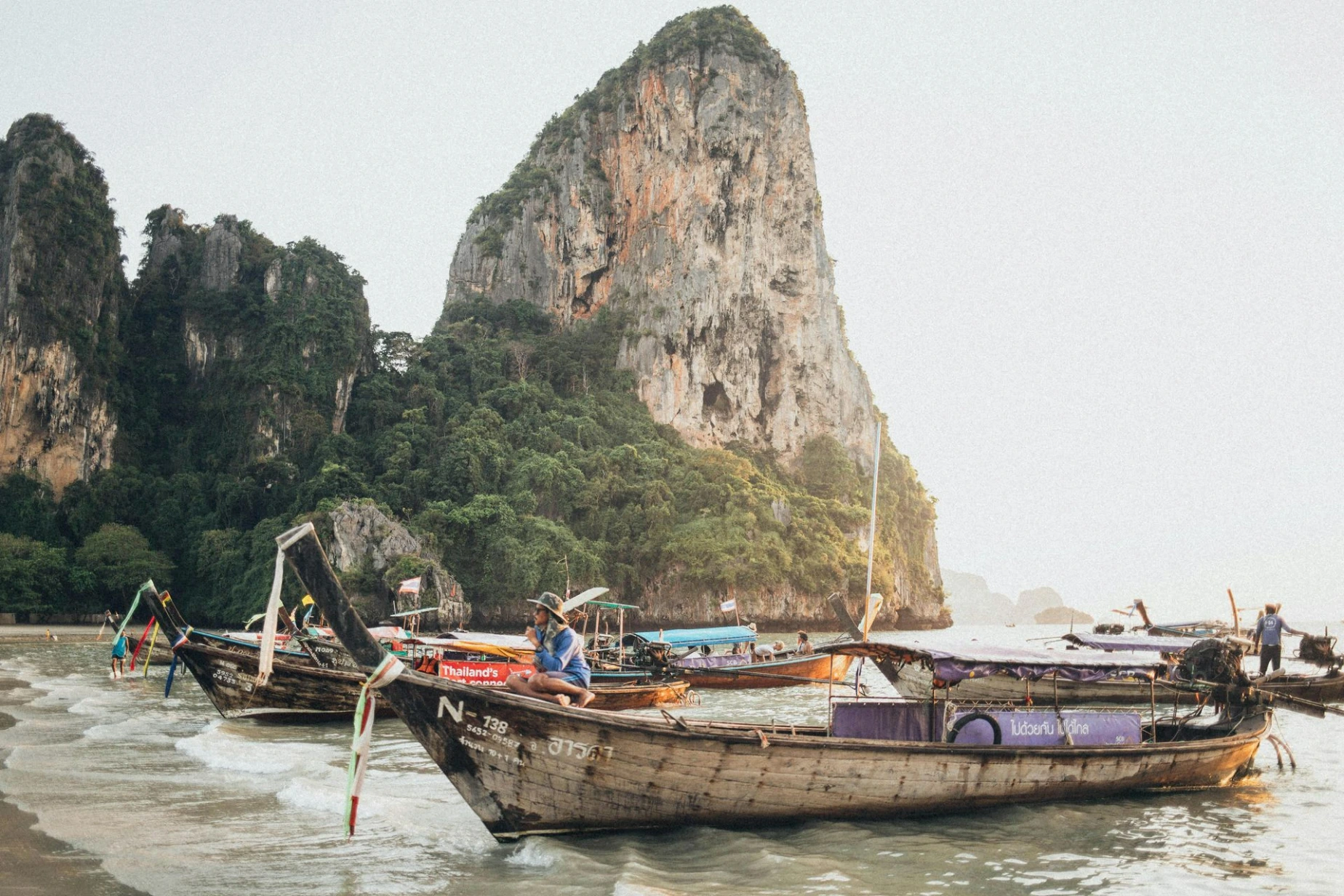
Krabi is the correct choice when the visual landscape is the primary consideration. The province encompasses Railay Beach, accessible only by boat; the karst island formations of Phang Nga Bay's southern reach; Koh Lanta; and the departure point for the Trang and Koh Lipe island chains farther south. Travelers who want to be on or near the water rather than in a resort with a sea view will find Krabi structurally better positioned than Phuket.
It is also the right destination for travelers building an island-hopping itinerary across the Andaman chain. The range of islands accessible within a one- to two-hour boat ride from Krabi is broader than that reachable from Phuket's southern tip. This becomes clearer when viewed in the context of a full Krabi luxury travel guide, where access defines the experience more than the property itself. Privacy in Phuket is largely villa-dependent, while in Krabi it is often geography-driven: the destination's boat-access structure filters visitor volume before a booking is even made.
Luxury Options: Railay, Koh Lanta, and the Resort Tier
Krabi's luxury accommodation is boutique-led rather than brand-concentrated. Rayavadee at Railay remains the definitive luxury property in the province, occupying a coconut grove between Railay West and Phra Nang Beach with no road access from either direction. Koh Lanta's northern coast has developed a credible mid-to-upper luxury tier over the past decade. Beyond these areas, the options thin considerably compared to Phuket's density of five-star properties.
For a detailed comparison of Krabi's beach and coastline quality with Phuket's, the luxury beaches in Phuket and Krabi guide breaks down each zone by privacy level, scenery, and access.
Access Structure: Krabi Airport, Ferry Logistics, and Pier Timing
Krabi Airport (KBV) operates domestic routes from Bangkok and a limited number of international services, primarily from Singapore, Kuala Lumpur, and Chinese gateway cities. Travelers arriving from Europe or the Middle East will typically route through Bangkok (BKK or DMK) or connect via Phuket. The road transfer from Phuket Airport to Ao Nang takes approximately 2.5 to 3 hours, depending on the route and traffic.
Access to Railay Beach from Ao Nang involves a 15-minute longtail boat transfer from Ao Nang pier or Krabi Town pier. This is a fixed logistical constraint regardless of the traveler's budget. Luggage volume, weather conditions, and tide levels affect boarding comfort. These are not inconveniences that can be engineered away with a premium booking.
For travelers moving between the two Andaman destinations, the Phuket to Krabi private transfer guide covers speedboat, van, helicopter, and flight options, with timing, cost estimates, and operational notes for each route.
Trade-offs and Limitations
Ao Nang is a staging point, not a beach destination. It provides services, restaurants, and pier access. Travelers who book in Ao Nang expecting beach quality comparable to Railay or Phuket's west coast will be disappointed. This is the single most common planning misalignment in Krabi.
Krabi's logistics overhead is real. Moving with luggage between mainland Krabi and Railay, or between Railay and the offshore islands, requires planning around tide windows, weather conditions, and pier departure times. This is manageable but not frictionless.
Where Krabi Fits in a Broader Thailand Itinerary
Krabi pairs naturally with Phuket as a two-destination Andaman itinerary, with Koh Yao Noi as a logical mid-point between the two. The island sits at the center of Phang Nga Bay, equidistant from both provinces, and offers one of the quietest high-end experiences on the Andaman coast.
For travelers who want to understand what Koh Yao Noi offers in this routing context, the Koh Yao Noi luxury travel guide covers access, accommodation, and how it fits into a Phuket-to-Krabi itinerary.
Koh Samui: Resort Immersion and Gulf-Side Ease
Who Koh Samui Suits
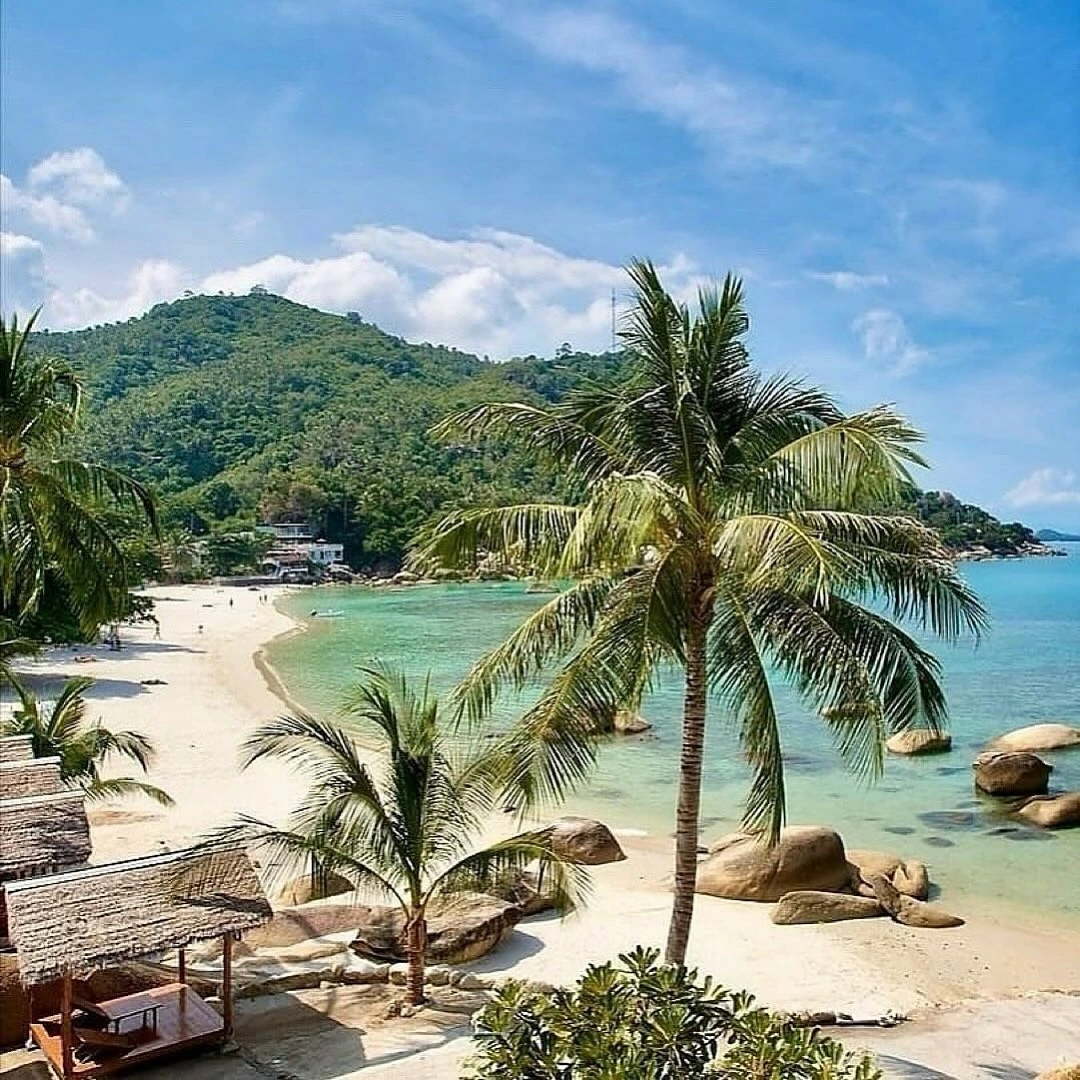
Koh Samui is the right destination for travelers who want a polished, resort-anchored experience with minimal logistical management. It is a self-contained island with a functioning airport, a concentration of high-quality properties along its northern and northeastern coasts, and well-established infrastructure for villa rentals, spa itineraries, and private dining. It does not require boat connections to reach the primary luxury experiences.
It is also the most practical choice for travelers whose itinerary window falls between May and August, when the Andaman coast (Phuket and Krabi) enters monsoon season. The Gulf of Thailand coast follows a different weather pattern, with Koh Samui's best conditions running from December through August and a shorter monsoon period concentrated in October and November.
Luxury Resort Concentration
The north and northeast coastlines, from Maenam through Choeng Mon and around to Chaweng Noi, represent Koh Samui's primary luxury corridor. Properties here include Four Seasons Resort Koh Samui at Choeng Mon, Vana Belle on the Chaweng Noi headland, and a range of independent luxury villas with private pools and sea-view configurations. The interior of the island is hilly and largely undeveloped, functioning as a backdrop rather than an accessible landscape feature.
The east coast at Chaweng Beach carries the island's highest visitor density. Travelers seeking seclusion should focus on Choeng Mon, Maenam, or the west coast, where the experience is quieter and villa availability is generally higher.
Access: Samui Airport, Bangkok Airways Pricing, and Helicopter Options
Samui Airport (USM) is a private airport operated under the Bangkok Airways concession. This structure limits competition on routes, resulting in airfares consistently higher than on equivalent routes to Phuket or Krabi. Travelers arriving from Bangkok should expect to pay a premium over the Phuket or Krabi equivalent, particularly in high season.
Alternative access routes include the Surat Thani ferry combination from Bangkok via overnight train or flight to Surat Thani, followed by a one-hour high-speed catamaran to Koh Samui's Nathon Pier. For travelers already on the Gulf coast, the Koh Samui-to-Hua Hin private transfer route demonstrates how the island connects to broader Gulf itineraries. The Koh Samui to Hua Hin private transfer guide covers all routing options in full.
Trade-offs and Limitations
Koh Samui's weakness is its landscape. The island is scenic, with palm-covered hills and curved bays, but it does not offer the dramatic natural environment of Krabi's karst formations or the archipelago access of the Andaman coast. Travelers who arrive expecting Phang Nga Bay-style scenery will find the Gulf of Thailand coast a different proposition entirely.
The Bangkok Airways pricing structure at Samui Airport is a fixed cost that affects most international travelers. Budget accordingly when comparing total trip costs across the three destinations.
Gulf of Thailand Seasonality: How It Differs from the Andaman
This is the most operationally important distinction between Koh Samui and the other two destinations. The Andaman coast and the Gulf of Thailand coast follow opposite monsoon patterns. When Phuket and Krabi are in peak season (November to April), Koh Samui is entering its own high season from December onward. When the Andaman enters monsoon from May onward, the Gulf coast remains largely stable through August.
This seasonal offset is strategically useful for travelers planning between May and August who still want a high-quality Thai beach experience. It is also a critical factor to understand when building multi-destination itineraries that combine both coastlines.
Seasonal Comparison: When to Go and Why It Matters
Andaman Coast Season (Phuket and Krabi): November to April
The Andaman coast's peak season runs from November through April, with December to February representing the most stable and desirable conditions. Seas are calm, visibility for diving and snorkeling is at its best, and the karst island formations around Phang Nga Bay and Koh Phi Phi are fully accessible for day charters and overnight trips. March and April remain good months, progressively warmer, with the shoulder season bringing lighter crowds and lower accommodation rates.
May through October is the southwest monsoon period on the Andaman coast. Conditions vary significantly by month and by specific location. Phuket's north coast, including Bang Tao and Surin, typically fares better during the shoulder monsoon months than the south. Krabi and the offshore islands are more severely affected, with some boat services suspended and access to Railay Beach occasionally interrupted during peak storm periods.
The Tourism Authority of Thailand notes that the Andaman and Gulf coasts follow opposing monsoon systems, making the seasonal timing of your destination choice one of the most consequential planning variables for any southern Thailand itinerary.
Gulf of Thailand Season (Koh Samui): December to August
Koh Samui's reliable high season runs from December through August, with January through April representing the optimal window. The island's monsoon period is concentrated in October and November, driven by the northeast monsoon rather than the southwest monsoon that affects the Andaman Islands. September also brings increased rainfall and reduced sea conditions.
The practical implication: a Thailand beach trip planned for June or July is better served by Koh Samui than by Phuket or Krabi, where conditions in those months are unpredictable, and some infrastructure operates on a reduced schedule.
Monthly Summary by Destination
| Month | Phuket | Krabi | Koh Samui |
|---|---|---|---|
| November | Good (early season) | Good (early season) | Monsoon (avoid) |
| December | Excellent | Excellent | Good (early season) |
| January to March | Peak (best conditions) | Peak (best conditions) | Excellent |
| April | Good (warming) | Good (warming) | Excellent |
| May to June | Monsoon (variable) | Monsoon (variable) | Good |
| July to August | Monsoon (reduced ops) | Monsoon (reduced ops) | Good to excellent |
| September to October | Monsoon | Monsoon | Variable to poor |
Combining Two or All Three Destinations
Phuket and Krabi: The Logical Andaman Pair
Phuket and Krabi represent the most natural two-destination combination within this comparison. Both sit on the Andaman coast, share the same peak season, and are connected by a well-established transfer network covering speedboat, van, and private flight options. A well-structured seven- to ten-night itinerary can include three to four nights in each destination, with one travel day between destinations.
The transfer between the two destinations should be confirmed before booking accommodation, as the route and timing affect which beaches and piers are most practical to base from. The Krabi to Phuket private transfer comparison covers all options, including time, cost, and operational notes, for both directions.
Suggested routing: Phuket (3 nights, Bang Tao or Surin) > Koh Yao Noi (2 nights, Phang Nga Bay) > Krabi (3 nights, Railay or Koh Lanta)
Adding Koh Samui: When It Works and When It Adds Friction
Adding Koh Samui to an Andaman itinerary introduces a coastline switch that requires a domestic flight connection and a seasonal compatibility check. The combination works well when the travel window spans both coasts' high seasons (December to April) and when the traveler has at least 10 to 12 nights available. Fewer nights than this and the movement between coastlines consumes a disproportionate share of the trip.
The most logical routing for a three-destination itinerary is Bangkok > Koh Samui (Gulf coast) > Phuket or Krabi (Andaman coast), via a domestic flight from Samui Airport. This sequencing uses the country's geographic logic rather than working against it.
Minimum Day Allocations
- Phuket: 3 nights minimum. 4 to 5 nights is optimal if including a Phang Nga Bay day charter.
- Krabi (Railay base): minimum 3 nights. 4 nights if including Koh Lanta or offshore islands.
- Koh Samui: 3 nights minimum. 5 nights are optimal for a resort-immersion itinerary.
- Koh Yao Noi (as Phuket-Krabi midpoint): 2 nights.
Beyond the Three: What Most Thailand Itineraries Miss
The Phuket, Krabi, and Koh Samui shortlist represents the high-volume luxury circuit. It is well-structured, well-serviced, and suitable for most first- and second-time visitors to southern Thailand. It is not the complete picture.
Koh Yao Noi in Phang Nga Bay, Khao Sok National Park in the interior, and the Trang Islands to the south of Krabi each offer experiences that fall outside the standard circuit and, in several cases, deliver a higher privacy quotient than the destinations named above. For travelers open to destinations beyond this shortlist, the luxury Thailand travel experiences and hidden gems guide covers what lies beyond the standard circuit and how to access them.
Sample Itineraries
Phuket and Krabi: 8 Nights
| Days | Location | Key Experiences |
|---|---|---|
| Days 1 to 3 | Phuket west coast (Bang Tao or Surin) | Arrival, villa or resort check-in, Phang Nga Bay day charter from Ao Po Grand Marina, Surin Beach sunset |
| Transfer day (Day 4) | Phuket to Koh Yao Noi | Private speedboat transfer via Ao Po Grand Marina, approximately 45 minutes |
| Days 4 to 5 | Koh Yao Noi | Phang Nga Bay at low tide, kayaking through mangroves, resort immersion, no crowds |
| Transfer day (Day 6) | Koh Yao Noi to Krabi | Speedboat to Rassada Pier or Ao Nang, 45 to 60 minutes |
| Days 6 to 8 | Krabi: Railay or Koh Lanta | Railay West Beach, Phra Nang Beach cave, private longtail to the Four Islands, sunset from the cliff viewpoint |
Booking notes: Rayavadee at Railay and the Six Senses properties on Koh Yao Noi book 90 to 120 days in advance during peak season (December to February). Confirm speedboat charters and villa bookings before finalizing flight routing.
Bangkok and Koh Samui: 7 Nights
| Days | Location | Key Experiences |
|---|---|---|
| Days 1 to 2 | Bangkok | Arrival, Chao Phraya riverside, private city orientation |
| Transfer (Day 3) | Bangkok to Koh Samui | Bangkok Airways direct from Suvarnabhumi (BKK) to Samui (USM), approximately 70 minutes. |
| Days 3 to 7 | Koh Samui (Choeng Mon or Maenam) | Four Seasons or private villa, private longtail to Koh Nang Yuan, Ang Thong Marine Park day trip, spa schedule |
Booking notes: Bangkok Airways fares on the BKK-USM route peak in December and January. Book at least 60 days in advance for competitive pricing. The Ang Thong Marine Park day trip requires a full day and is best positioned mid-stay rather than on the first or last day.
A note on timing: If you are building a private Thailand coast itinerary, the transfer logistics between destinations are as consequential as the destination choice itself. Villas at Railay and the key properties on Koh Yao Noi operate at close to full occupancy during peak season from December through February. The experience that remains bookable in January is rarely the one you intended to secure in October. Confirm your villa, your primary transfer, and your key charter before finalizing any other element of the itinerary. Plan your luxury Thailand itinerary with Southeast Asia Simplified before the peak season window closes.
Who This Is Not For: Setting Honest Expectations
Choosing Phuket while expecting the seclusion of a remote island will inevitably lead to disappointment. Phuket's west coast beaches, even the quieter ones, operate within a developed resort environment. The privacy available in Phuket is villa-sourced and beach-zone-specific, not endemic to the destination.
Choosing Krabi while expecting Phuket-level convenience introduces logistical friction that is not always compatible with a relaxed itinerary. Boat transfers, tide-dependent access, and the gap between Ao Nang's infrastructure and the beaches it serves can feel burdensome to travelers who were not adequately informed at the planning stage.
Choosing Koh Samui while expecting raw, undeveloped scenery comparable to that of Phang Nga Bay or the Trang Islands will lead to a fundamental mismatch. Koh Samui is refined and well-served. It is not wild.
Choosing Phi Phi Islands as a residential base rather than a day-trip destination from Phuket or Krabi is one of the more common planning errors on the Andaman circuit. Phi Phi Don's infrastructure is modest, the visitor volume is high relative to the island's size, and the nights can be considerably noisier than the scenery suggests. The experience is significantly stronger as a day charter rather than an overnight stay. Travelers planning to reach Phi Phi from Bangkok should note that the Bangkok to Phi Phi Islands private transfer typically involves a flight to Phuket followed by a speedboat connection, adding an extra layer of coordination that makes it less practical as a standalone destination and more logical as part of a Phuket-based itinerary. The luxury villas Phi Phi Islands guide covers what is realistically available there and whether the trade-off structure fits a luxury itinerary.
Planning Help: Structuring the Right Thailand Coast Trip
The most common planning error in southern Thailand is sequencing bookings in the wrong order. Most travelers lock in flights first, then search for accommodation, and then consider transfers. The correct sequence runs in reverse.
Start with the experience that has the tightest availability window. For a Phuket and Krabi itinerary in peak season (December to February), that is the Railay property or the Koh Yao Noi villa. These books are 90 to 120 days in advance. For a Koh Samui itinerary, the Four Seasons at Choeng Mon and comparable properties are typically booked 60 to 90 days out from January to April.
Once the anchor property is confirmed, build the transfer structure around it. Private speedboat charters between Phuket and Krabi run approximately 3,500 to 7,000 THB per boat (roughly USD 95 to 190) for a point-to-point transfer, depending on vessel type and route. Helicopter transfers between the two provinces range from approximately USD 800 to 1,500 per flight. Van transfers via the Andaman coastal road take 2.5 to 3 hours and cost approximately USD 60 to 120 for a private vehicle.
Luxury villa pricing varies considerably by specification. Entry-level private pool villas in Phuket's Bang Tao zone typically start at USD 400-600 per night. Upper-tier villas with full staff and sea views run from USD 1,500 to 3,500 per night in high season. Krabi's villa inventory is thinner, with Railay Beach accommodation skewing toward resort rather than standalone villa. Koh Samui's villa market is well-developed along the north coast, with pricing comparable to Phuket's mid-to-upper-tier.
Flights are the most flexible element of any itinerary and should be confirmed last, once the property and transfer structure are fixed.
Frequently Asked Questions
Phuket vs Krabi vs Koh Samui: which is best for luxury travelers?
The answer depends on three factors: travel window, logistics tolerance, and whether you are prioritizing infrastructure or landscape. The direct breakdown is as follows:
- Choose Phuket for the widest range of luxury options, international access, and itinerary flexibility.
- Choose Krabi for its dramatic scenery, karst coastline, and access to the Andaman Islands.
- Choose Koh Samui for resort immersion, minimal logistics, and Gulf-side seasonality from May to August.
No single destination is objectively best. Each is best for a specific traveler profile.
What is the main difference between Phuket and Krabi?
Phuket is a developed island with an international airport, a broad luxury hotel market, and road access to all beaches. Krabi is a province centered on a boat-access coastline, karst island formations, and a boutique-led luxury tier. Phuket optimizes for convenience and variety. Krabi optimizes for scenery and seclusion. They are structurally different destinations, not simply different in scale.
Is Koh Samui worth visiting compared to Phuket?
Yes, under specific conditions. Koh Samui is the stronger choice in these three situations:
- Travel between May and August, when the Andaman coast is in monsoon season.
- Preference for a self-contained resort experience without having to manage boat logistics or island transfers.
- An itinerary that combines a Bangkok stopover with a Gulf Coast beach leg.
For most long-haul travelers arriving between November and April, Phuket offers more variety and easier access at a comparable level of luxury.
Can you visit Phuket, Krabi, and Koh Samui in one trip?
Yes, but it requires a minimum of ten to twelve nights and careful routing. The most practical sequence is: arrive in Bangkok, fly to Koh Samui (Gulf coast), then fly to Phuket (Andaman coast), with Krabi accessible as a second Andaman stop via private transfer. Attempting all three in fewer than ten nights results in a movement-heavy itinerary where travel logistics consume a disproportionate share of available days.
Phuket vs Krabi vs Koh Samui: which has the best beaches?
Krabi holds the highest scenic quality of the three. Railay West, Phra Nang Beach, and the accessible offshore islands offer a level of visual drama that neither Phuket nor Koh Samui matches. Phuket's best beaches (Surin, Bang Tao, Natai) offer cleanliness and high-standard infrastructure, but lack the raw karst landscape of Krabi. Koh Samui's beaches are pleasant and well-maintained, particularly at Choeng Mon and Maenam, but do not reach the scenic threshold of the Andaman coast. Beach quality is not the only variable: access structure, crowd density, and seasonal conditions all affect the actual experience.
When is the best time to visit Phuket vs Koh Samui?
The best time to visit Phuket is November to April, with December through February representing peak conditions. The best time to visit Koh Samui is December to August, with January through April representing optimal conditions. The key practical difference: travelers planning for May through August should default to Koh Samui rather than Phuket, as the Andaman coast operates at reduced capacity during the southwest monsoon.
Ready to build a private Thailand itinerary aligned with how you actually travel? Plan your luxury Thailand itinerary with Southeast Asia Simplified.
Conclusion: Which Destination Fits How You Travel
The Phuket vs Krabi vs Koh Samui question does not have a universal answer, but it does have a precise one once the traveler's priorities are defined. The Phuket vs Krabi vs Koh Samui decision becomes straightforward once those priorities are clear. Phuket functions as the infrastructure destination. It is broad, well-connected, and capable of supporting almost any type of itinerary. Krabi functions as a landscape destination. It is boat-dependent, scenery-led, and most rewarding for travelers willing to manage the associated logistics. Koh Samui functions as the easiest destination. It is resort-concentrated, Gulf-facing, and optimal for travelers whose window sits outside the Andaman high season or who simply want fewer decisions to make.
None of the three destinations delivers what the others offer. The planning decision is not about finding the best option. It is about identifying which destination is structurally aligned with the way you intend to travel.
Thailand has always rewarded travelers who understand the difference between those two questions.