Most Phi Phi Islands experiences are built around the same four stops. The problem is not the stops. It is the timing, the access method, and the assumption that Phi Phi works best as a day trip from Phuket or Krabi.
That assumption is how most travelers end up sharing a turquoise lagoon with 300 strangers at 10 a.m., wondering what the fuss was about.
Phi Phi's rewards structure. It punishes improvisation. The version of these islands worth having is entirely accessible, but only if you understand how the crowds move, when the ferries arrive, and why where you sleep changes everything about what you can see.
This guide is built around that operational understanding.
The Short Answer: What Makes Phi Phi Islands Experiences Worth It
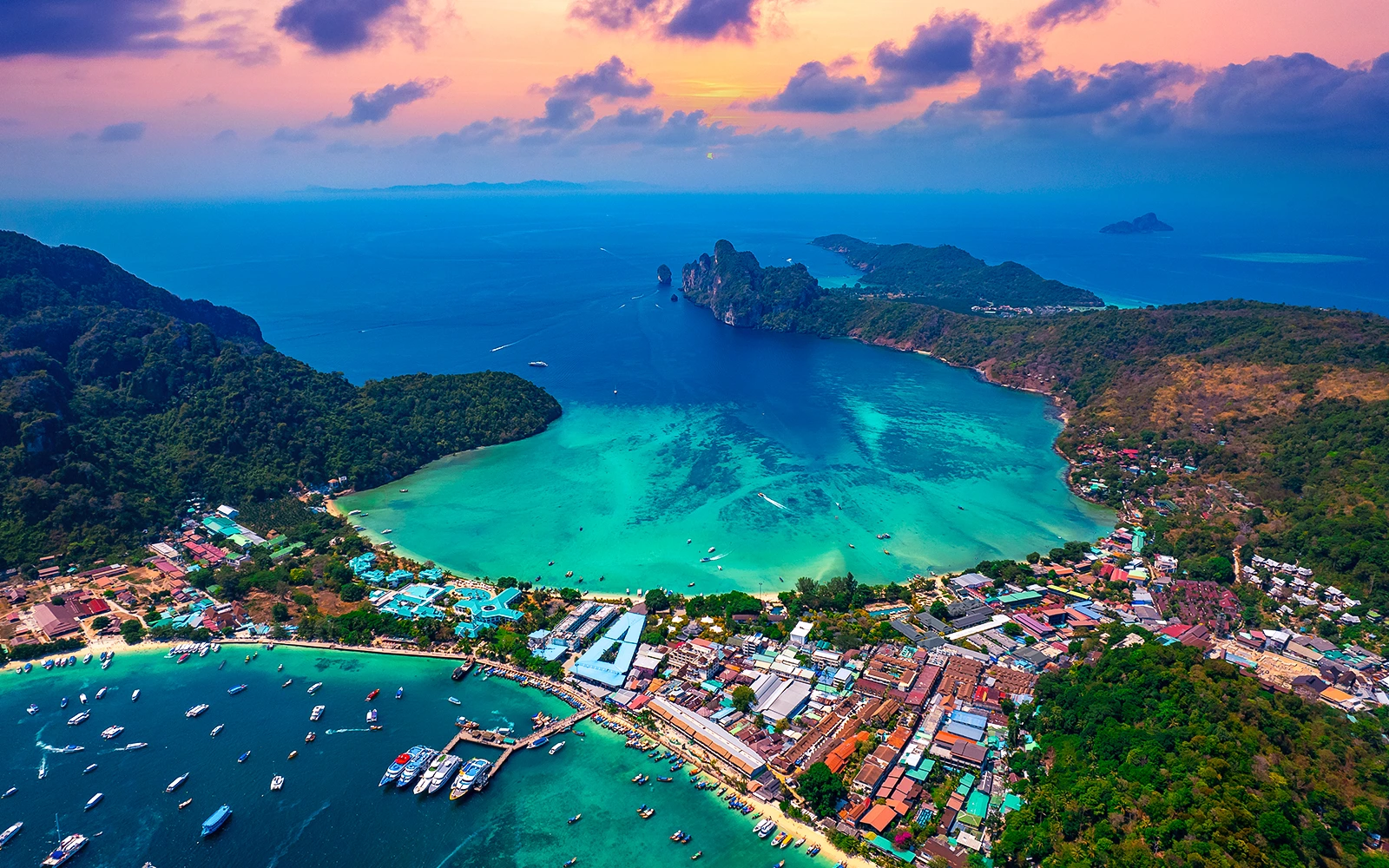
The best Phi Phi Islands experiences are not found on group day tours. They are accessed through private longtail or speedboat charters departing before 7 a.m., timed to arrive at Maya Bay and Pileh Lagoon before the ferry crowds that begin arriving at Ton Sai Bay from 9 a.m. onward.
The geography does not change. The experience changes entirely based on when you arrive and how you move.
Quick Picks: Best Experiences by Category
- Best for privacy: Sunrise charter to Maya Bay, departing Phi Phi Don before 6:30 a.m.
- Best for scenery: Pileh Lagoon by private longtail, mid-morning after the first tour groups clear
- Best for snorkeling: Hin Klang reef and Shark Point, outside the 10 a.m. to 2 p.m. peak window
- Best viewpoint: Phi Phi Viewpoint, arriving before 7:30 a.m. or after 4:30 p.m.
- Best overnight base: Zeavola Resort or Phi Phi Island Village Resort, both on the north shore away from Ton Sai
- Best for combining islands: Private speedboat day covering Bamboo Island, Mosquito Island, and Maya Bay in sequence
Day Trip vs. Overnight Stay: At a Glance
Day Trip from Phuket or Krabi | Overnight on Phi Phi Don | |
|---|---|---|
| Crowd exposure | High, 9 a.m. to 4 p.m. | Low, if north shore-based |
| Maya Bay access | Limited by departure timing | Sunrise access by private charter |
| Experience depth | Surface level | Full itinerary control |
| Cost range (est.) | THB 3,500 to 8,000 per person | THB 12,000 to 45,000 per night (resort) |
| Best for | First-time, time-constrained | Couples, privacy-focused travelers |
| Weakness | No early or late access | Requires advance booking, especially Nov to Feb |
Decision Shortcut
Choose a day trip if you are connecting Phi Phi as a single stop within a longer Andaman itinerary and cannot extend your schedule.
Choose an overnight stay if privacy, early water access, and a structured two-day itinerary are your baseline expectations. Anything less and Phi Phi will feel like a logistical inconvenience rather than a destination.
Why Timing Controls Everything on Phi Phi
Phi Phi Don receives the majority of its daily visitors not from overnight guests but from day-trippers arriving on high-speed ferries from Phuket's Rassada Pier and Krabi's Ao Nammao Pier. The first ferries dock at Ton Sai Bay between 9 a.m. and 10 a.m. By 10:30 a.m., the main beach, the pier area, and the primary longtail routes are operating at capacity.
This is not a seasonal problem. It happens year-round during the dry season, which runs from November through April.
The travelers who remember Phi Phi differently are almost always those who moved before 7 a.m. or after 4 p.m.
That two-hour window in the early morning is not a minor advantage. It is the difference between Maya Bay with six boats and Maya Bay with sixty.
The Private Charter Question: Longtail vs. Speedboat
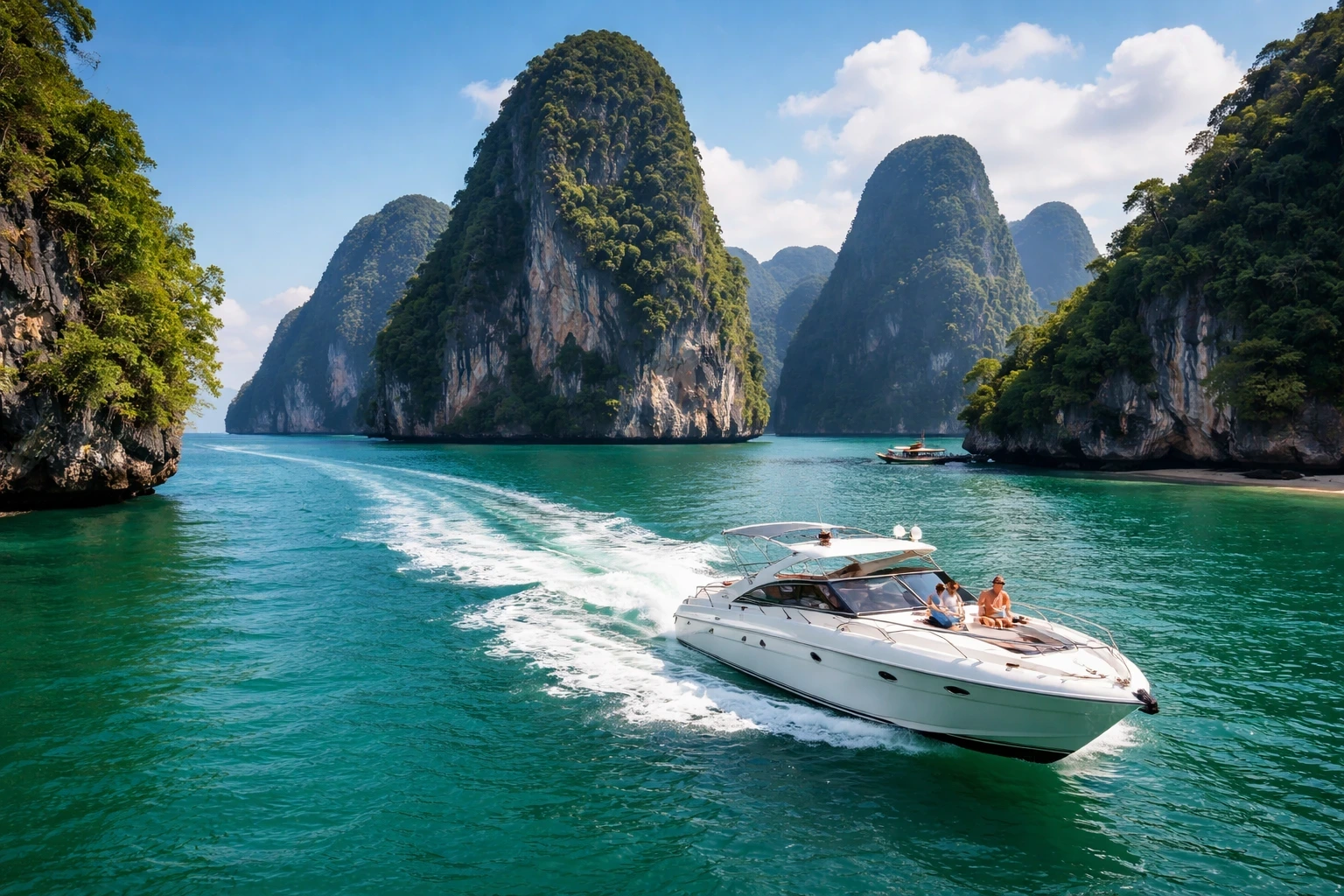
Choosing between a longtail boat and a speedboat is the most consequential practical decision for any Phi Phi Islands experience. They serve different purposes, and neither is universally better.
Longtail boats move slowly, which is the point. They sit lower in the water, cause less wash, and can enter the shallower sections of Pileh Lagoon and the Viking Cave shoreline with greater precision. A private longtail for a half-day charter typically runs THB 2,000 to 3,500 (estimate), depending on duration and the operator. They are the right choice for lagoon access, shallow reef snorkeling, and anyone prioritizing atmosphere over distance covered.
Private speedboats cover more range in less time. A full-day private charter typically runs THB 12,000 to 22,000 (estimate) and allows you to combine Phi Phi Leh, Bamboo Island, Mosquito Island, and Shark Point within a single structured day. In practice, speedboats are the right choice for travelers arriving from Phuket or Krabi on a day excursion, or for those based on Phi Phi Don who want to visit the outer islands.
The key constraint: longtails are not suitable for open-water crossings in choppy conditions. Between May and October, swell from the southwest monsoon makes longtail travel unreliable beyond the protected bays. Speedboats handle these conditions better, though operators will cancel if seas exceed safe limits.
For transfer logistics from the mainland, see the full breakdown of options in the Bangkok to Phi Phi Islands Private Transfer guide before confirming any charter or ferry booking.
Mid-Article Planning Note
If you are deciding between longtail and speedboat based on your itinerary structure, review the Phuket vs Krabi vs Koh Samui comparison guide before locking your mainland base. The wrong departure point limits your Phi Phi access window before you even arrive.
Maya Bay: The Reality, the Restrictions, and the Right Way to See It
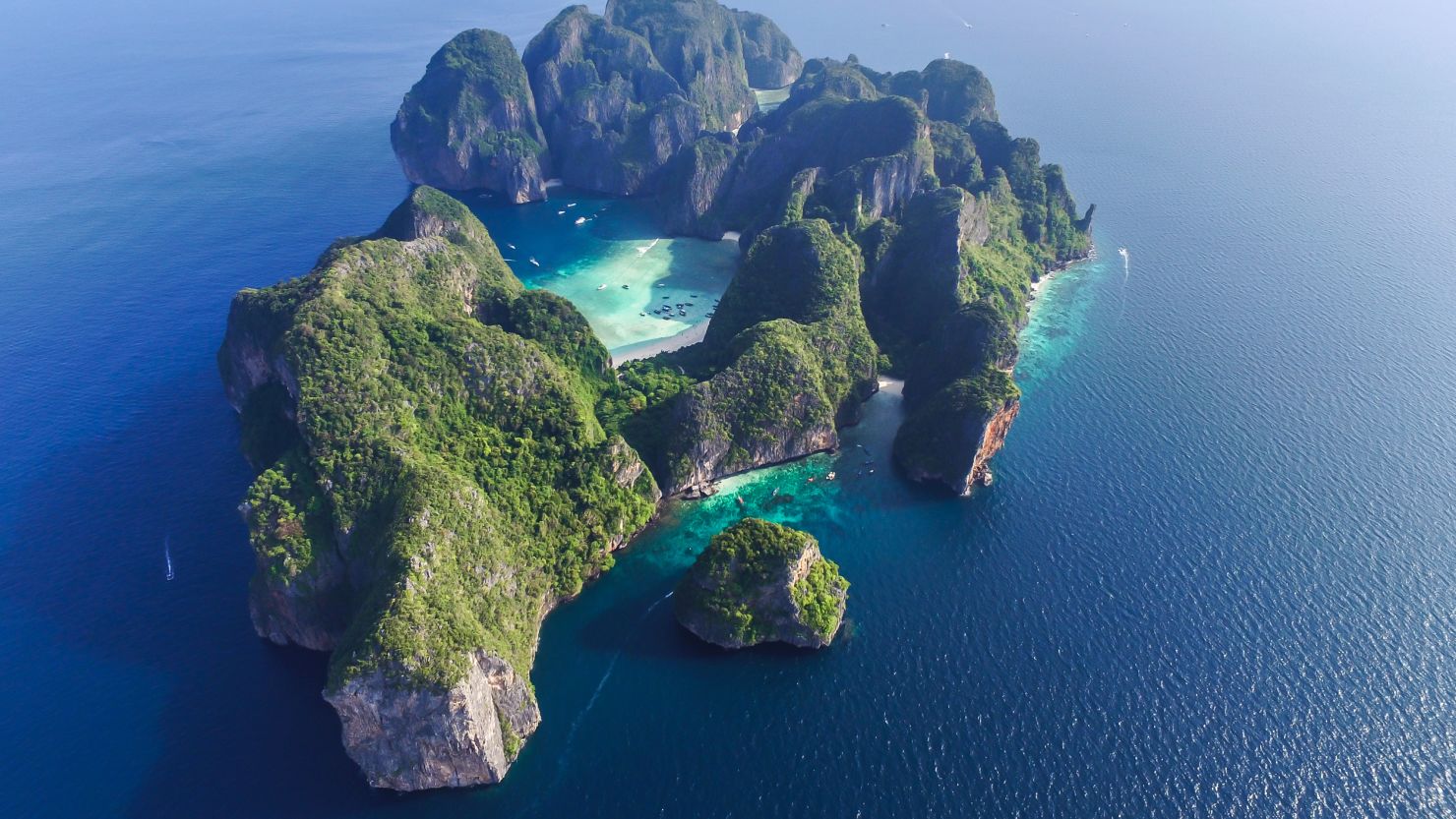
Maya Bay sits on Phi Phi Leh, the uninhabited sister island to Phi Phi Don. It is closed to overnight stays and managed by the Department of National Parks, Wildlife and Plant Conservation, which enforces a daily visitor cap and restricts boat mooring to designated zones.
The bay reopened to visitors in 2022 after a four-year closure for ecological recovery. Current regulations prohibit boats from entering the bay itself. As a result, visitors transfer to a floating platform and swim in. Group tour operators time their arrivals to fit within ferry schedules, which means most groups arrive between 9:30 a.m. and 11:30 a.m.
A private charter departing Phi Phi Don at 6 a.m. reaches Maya Bay before the first group tours. That window, roughly 6:30 a.m. to 8:30 a.m., is when the bay is at its clearest, calmest, and least populated.
Is it worth it in 2026? Yes, with one qualification. The water clarity and the limestone wall scale are genuinely impressive. However, arriving mid-morning on a group tour produces a version of Maya Bay that is difficult to connect with. The early charter version is a different experience entirely.
For current entry regulations and conservation status, refer to the Department of National Parks, Wildlife and Plant Conservation directly before booking.
Phi Phi Viewpoint: Simple, Effective, and Almost Always Done Wrong
The Phi Phi Viewpoint sits approximately 186 meters above sea level on the ridge between the two bays of Phi Phi Don. The climb takes 20 to 30 minutes from Ton Sai, moving through a series of steep concrete steps and uneven rocky paths. It is not technical, but it requires reasonable fitness and proper footwear.
The view across the twin bays, the limestone karsts, and the surrounding Andaman Sea is the clearest visual summary of why Phi Phi's geography is exceptional.
The timing problem is predictable. Most visitors arrive between 8:30 a.m. and 11 a.m., after breakfast and before the heat. At the same time, that window is when the viewpoint platform is at its most congested.
Arrive before 7:30 a.m., and you will have the platform largely to yourself.
The late afternoon window, from 4:30 p.m. onward, offers softer light and significantly fewer people. Sunset from the viewpoint is not reliably visible due to the orientation of the ridge, so the sunrise window is operationally superior for both quality and crowd management.
Where to Stay and Why It Changes Everything
Accommodation on Phi Phi Don divides into two distinct zones: Ton Sai Bay and the north shore. This is not just a geographic distinction. It determines what kind of Phi Phi experience is actually possible.
Ton Sai Bay is the arrival point, the commercial center, and the nightlife area. Staying here places you in the middle of the ferry traffic, the beach bars, and the ambient noise that runs until late. It is not a luxury environment, regardless of which property you select.
The north shore, particularly the Long Beach and Laem Tong Bay areas, operates on a different logic. Zeavola Resort occupies its own headland at Laem Tong, with private beach access, a spa, and a dining environment that does not require leaving the property. Phi Phi Island Village Resort sits along a quieter stretch of the north shore with larger grounds, overwater bungalow options, and structured water sports access without the Ton Sai crowd.
Both properties require advance booking of six to ten weeks for peak season (December to February). Availability inside that window is limited, particularly for the better room categories.
For a full breakdown of where to stay, room categories, and cost ranges, see the Luxury Villas Phi Phi Islands guide before confirming any reservation.
Snorkeling and Marine Experiences: An Honest Assessment
The marine environment around Phi Phi has experienced significant coral bleaching over the past decade, accelerated by the 2010 and 2016 thermal events. However, what this means practically is not that snorkeling is not worth doing. It means you need to know which sites still deliver.
Best snorkeling spots at a glance:
- Hin Klang: Best overall coral coverage, consistent visibility from November through April
- Shark Point (Hin Bida): Highest chance of leopard shark sightings, south side of Phi Phi Leh
- Bamboo Island (Koh Phai): Clearest water, easiest conditions, best before 10 a.m.
The shallow reef snorkeling directly off Maya Bay and Ton Sai is less impressive than it was ten years ago. Expecting Caribbean-standard coral density will lead to disappointment.
Bamboo Island sits roughly 45 minutes by speedboat from Phi Phi Don and offers a wide shallow reef with calmer conditions and better visual clarity than the main island sites.
Visibility ranges from 5 to 15 meters, depending on season and recent weather. The clearest conditions are typically from December through February.
Dining and Downtime: Realistic Expectations
Phi Phi is not a food destination.
This is worth stating clearly before any traveler allocates significant itinerary time to dining in Ton Sai.
The best dining available on the islands is at the north shore resorts. Zeavola's restaurant offers a composed menu drawing on Thai and international influences, served in a beach-adjacent open-air setting that suits the pace of the property. Phi Phi Island Village's dining is competent, well-presented, and better than anything available in the Ton Sai restaurant strip.
Within Ton Sai itself, the options are functional. There are Thai restaurants that produce clean, well-priced food. There is nothing at a level that would justify centering an evening around it.
The practical recommendation: allocate time and money toward water access and accommodation, not restaurants. The experience budget on Phi Phi is better spent on a sunrise charter than on a dinner that will not be the highlight of the trip.
Ideal Itinerary: Two Nights on Phi Phi
| Location | Key Experiences | |
|---|---|---|
| Arrival day | Phi Phi Don, north shore | Private speedboat transfer from Phuket (Rassada Pier) or Krabi (Ao Nammao). Check in to the North Shore Resort. Afternoon longtail to Pileh Lagoon. Sundowner at the resort. |
| Day 2 | Phi Phi Leh and the outer islands | Pre-6:30 a.m. Maya Bay sunrise charter. Viewpoint climb on return (before 8 a.m.). Mid-morning: Bamboo Island or Shark Point by speedboat. Afternoon: north shore beach or spa. |
| Departure day | Transfer | Morning at leisure. Speedboat departure to Phuket or Krabi by 11 a.m. to avoid midday swell. |
Booking notes: Confirm the sunrise charter directly with your resort or a vetted private operator before arrival. Do not book through aggregators for a sunrise departure, as timing reliability and vessel quality vary significantly. North shore resort transfers from the pier should also be arranged in advance, as they operate on scheduled boat shuttles rather than on-demand pickup.
For how Phi Phi fits within a broader southern Thailand trip, see the full structure in the 2 Weeks in Thailand Luxury Private Itinerary, which covers sequencing across Phuket, Phi Phi, and Krabi with transfer timing.
Who These Experiences Are Not For
Travelers expecting consistent seclusion throughout. Phi Phi is not Koh Yao Noi. Outside the early morning window and the north shore properties, the islands carry significant foot traffic during peak season. Privacy is available, but it requires deliberate planning, not luck.
Travelers staying one night without advance booking. A single night, particularly at a north shore resort booked inside six weeks of travel in high season, is either unavailable or limited to inferior room categories. The two-night minimum is not arbitrary. It is the operational minimum for the experience to justify the logistics.
Travelers arriving by public ferry and expecting resort-level access. The public ferry docks at Ton Sai. The experience that begins there is a different category from what is described in this guide. That is not a judgment. It is a structural reality.
Travelers with limited mobility. The Phi Phi Viewpoint climb, longtail boat boarding, and the swim-in entry at Maya Bay all require physical capability that some travelers may not have. The north shore resorts are accessible, but the island's key experiences are not.
Planning Your Phi Phi Islands Experience
The margin for error on Phi Phi is narrow. Boat timing, accommodation zone, and transfer structure all interact. Booking them separately without coordination often removes access to the early morning windows that define the experience.
If your itinerary includes Phuket, Krabi, or Phang Nga, sequence and transfer timing should be confirmed before selecting your Phi Phi base. The mainland departure point is not a minor detail. It determines your earliest possible arrival and, in turn, whether a sunrise charter is operationally viable on your schedule.
For the broader Andaman regional context and how Phi Phi connects to Krabi, Phang Nga Bay, and Phuket within a structured southern itinerary, the Southern Thailand Andaman Coast Travel Guide covers the sequencing decisions that affect every island stop.
If you are serious about getting this right, the sunrise charter, the north shore accommodation, and the mainland transfer are the three variables that determine whether your Phi Phi Islands experience delivers. Each has a limited availability window in peak season.
If you wait to confirm them, you do not get a reduced version of the same trip. You lose access to the only version worth having.
Plan your Phi Phi Islands experience with Southeast Asia Simplified at southeastasiasimplified.com/contact-us.
FAQ: Phi Phi Islands Experiences
What are the best Phi Phi Islands experiences for couples?
The best Phi Phi Islands experiences for couples are: a private sunrise charter to Maya Bay departing before 6:30 a.m., an afternoon longtail circuit through Pileh Lagoon, and two nights at Zeavola Resort or Phi Phi Island Village on the north shore. Couples prioritizing privacy should avoid Ton Sai Bay accommodation entirely and structure all water activities through private charters rather than group tours.
Is Phi Phi worth visiting in 2026?
Yes, with clear conditions attached. Phi Phi is worth visiting if you stay on the north shore, access Maya Bay before group tours arrive, and move by private boat rather than joining group excursions. Visited without those conditions, on a public ferry day trip, arriving mid-morning, the experience is significantly diminished. The islands themselves have not changed. The access structure is what determines value.
What is the difference between Phi Phi Don and Phi Phi Leh?
Phi Phi Don is the inhabited island with accommodation, restaurants, and the main pier at Ton Sai Bay. Phi Phi Leh is uninhabited, managed as a national park, and home to Maya Bay and Pileh Lagoon. You cannot stay on Phi Phi Leh. All visits to Phi Phi Leh are by day boat from Phi Phi Don or directly from the mainland.
What is the best time of year for Phi Phi Islands experiences?
November through April is the primary dry season window, with calmer seas, better snorkeling visibility, and reliable charter conditions. December through February is peak season with the highest prices and tightest accommodation availability. March and April offer drier conditions with slightly lower demand. May through October brings the southwest monsoon: some operators continue running, but conditions are less predictable, and the experience is more variable.
How do I book a private boat charter from Phi Phi?
The most reliable method is to arrange a private charter through your north shore resort before arrival. Both Zeavola and Phi Phi Island Village have in-house or vetted operator relationships. Independent operators also work from the Ton Sai pier, but timing reliability, vessel quality, and English-language communication vary. For a sunrise charter specifically, confirm the departure time, the vessel type, and the operator's wet-weather cancellation policy in writing before arrival.
Can you visit Maya Bay independently?
Technically, yes, but the practical definition of independence differs from what most travelers expect. Visitors cannot enter Maya Bay by private boat without following the DNP mooring protocols. Entry requires transferring to a floating platform and swimming in. There is no walk-in access from a beach path. The advantage of a private charter over a group tour is not rule-free access but timing control: you arrive before group tours and depart before the crowds build. Refer to the Department of National Parks, Wildlife and Plant Conservation for current entry regulations.
Conclusion
Phi Phi Islands experiences a sharp divide between those who plan around the crowds and those who do not. The islands are not hidden. The beaches are not secret. The limestone formations are exactly as striking as the photographs suggest.
However, what changes is the hour you arrive, the vessel you use, and the side of the island where you sleep.
Travelers who approach Phi Phi as a logistical problem to solve, rather than a destination to simply show up at, consistently find a version of these islands that matches what drew them there in the first place. Those who do not remember it differently.
Phi Phi has never been the problem. Only the way you arrive decides what it reveals.