
Phuket has more than 30 beaches across its west and south coasts. The best Phuket beaches are not ranked by quality. They are differentiated by fit.
Surin is not better than Kata Noi. It is better for a different traveler at a different stage of the trip with a different set of priorities. The planning decision is not which beach is best. Which beach matches how you actually travel?
This guide resolves that by traveler type.
The Short Answer: Which Phuket Beach Is Right for You
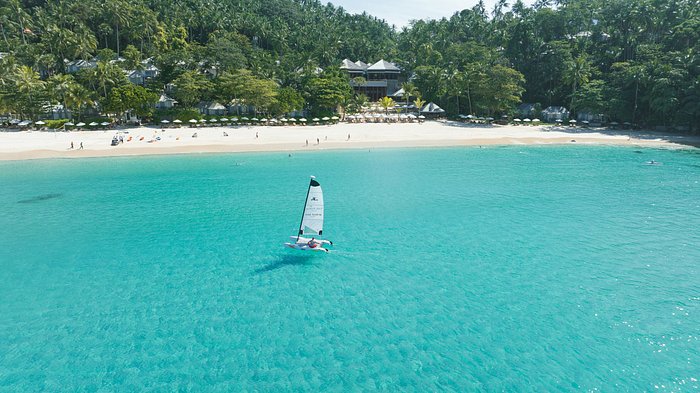
The best Phuket beach depends entirely on how you travel. Couples prioritizing atmosphere and privacy should base themselves at Surin or Laem Singh. Families with children need the calm, shallow water of Kata or Bang Tao. Solo travelers who want ease and low-pressure surroundings will find Kamala or Kata the most practical choice. Privacy-seekers who want genuine separation from resort crowds should look at Nai Harn or Ao Sane. First-time visitors should start at Kamala or Patong and understand what each delivers before committing to a base.
Quick Picks: Best Phuket Beaches by Traveler Type
Traveler Type | Best Beach | Why |
| Couples | Surin Beach | Composed atmosphere, beach clubs, sunset timing |
| Couples (seclusion) | Laem Singh | No vendors, no sunbeds, boat, or trail access only |
| Families | Kata Beach | Calm water, shallow entry, facilities close by |
| Families (space) | Bang Tao Beach | 8km of beach, Laguna resort infrastructure |
| Solo travelers | Kata Beach | Walkable, social without pressure, safe access |
| Solo travelers (calm) | Kamala Beach | Low vendor pressure, easy to decompress |
| Privacy-seekers | Nai Harn Beach | South coast, quieter, less developed |
| Privacy-seekers (extreme) | Ao Sane Beach | Small, rocky, no facilities, crowd-free by design |
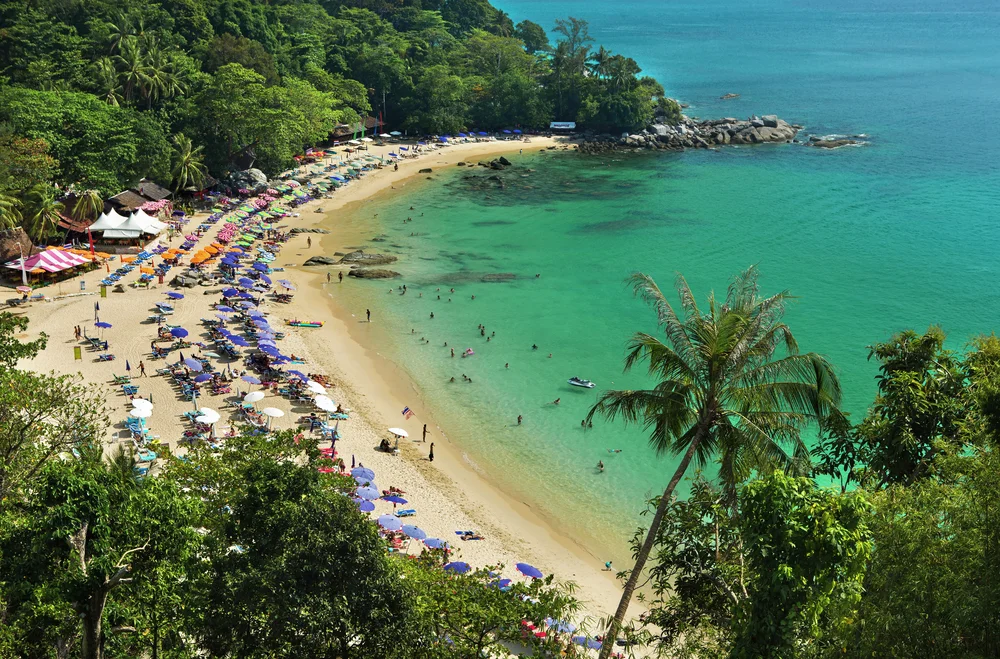
| First-timers | Kamala Beach | Calm, mid-island, less chaotic than Patong |
| First-timers (orientation) | Patong Beach | Understand what it is before deciding it is not for you |
Most travelers do not choose the wrong beach. They chose the wrong base.
Typical Phuket Beach Costs (Quick Reference)
These are estimates based on standard dry season pricing. Costs vary by season, operator, and negotiation.
- Longtail boat to Laem Singh: THB 100 to 200 per person
- Beach club day beds at Surin (Café del Mar, Baba Beach Club): THB 1,500 to 4,000 minimum spend
- Sunbed rental at Kata or Bang Tao, where available: THB 100 to 200 per day
- Taxi between major West Coast beaches: THB 300 to 800 depending on distance and time of day
- Private car between the south coast and the north coast beaches: THB 800 to 1,500 (estimate)
West Coast vs South Coast: At a Glance
| West Coast (Surin to Kata) | South Coast (Nai Harn, Ao Sane) | |
|---|---|---|
| Crowd level | Moderate to high in peak season | Low to moderate |
| Sunset visibility | Yes, direct west-facing | Partial orientation varies |
| Water conditions | Calm Nov to Apr, rough May to Oct | More sheltered, variable by cove |
| Luxury infrastructure | Strong, beach clubs, and resorts | Limited, resort proximity varies |
| Access | Car, taxi, direct road | Longer drive from the airport, fewer taxis |
| Best for | Couples, families, first-timers | Privacy-seekers, experienced visitors |
Decision Shortcut
Choose the West Coast if you want beach club access, resort infrastructure, and direct sunset views between November and April.
Choose the south coast if crowd separation is your primary requirement and you are willing to trade infrastructure convenience for a noticeably quieter environment.
Phuket Beaches for Couples
Surin Beach
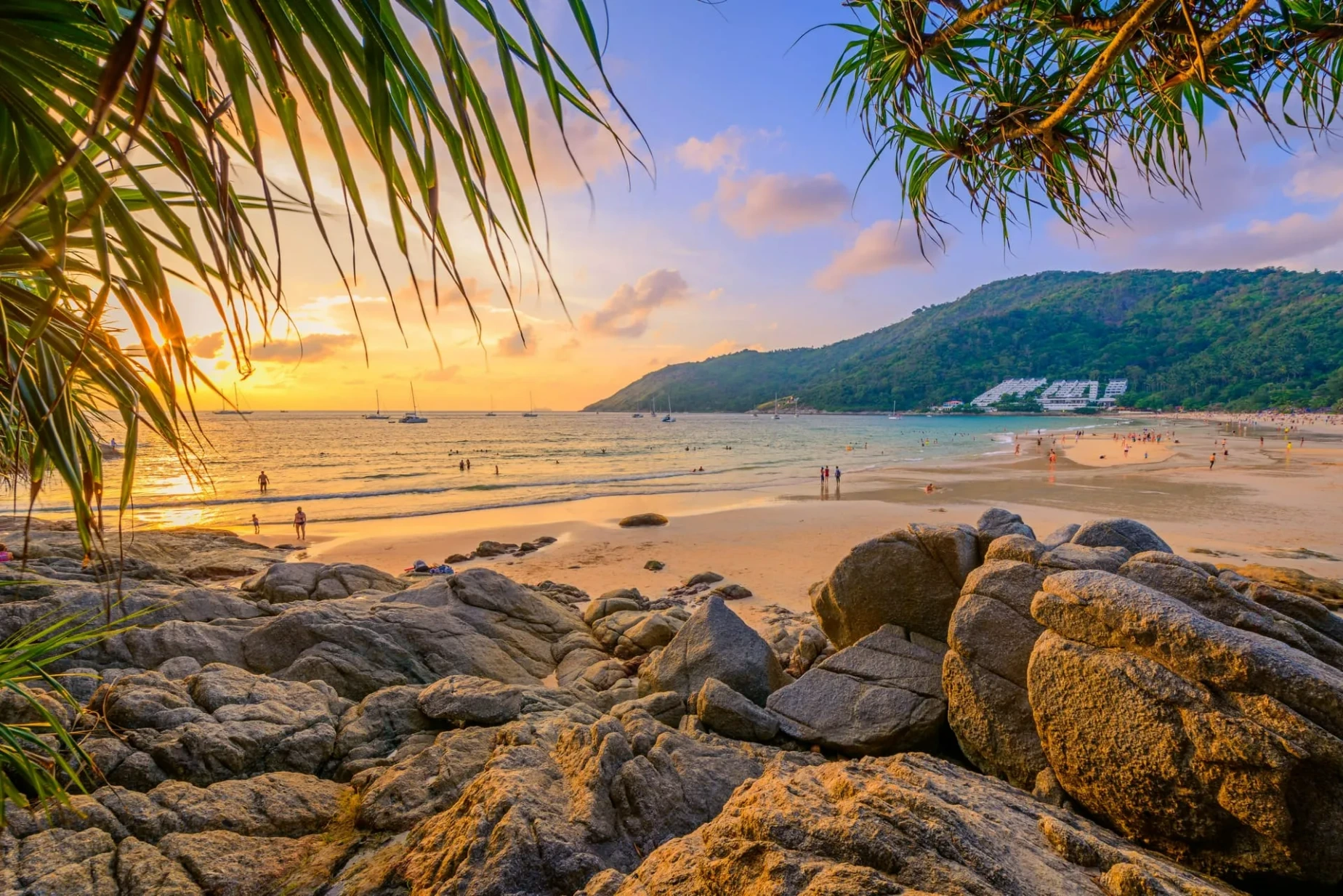
Surin Beach sits on the upper west coast, accessed via Cherng Talay Road, approximately 25 kilometers north of Patong. It is one of the few Phuket beaches where the crowd composition, the beach club infrastructure, and the physical environment align into something that actually suits a couple's itinerary.
The beach is wide and relatively flat, with a consistent sandy bottom and moderate surf between November and February. The water is calm enough for swimming for most of the dry season. However, rip currents develop along the northern end of the bay during periods of high swell, and flag warnings should be observed.
Café del Mar and Baba Beach Club both operate on Surin and represent the best beach club experience available on the island. Neither is aggressively commercial. Both have day-bed options, table service, and an atmosphere calibrated toward composed enjoyment rather than volume.
Honest trade-off: Surin is not secluded. In peak season, December through February, the beach carries a significant crowd by mid-morning. However, it is a composed crowd, and the beach is wide enough that the density feels manageable in a way that Patong does not.
Sunset timing from Surin is reliable from November through March. The beach faces directly west, and the horizon is unobstructed.
Laem Singh Beach
Laem Singh is the most consequential beach on this list for couples who genuinely prioritize separation from resort infrastructure. It sits between Surin and Kamala, accessible either by longtail boat from Surin (approximately THB 100 to 200 per person, estimate) or by a steep trail descent from the road above.
There are no vendors on the beach. There are no sunbeds for hire, no facilities, and no food service. What there is: a small cove framed by granite boulders, calm water in the protected bay, and a crowd that self-selects through the access difficulty.
Laem Singh works best as a half-day stop rather than a full base. Most visitors arrive mid-morning and leave by early afternoon. Arriving before 9 a.m. or after 2 p.m. produces the most private version of the beach.
Honest trade-off: the trail descent is steep and uneven. It is not suitable for travelers with mobility limitations. Boat access resolves this, but adds a logistics step that some couples will find inconvenient.
For a direct comparison of how Phuket's beach landscape positions against Krabi's, see the full breakdown in the Luxury Beaches in Phuket and Krabi: The Complete Comparison Guide before finalizing which Andaman base suits your itinerary.
Phuket Beaches for Families
Kata Beach
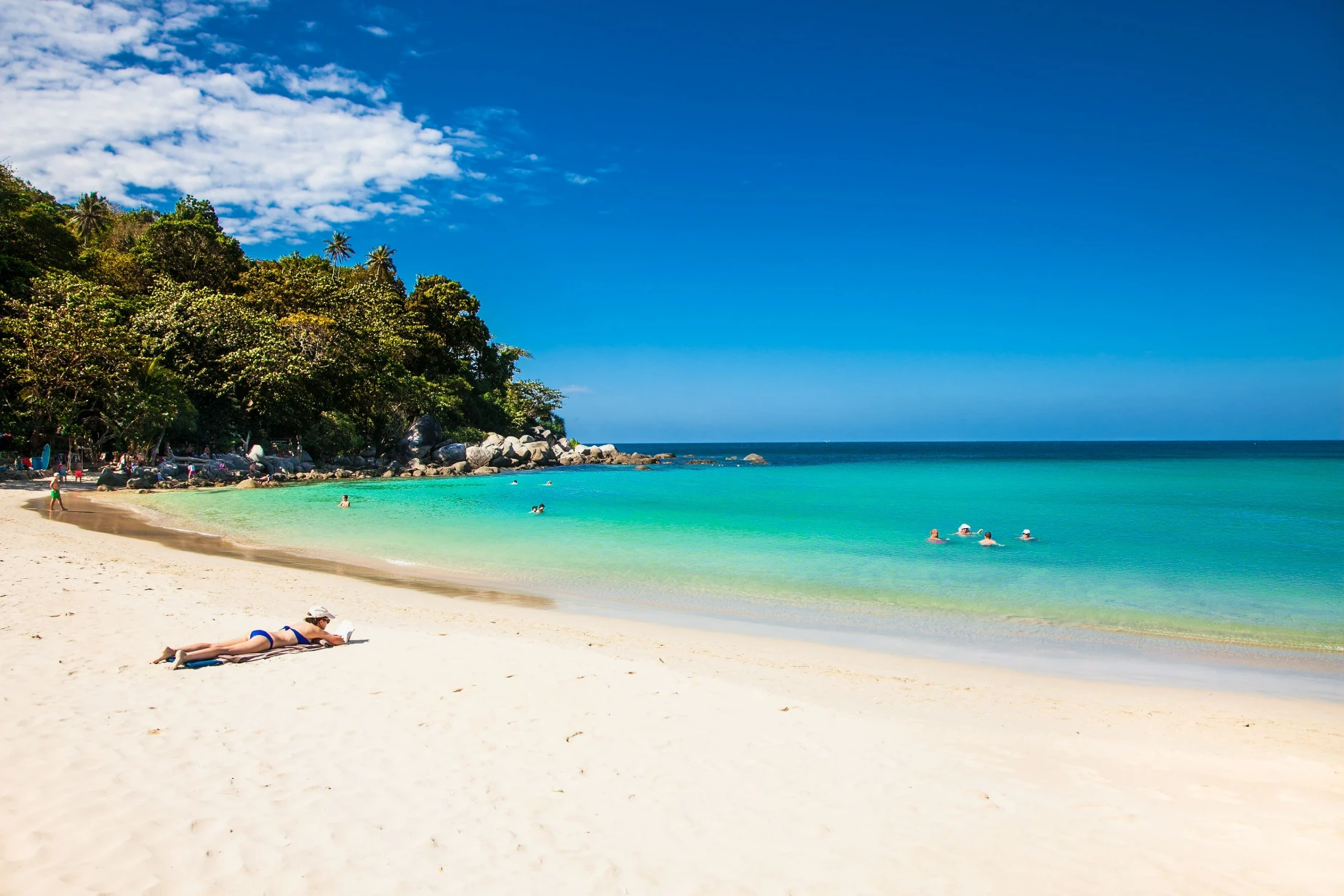
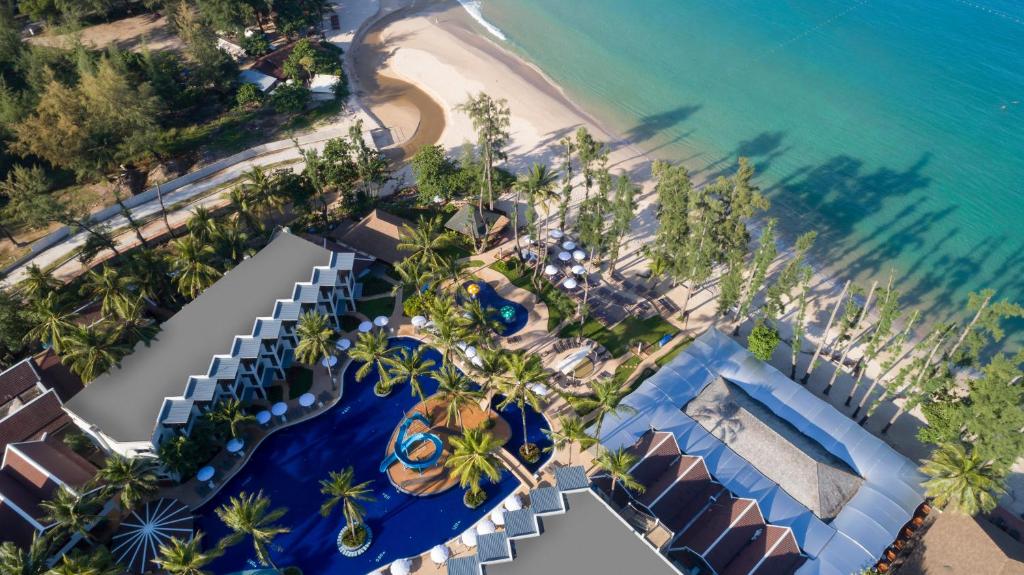
Kata Beach is the most operationally sound choice among Phuket beaches for families with young children. The bay is wide, the sandy bottom slopes gradually, and the water in the central and southern sections of the beach is calm enough for confident swimming from November through April.
The flag system at Kata is actively managed. Red flags indicate rip current risk and should be treated as absolute. Between May and October, the surf builds significantly on the northern section of the beach, and swimming is not advisable without flag confirmation. Families traveling outside the November to April window should build this into their planning.
Proximity to facilities is one of Kata's practical strengths. The beach road running parallel to the sand carries restaurants, pharmacies, convenience stores, and beach equipment rental within a comfortable walking distance. The Katathani Phuket Beach Resort occupies the southern end of the bay and provides direct beach access without requiring guests to navigate the main road.
Honest trade-off: Kata is popular. In peak season, the beach attracts a large number of day visitors, and parking along Kata Road becomes congested by mid-morning. Families staying within walking distance of the beach avoid this entirely.
Bang Tao Beach
Bang Tao is Phuket's longest continuous beach at approximately 8 kilometers, running along the upper west coast north of Surin. For families who need space, the beach's length means that even in peak season, the density per square meter remains manageable across most of the bay.
The Laguna Phuket resort complex occupies the central section of the beach, providing a structured environment with access to water sports, supervised swimming areas, and dining without leaving the resort grounds. The beach club strip along the southern end of Bang Tao operates independently of the resort complex and offers an alternative for families not staying at Laguna properties.
Honest trade-off: Bang Tao is long, so sections furthest from resort infrastructure can feel underdeveloped. Families should confirm which section of the beach their accommodation fronts before booking, as the northern and southern ends of the bay have significantly less access to facilities than the central Laguna zone.
If you are planning a family trip or a couple's itinerary across southern Thailand, confirm your beach base before booking internal transfers. The wrong base creates unnecessary movement across the island. See how Phuket compares to Krabi and Koh Samui as a base in the Phuket vs Krabi vs Koh Samui guide before locking your accommodation zone.
Phuket Beaches for Solo Travelers
Kata Beach
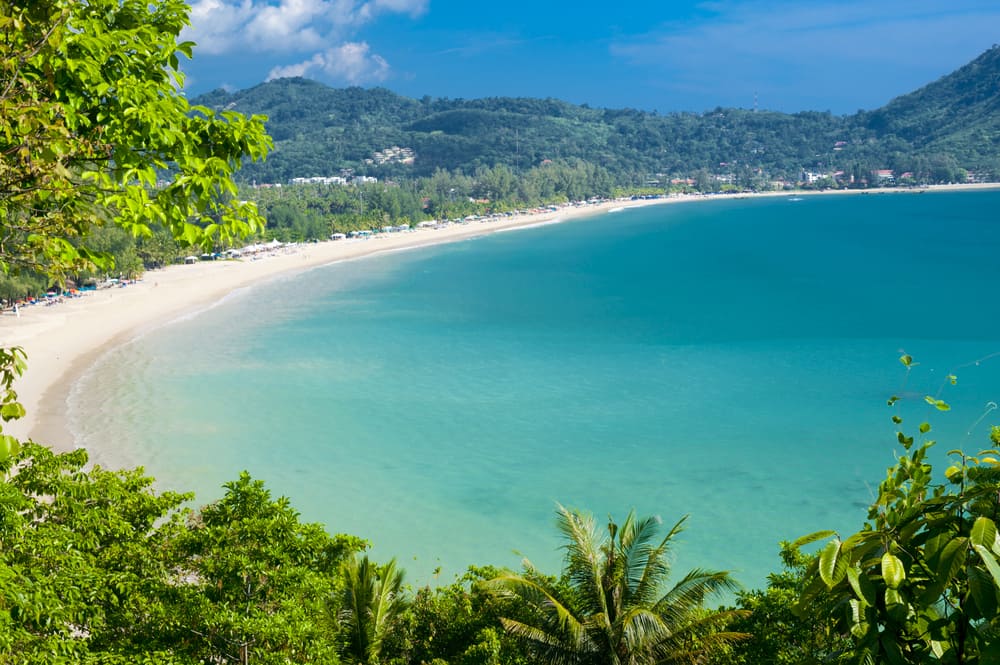
Kata is the most practical Phuket beach for solo travelers, for reasons that go beyond the beach itself. The surrounding area is walkable, with independent cafes, restaurants, and small shops within easy reach of the sand. Surf schools operate from the beach and create a natural social environment for those who want incidental interaction without seeking it out.
The beach strip is well-lit and actively used through the early evening, which matters for solo travelers managing timing and comfort after sunset. Access back to accommodation from Kata Road is straightforward, with taxis and ride-hailing options available until late.
Honest trade-off: Kata is not the quietest beach on this list. In peak season, it carries a volume of visitors that some solo travelers will find preferable and others will not. The beach is wide enough that finding space is rarely a problem. Finding silence is a different question.
Kamala Beach
Kamala operates at a noticeably lower intensity than Kata. The vendor presence on the beach is lower, the approach from local operators is less persistent, and the overall pace of the beach suits solo travelers who are using beach time to decompress rather than engage.
The trade-off is practical: dining options within walking distance of Kamala Beach are more limited than in Kata. The beach road has a small selection of restaurants and cafes, but for a broader choice, a short taxi ride is required. Solo travelers who prefer a quieter evening will find Kamala's pace an advantage rather than a limitation.
Surin Beach
For solo travelers who want an atmosphere-driven environment without the noise of Patong, Surin is the strongest option. The beach club structure at Surin, particularly Café del Mar and Baba Beach Club, offers bar seating and table service that suit solo visitors during the day without requiring a group.
Surin is not a nightlife destination. That is the point. The crowd thins significantly after sunset, and the beach itself lacks the after-dark activity of the Patong strip. In practice, this makes Surin a clean daytime environment for solo travelers who want quality surroundings without social pressure.
Honest note for all solo travelers: Phuket's west coast beaches are generally safe and well-managed. The mid-coast zone from Kamala to Kata carries lower vendor and tout pressure than Patong. Late-evening beach access on any beach is not recommended, regardless of the traveler profile.
Phuket Beaches for Privacy-Seekers
Nai Harn Beach
Nai Harn sits on the south coast of Phuket, approximately 18 kilometers from Patong and 45 minutes from the airport under normal traffic conditions. The distance is the point. It sits outside the main tourist corridor, and the crowd profile reflects that.
The beach fronts Nai Harn Lake, a freshwater lagoon immediately behind the sand, creating a distinctive setting not found elsewhere on the island. The Nai Harn resort occupies the hillside above the southern end of the beach and offers direct access without requiring guests to navigate public beach infrastructure.
In practice, Nai Harn is not isolated. In peak season, December through February, the beach carries day visitors and the car park at the northern end fills by mid-morning. However, by West Coast standards, the density remains noticeably lower, and the southern end of the beach near the resort maintains a calmer atmosphere throughout the day.
Honest trade-off: Nai Harn is more exposed to southwest swell than the north-facing west coast beaches during the transition months of October and November. Conditions vary more here than at Kata or Bang Tao.
Ao Sane Beach
Ao Sane is a small, rocky cove approximately 10 minutes on foot from Nai Harn Beach. There are no sunbeds, vendors, food service, or formal facilities. Access is by foot along an unpaved path from the Nai Harn road.
The crowd that finds Ao Sane is self-selecting. The difficulty of access filters out day-trippers who have not specifically sought it out. In practice, the beach sees a small number of visitors, mostly snorkelers drawn to the reef just offshore, and rarely feels crowded at any point in the dry season.
Honest trade-off: Ao Sane is not a comfortable beach in the conventional sense. The rocky foreshore and uneven seabed entry require water shoes. The absence of shade infrastructure means heat management depends on what you bring. This is a beach for travelers who have decided that crowd separation is the primary variable and are willing to accept the physical trade-offs that come with it.
Ya Nui Beach
Ya Nui is a single-cove beach between Nai Harn and Promthep Cape, accessible by motorcycle taxi or private car. It is small enough that it rarely appears on mainstream Phuket beach lists, which is precisely what makes it worth including here.
Ya Nui works best as a half-day stop rather than a full-day base. The beach is too small to sustain a full itinerary, but for two to three hours of calm water and genuine quiet, it offers something the more accessible west coast beaches cannot reliably deliver.
For travelers who find that even the quieter Phuket beaches do not provide the level of separation they need, the logical next step is to leave the island entirely. See the full guide to Koh Yao Noi Luxury Travel for what genuine island seclusion within Phang Nga Bay looks like and how to access it from Phuket.
Phuket Beaches for First-Time Visitors
Kamala Beach
Kamala is the most honest recommendation for a first visit to Phuket. It sits mid-island on the west coast, south of Surin and north of Patong, and occupies a middle ground that suits travelers who have not yet formed a clear preference.
The beach is calm, the water is safe for swimming throughout the dry season, and the surrounding area has enough infrastructure to be convenient without the commercial density of Patong. The crowd is mixed, without the heavy package-tour concentration that characterizes the beaches further south.
Kamala also provides a useful reference point for first-time visitors. After a day or two at Kamala, most travelers have a clear sense of whether they want more atmosphere (Surin), more facilities (Kata), or more quiet (Nai Harn). It functions as much as an orientation base as a destination.
Honest trade-off: Kamala lacks the beach club infrastructure of Surin or the family facilities of Kata. For travelers who arrive with a clear preference already formed, it may feel like a compromise rather than a choice.
Patong Beach
Patong requires an honest assessment rather than a recommendation or a dismissal.
It is the most commercially developed beach in Phuket. The beach strip is wide and long, the water is swimmable in the dry season, and the surrounding infrastructure, including restaurants, transport links, shopping, and nightlife, is the most comprehensive on the island. For a certain type of first-time visitor, particularly those traveling in groups or on a short schedule who want everything accessible from one location, Patong functions exactly as designed.
For luxury travelers, the atmosphere and crowd composition are materially mismatched. The Bangla Road entertainment district operates until the early hours, and the beach carries that energy throughout. Understanding what Patong is helps a first-time visitor calibrate the rest of Phuket correctly and make a more informed decision about where they actually want to be.
Karon Beach
Karon is the underused first-timer option. It sits immediately north of Kata, is longer and wider than most visitors expect, and carries a noticeably lower commercial density than Patong despite similar accessibility.
The beach faces directly west; sunset visibility is reliable from November through March; and the sand quality across the central section is among the best on the West Coast. In high swell months, October and November, the surf builds significantly, and swimming requires flag-system awareness.
Karon suits first-time visitors who want more space and less noise than Patong, without the south coast logistics of Nai Harn. It is a genuinely underrated option that rarely receives the recommendation it deserves.
Honest trade-off: Karon lacks the defined atmosphere of Surin and the structured family environment of Kata, which can make it feel neutral rather than intentional. For travelers who want a beach with a clear identity, it is better as a second stop than a primary base.
For a broader understanding of what Phuket offers beyond its beach strip, the 10 Must-Visit Places in Phuket for Luxury Travelers covers the full range of experiences worth building into a first visit.
Seasonal Reality: When Phuket Beaches Actually Work
| Nov to Feb Month West Coast South Coast Notes | Excellent | Good | Peak season, book accommodation early |
| Mar to Apr | Good | Good | Shoulder season, less crowded, good value |
| May to Jun | Poor | Variable | Monsoon onset, red flags common on the West Coast |
| Jul to Aug | Poor to variable | Variable | Swell, some beach closures, green flag days exist |
| Sep to Oct | Poor | Poor | Wettest months, limited beach access island-wide |
The Tourism Authority of Thailand promotes Phuket as a year-round destination. In practice, the beach experience on the West Coast from May through October is materially different from that of November through April. First-time visitors and travelers building a beach-first itinerary should treat November to April as the operative planning window.
Solo travelers and couples with flexible schedules who visit in March or April find a quieter island with good beach conditions and noticeably lower accommodation rates than peak season. That window is worth considering for anyone not locked into the December-to-February school holiday period.
For current seasonal advisories and safety updates, refer to the Tourism Authority of Thailand before finalizing travel dates.
Who This Is Not For
This guide is not suitable for every traveler planning a trip to Phuket. Understanding those cases is as useful as understanding the recommendations.
Travelers whose primary focus is nightlife. This guide is structured around beach quality, crowd management, and traveler-type fit. Patong is the most relevant beach for nightlife-focused travelers, as noted briefly above. However, if nightlife is the organizing principle of the trip rather than the beach experience, base selection and resort proximity to the entertainment district matter more than beach selection itself.
Travelers planning a monsoon-season trip should expect consistent swimming conditions. May through October carries a genuine risk of red flag conditions, particularly on the West Coast. This guide is most useful for dry season planning. Monsoon-season visitors should treat beach access as a secondary activity rather than a primary one and plan their itinerary accordingly.
Travelers whose priority is an ultra-luxury private resort with no requirement to access a public beach. Several high-end properties on Phuket operate private beach frontage or semi-private beach access. For those travelers, resort selection directly drives the beach experience. This guide covers public beach selection for travelers who want to choose their base and access the beach independently.
Travelers expect fully packaged experiences without having to make logistical decisions. This guide is a decision framework. It requires some planning and engagement. Travelers who prefer a single, packaged resort experience with curated activities may find the beach selection process described here unnecessary for their trip.
What Phuket Beaches Are Not
A consistently turquoise destination year-round. The Andaman coast produces the clear, blue-green water visible in most Phuket photographs between December and February, in calm conditions. In monsoon months, the water color changes, visibility reduces, and the beach experience shifts considerably. Photographs taken in peak season should not set expectations for an October arrival.
A secluded destination on the West Coast in peak season. Even Laem Singh, the most access-restricted beach on the west coast, receives visitors during December through February. Travelers requiring guaranteed crowd separation during peak season should consider the south coast or leave the island entirely.
A destination where Patong is the base, with quieter beaches a day trip away. The logistics of driving from Patong to Surin or Nai Harn are manageable. However, the experience gap between spending a day at a quiet beach and returning to Patong in the evening is significant. Base selection shapes the entire trip, not just the beach hours.
A reliable beach destination in September and October. Those months carry the highest rainfall and the most consistent swell of the year. Travelers who arrive expecting the photographs and find grey skies and red flags have not chosen the wrong beach. They have chosen the wrong month.
Planning Your Phuket Beach Base
The beach selection and accommodation zone are the same decision made twice. Staying in the north of the island, around Surin and Bang Tao, and trying to access Nai Harn or Ao Sane by day creates unnecessary transit across a slow-moving island road network. Staying in the south and trying to access the Surin beach club scene by afternoon adds the same friction in the other direction.
The most efficient approach is to identify which traveler type applies, select the corresponding beach, and choose accommodation within 10 to 15 minutes of that beach. Everything else in the itinerary is organized around that base.
For travelers positioning Phuket within a wider southern Thailand itinerary that includes Krabi, Phang Nga Bay, or the islands, the sequencing of which destination to use as a base matters as much as which beach to visit. The Southern Thailand Andaman Coast Travel Guide covers how Phuket connects to the broader Andaman region and where it fits within a structured multi-destination itinerary.
For travelers who want to combine a Phuket beach base with Krabi or the outer islands, transfer logistics and timing windows are covered in the Phuket to Krabi Private Transfer guide before confirming any inter-destination movement.
If you want support sequencing your beach base, accommodation zone, and broader itinerary across southern Thailand, plan your trip with Southeast Asia Simplified at southeastasiasimplified.com/contact-us.
FAQ: Phuket Beaches
What are the best Phuket beaches for couples in 2026?
The best Phuket beaches for couples are Surin Beach for atmosphere and beach club access, and Laem Singh for genuine privacy in a natural cove setting. Couples who want a composed, crowd-managed environment without nightlife pressure should base themselves in the Surin and Kamala zone on the upper west coast. Couples requiring stronger crowd separation should consider the south coast around Nai Harn or move to Koh Yao Noi in Phang Nga Bay.
Which Phuket beaches are best for families with young children?
The best Phuket beaches for families with young children are Kata Beach and Bang Tao Beach. Kata offers calm, shallow water across most of the bay from November through April, with facilities and dining within walking distance. Bang Tao is the better option for families who need more space and are staying within the Laguna resort complex, where supervised swimming areas and access to structured water sports are available.
Which Phuket beach is safest and most practical for solo travelers?
The most practical Phuket beaches for solo travelers are Kata Beach and Kamala Beach. Kata offers a walkable surrounding area, natural social environments through surf schools and beach cafes, and well-lit access through the early evening. Kamala is the calmer alternative with lower vendor pressure. Both sit within the west coast mid-zone, which carries lower tout pressure than Patong. Late evening beach access on any Phuket beach is not recommended for solo travelers.
What is the quietest beach in Phuket?
The quietest accessible beach in Phuket is Ao Sane, a small rocky cove near Nai Harn on the south coast. It has no vendors, no sunbeds, and no formal facilities. Access is by foot along an unpaved path. Ya Nui Beach, between Nai Harn and Promthep Cape, is similarly quiet and better suited to travelers who want a short stop rather than a full day. Travelers who require consistently guaranteed seclusion at any point in peak season should consider Koh Yao Noi as an alternative base.
Are Phuket beaches worth visiting in the rainy season?
The west coast beaches from May through October are unreliable for swimming due to southwest monsoon swells, red-flag conditions, and reduced water clarity. Some dry days occur in July and August, but planning a beach-first itinerary around those months carries a significant risk of disappointment. November through April is the operative window for Phuket beaches. Travelers with fixed dates during the monsoon period should understand that the beach experience will differ materially from that in the dry season.
Which Phuket beaches are best for first-time visitors?
The best Phuket beaches for first-time visitors are Kamala Beach and Karon Beach. Kamala is calm, accessible, mid-island, and provides a practical reference point before committing to a more specific base. Karon is a strong alternative for first-timers seeking more space and a wider beach, without Patong's commercial density. First-time visitors should see Patong at least briefly to understand what it is, but should not base themselves there unless that environment suits how they travel.
Conclusion
Phuket beaches are not ranked. They are matched.
The traveler who finds Surin Beach exactly right is not having a better experience than the traveler who finds it too busy and retreats to Ao Sane. They are having the right experience for a different set of priorities. The planning error is not choosing a beach that others find ordinary. It is choosing a beach that does not fit how you actually travel.
Phuket has enough coastline, enough variation in crowd density, and enough differences among its north, mid, and south coast environments to suit almost every type of traveler well. The condition is knowing which type you are before you arrive.
In Phuket, the beach does not decide the experience. The match between the beach and the traveler does.