
Most travelers treat northern Thailand as a single destination called Chiang Mai. It is not. The north is a coherent region with four distinct destinations, one hard seasonal constraint, and a routing logic that most itineraries ignore until it costs them days.
The planning error is rarely about which temple to visit or which hotel to book. It is about arriving in March when the air quality index reads 180, or spending five nights in Chiang Mai without knowing that Pai is three hours away by mountain road and operates at a pace the city cannot replicate. It is about treating Chiang Rai as an afterthought when it warrants its own overnight, or skipping Lampang entirely because it does not appear in standard itinerary templates.
This northern Thailand travel guide covers all four destinations with the seasonal, logistical, and operational details needed to build a trip that holds together.
Northern Thailand Travel Guide: The Short Answer
Northern Thailand is best visited between November and January. The region centers on Chiang Mai as a base, with Chiang Rai, Pai, and Lampang functioning as extensions of between one and three nights each. A complete northern Thailand travel guide itinerary requires 9 to 11 nights and must avoid February to April. A focused Chiang Mai-only visit works in 4 to 5 nights.
The one constraint that overrides all others: burning season, which runs from approximately February through April, produces air quality conditions that fundamentally alter the experience. Plan around it, not through it.
Quick Picks
- Best base: Chiang Mai
- Best time to visit: November to January
- Best single extension: Chiang Rai (1 to 2 nights)
- Best for slow travel and wellness: Pai (2 to 3 nights)
- Most overlooked destination: Lampang
- Minimum recommended time in the region: 5 nights
- Ideal length for all four destinations: 9 to 11 nights
- Avoid if traveling: February to April, without accounting for the burning season
Northern Thailand at a Glance
| Variable | Chiang Mai | Chiang Rai | Pai | Lampang |
|---|---|---|---|---|
| Role | Primary base | Northern extension | Wellness detour | Culture add-on |
| Access from Chiang Mai | Hub | 3hr road | 3hr mountain road | 1.5hr road |
| Luxury infrastructure | Strong | Limited | Boutique only | Minimal |
| Best for | Culture, food, wellness | Temples, Golden Triangle | Slow travel, nature | Temples, elephants |
| Ideal stay | 3 to 5 nights | 1 to 2 nights | 2 to 3 nights | 1 night |
| Key weakness | City density, burning season | Limited standalone depth | No flight access | No luxury accommodation |
Decision Shortcut
- 5 to 7 days in the north: Chiang Mai as base, Chiang Rai as a single overnight extension.
- 7 to 10 days: Add Pai as a mountain detour or Lampang as a cultural day trip from Chiang Mai.
- 10-plus days: All four destinations in a structured loop, returning to Chiang Mai for the onward flight south.
The Burning Season: The Variable That Governs Every Decision
This is not a minor seasonal footnote. It is the single planning constraint that determines whether a northern Thailand trip delivers what it should.
The burning season in northern Thailand runs from approximately February through April. Agricultural and forest burning across the region, combined with temperature inversion trapping smoke at low altitude, produces air quality conditions that regularly reach an AQI of 150 to 200 during the worst weeks, classified as unhealthy for all groups. Late February and March tend to be the most affected period. Chiang Mai has, in some years, recorded the worst urban air quality in the world during this window.
Conditions typically begin to improve in late April as the first rains of the season arrive.
The consequence for planning is direct. Travelers with respiratory conditions, those traveling with children, or anyone expecting the mountain clarity and clean air that northern Thailand is associated with should restrict their visit strictly to the November to January window.
For others, the guidance is straightforward: if your travel dates fall between February and April, plan the south first across the luxury beaches of Phuket and Krabi. Return to the north in late April when conditions have cleared, or adjust dates to prioritize the November to January window from the outset.
The Tourism Authority of Thailand provides seasonal and air quality guidance for the northern region and is the authoritative reference for travelers monitoring conditions in advance of departure.
The burning season is not a risk to be managed. It is a planning variable to be avoided.
Chiang Mai: The Northern Base
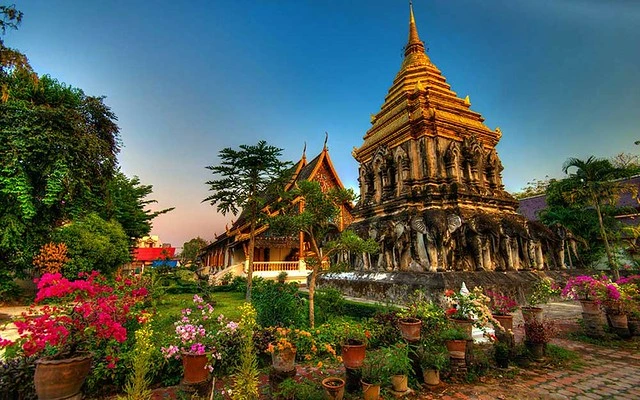
Chiang Mai is where the north begins for almost every international traveler, and for good reason. It has a functioning airport with direct connections from Bangkok, a well-developed hospitality infrastructure, and a concentration of cultural content that few cities in Southeast Asia match at any price point.
It is also a city, not a retreat. Managing that distinction is the key to using Chiang Mai correctly within a northern itinerary.
The Old City and the Temple District
The Old City of Chiang Mai is defined by its moat: a square canal enclosing approximately 1.5 square kilometers of streets, temples, guesthouses, and market lanes. The four gates mark the cardinal points. Most of the significant temple sites sit within or immediately adjacent to this perimeter.
Wat Chedi Luang dates to the 14th century and houses a partially restored chedi that reaches 60 metres in height. Wat Phra Singh contains one of the most revered Buddha images in the north. Both are within walking distance of each other in the Old City's western quarter.
The practical reality is that both sites receive substantial visitor volume from mid-morning onward. Arriving before 8 am produces a materially different experience. The temples are accessible, the light is favorable, and the courtyards hold a quiet that disappears within two hours.
Honest trade-off: the Old City is compact, walkable, and historically rich. It is not quiet by mid-morning and not secluded at any point during peak season. Timing is the variable the visitor controls.
Doi Suthep
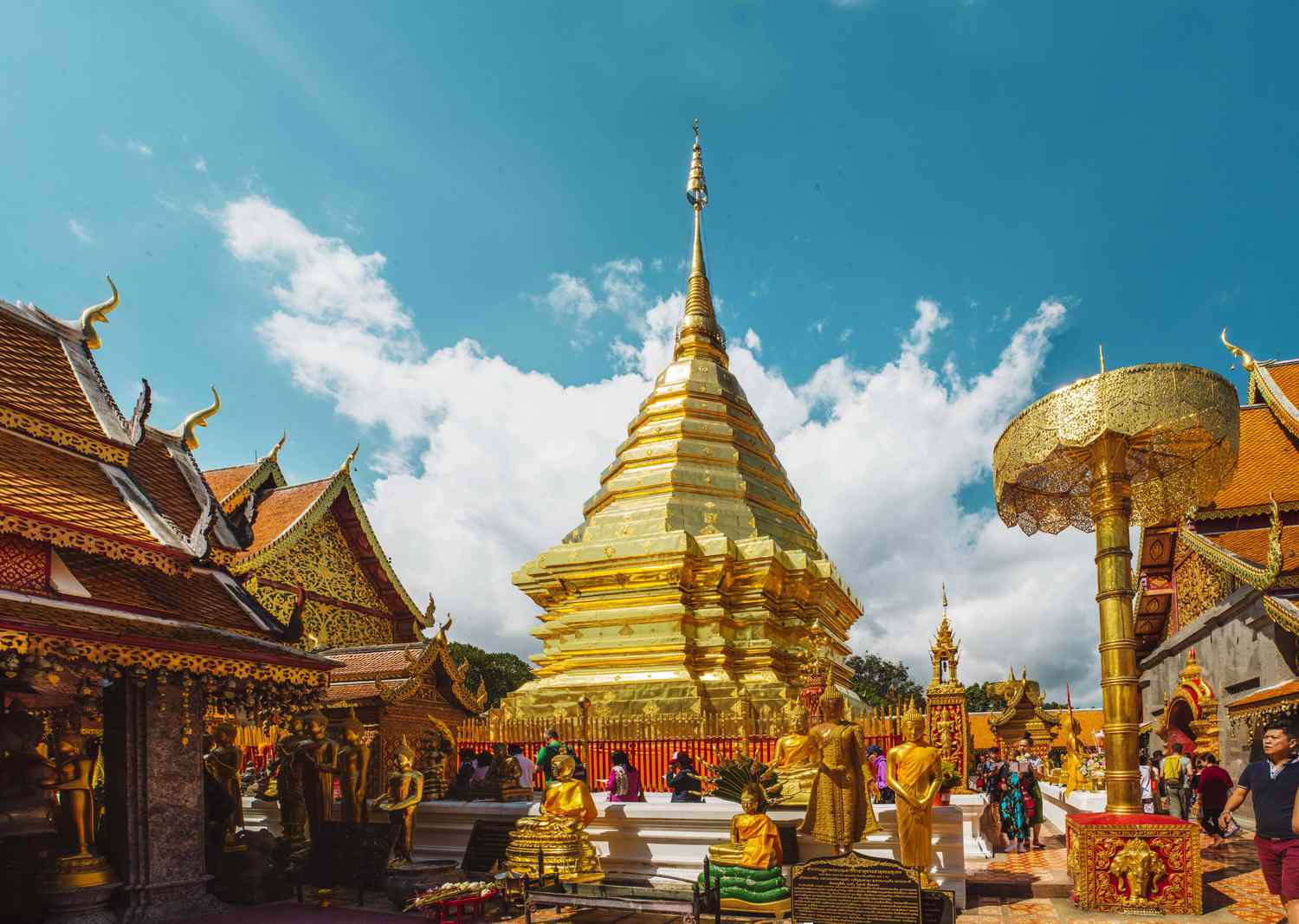
Doi Suthep sits 15 kilometers west of the Old City at an elevation of 1,676 metres. Wat Phra That Doi Suthep, the temple at its summit, is one of the most significant religious sites in northern Thailand and one of the most visited.
Access by private driver takes approximately 30 to 40 minutes from the Chiang Mai city center. The songthaew option from the base of the mountain is considerably cheaper but offers no scheduling control. For any traveler prioritizing the experience over the cost, a private vehicle with a driver is the correct choice.
The first hour after the temple opens, typically at 6 am, provides the version of Doi Suthep that photographs and descriptions reference. The views across the Chiang Mai valley are clear, the site is calm, and the approach via the 309-step Naga staircase holds a composure that evaporates once the tour coaches begin arriving.
Honest trade-off: Doi Suthep is one of Thailand's most visited temples. Early timing addresses the crowd variable. It does not eliminate it entirely during peak season.
Nimman Road and the Wider City
The Nimmanahaeminda Road district sits approximately two kilometers west of the Old City. It functions as Chiang Mai's design and dining neighborhood: boutique hotels, specialty coffee, independent restaurants, and a walkable street grid that feels distinct from the temple-and-market density of the Old City.
For travelers staying multiple nights, the Nimman district offers a useful second register. It is more contemporary, more polished, and less atmospheric than the Old City. It also has a higher concentration of quality independent restaurants and a calmer pace in the evenings.
The two areas are not in competition. They serve different functions within a multi-night stay.
Honest trade-off: Nimman is better suited to dining and evening walks than to cultural exploration. Travelers staying exclusively in the Nimman district will need transport to reach the Old City and its sites.
Cooking Classes and Wellness
Chiang Mai has one of the most developed cooking class ecosystems in Southeast Asia. Private classes with market visits, small-group sessions at dedicated teaching kitchens, and half-day formats that include a Mae Ping riverside market walk are all available across a wide range of price points. Private cooking classes and tailored cultural experiences in Chiang Mai are covered in detail when you compare private tour options across northern Thailand before booking.
The distinction between group and private formats matters at the luxury tier. A private class with a skilled instructor at a property with kitchen garden access produces a different experience than a group class with standardized recipes. The cost differential is significant. The experience differential is proportional.
Wellness infrastructure in Chiang Mai is similarly well-developed. The city has a range of day spas, traditional northern Thai massage operators, and small urban retreat facilities. This is not destination wellness in the resort sense. It is city-based wellness at a quality that exceeds most comparable cities in Southeast Asia.
Honest trade-off: Chiang Mai wellness is high quality and accessible. It is not a replacement for a dedicated wellness resort stay.
Where this fits in your trip: Bangkok (2 nights, BKK) → Chiang Mai (3 to 5 nights) → north or south, depending on dates.
For a broader view of how the north connects to a full Thailand itinerary, how to choose the right regions for your Thailand trip covers the full regional routing logic before any destination decision is made.
Chiang Rai: The Northern Extension
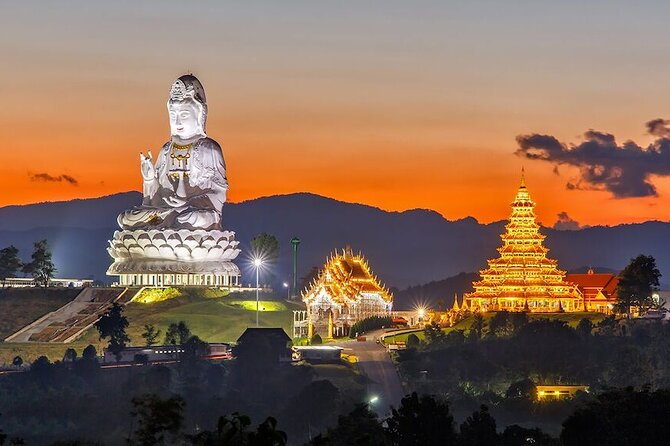
Chiang Rai is not a second Chiang Mai. It is a quieter, smaller city with three sites that justify an overnight and a routing that connects naturally to the Golden Triangle. Treating it as a standalone destination for more than two nights requires a specific interest to anchor the stay.
Wat Rong Khun (White Temple)
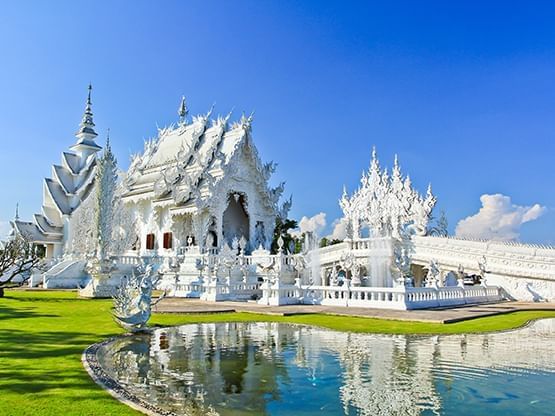
Wat Rong Khun is the work of Thai artist Chalermchai Kositpipat, begun in 1997 and still under construction. It is not a conventional Buddhist temple in either appearance or intent. It is a contemporary artistic project expressed through temple architecture: white mirrored surfaces, a bridge crossing a reflective pool, and interior murals that combine Buddhist iconography with unexpected contemporary references.
The photography window is early morning, before the first coach groups arrive from Chiang Mai. By 9 a.m., the site is busy. By 10 am, it is dense.
Two hours is the appropriate allocation. The site is visually extraordinary and experientially brief. Both things are true simultaneously.
Honest trade-off: Wat Rong Khun is among the most visually striking sites in northern Thailand. It is also among the most photographed, and crowd management is the visitor's primary logistical task.
Wat Rong Suea Ten (Blue Temple)
Wat Rong Suea Ten sits three kilometers from the Chiang Rai city center and receives considerably fewer visitors than the White Temple, despite offering an interior that many travelers find more striking. The deep cobalt blue exterior and gilded detailing create a visual register entirely different from Wat Rong Khun.
For travelers who have allocated time to the White Temple, the Blue Temple adds one hour and a different experience. It is consistently the less crowded of the two.
The Golden Triangle
The Golden Triangle marks the confluence of the Mekong and Ruak rivers where Thailand, Laos, and Myanmar meet. It sits approximately 60 kilometers north of Chiang Rai, around one hour by road.
The site offers river views, a small museum covering the region's opium trade history, and a geographic distinction that carries more historical weight than visual drama. The triangle itself is best understood as context rather than spectacle.
Honest trade-off: the Golden Triangle is worth the detour from Chiang Rai for historically curious travelers. It should not be the primary reason to visit the north.
Chiang Rai Access and Routing
The road from Chiang Mai to Chiang Rai via Route 118 covers approximately 200 kilometers through mountain scenery and takes around three hours by private vehicle. This is a well-maintained route, and the journey itself is part of the experience.
Chiang Rai Airport (CEI) has limited domestic service. The road remains the more reliable option for most travelers.
An overnight in Chiang Rai allows for an unhurried morning at Wat Rong Khun before coach groups arrive, a visit to Wat Rong Suea Ten, and an afternoon drive to the Golden Triangle. A day trip from Chiang Mai is sufficient for temple-focused travelers who do not want to extend the itinerary.
Honest trade-off: Chiang Rai does not sustain three or more nights for most travelers without a specific interest anchoring the stay. Two nights is the functional maximum for most itineraries.
Where this fits in your trip: Chiang Mai (base) → Chiang Rai overnight (1 to 2 nights) → return to Chiang Mai.
Mid-Article Planning Note
If your routing between Chiang Mai, Chiang Rai, and Pai is not clear at this stage, it is worth resolving before confirming hotels. Sequence errors here are the most common cause of lost time in northern Thailand itineraries. Compare private tour options across northern Thailand before locking any accommodation or transfer bookings in the region.
Pai: The Slow Travel Alternative
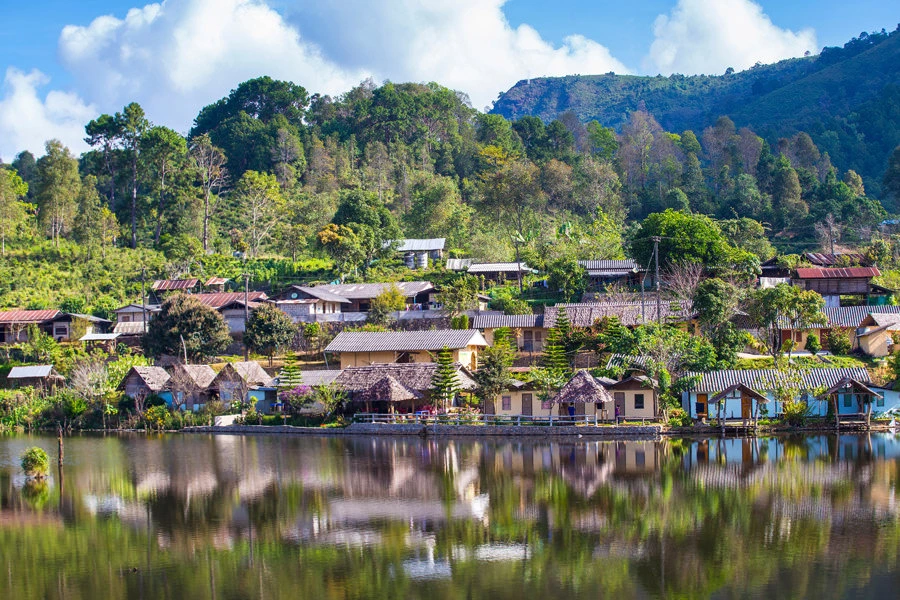
Pai is a small mountain town in Mae Hong Son Province at an elevation of 762 metres, approximately 130 kilometers northwest of Chiang Mai. It operates at a pace that the city cannot replicate and offers a natural environment that the city cannot provide. It also has no luxury accommodation infrastructure. These two facts together define what kind of traveler Pai suits.
The Road to Pai
Route 1095 from Chiang Mai to Pai covers 130 kilometers across 762 documented curves through mountain passes and valley descents. The drive takes approximately three hours by private vehicle.
This is the only motorized access option. There is no airport serving Pai. The road is the route, and the drive through the Mae Hong Son highlands is itself a significant part of the experience.
Minivan services operate from Chiang Mai's Arcade Bus Terminal and are frequent, inexpensive, and practical for independent travelers comfortable with shared transport. For any traveler who prefers a controlled experience, a private vehicle with a driver is the correct option. It also eliminates the motion sickness variable, which is a real consideration on this route.
Honest trade-off: the road to Pai is non-negotiable. Travelers who require flight access to every destination should treat Pai as a day trip from Chiang Mai rather than an overnight stop.
What to Do in Pai
Pai Canyon, known locally as Kong Lan, is a series of narrow sandstone ridgelines above the valley floor, approximately eight kilometers from the town center. The late afternoon and dusk window offers the most favorable light and temperature conditions.
The Mae Yen Waterfall trail runs approximately four kilometers from the town edge through agricultural land and forest. Mor Paeng Waterfall, closer to town, is accessible by road and requires less physical commitment.
The Pai Hot Springs sit six kilometers east of town. The commercial infrastructure is functional rather than luxurious. The thermal pools themselves are genuine.
The Pai Walking Street operates evenings only along Ratchadamnoen Road in the town center. It is a local night market in character: food stalls, small craft vendors, and a pace that reflects the town rather than performing for visitors.
Wellness options in Pai are available through small retreat operators and independent therapists. This is not destination wellness at a resort standard. It is a slower, less structured version of the wellness infrastructure found in Chiang Mai.
Accommodation in Pai
Pai has no internationally branded properties and no accommodation that competes with Chiang Mai's better hotels on service or amenity range. The available options are boutique guesthouses, small riverside properties, and simple bungalow-style stays.
The trade-off is explicit: Pai offers scenery and pace that Chiang Mai cannot replicate. It does not offer the service level or room quality of a city hotel. Travelers for whom accommodation standard is non-negotiable should take Pai as a day trip from Chiang Mai rather than an overnight destination.
Honest trade-off: two nights in Pai suits travelers who want to decompress, walk, and slow down between cultural stops. One night is sufficient for most. More than two nights requires Pai itself to be a deliberate priority rather than a component of a wider northern itinerary.
Where this fits in your trip: Chiang Mai (base) → Pai overnight or day trip → return to Chiang Mai
Lampang: The Overlooked Northern City
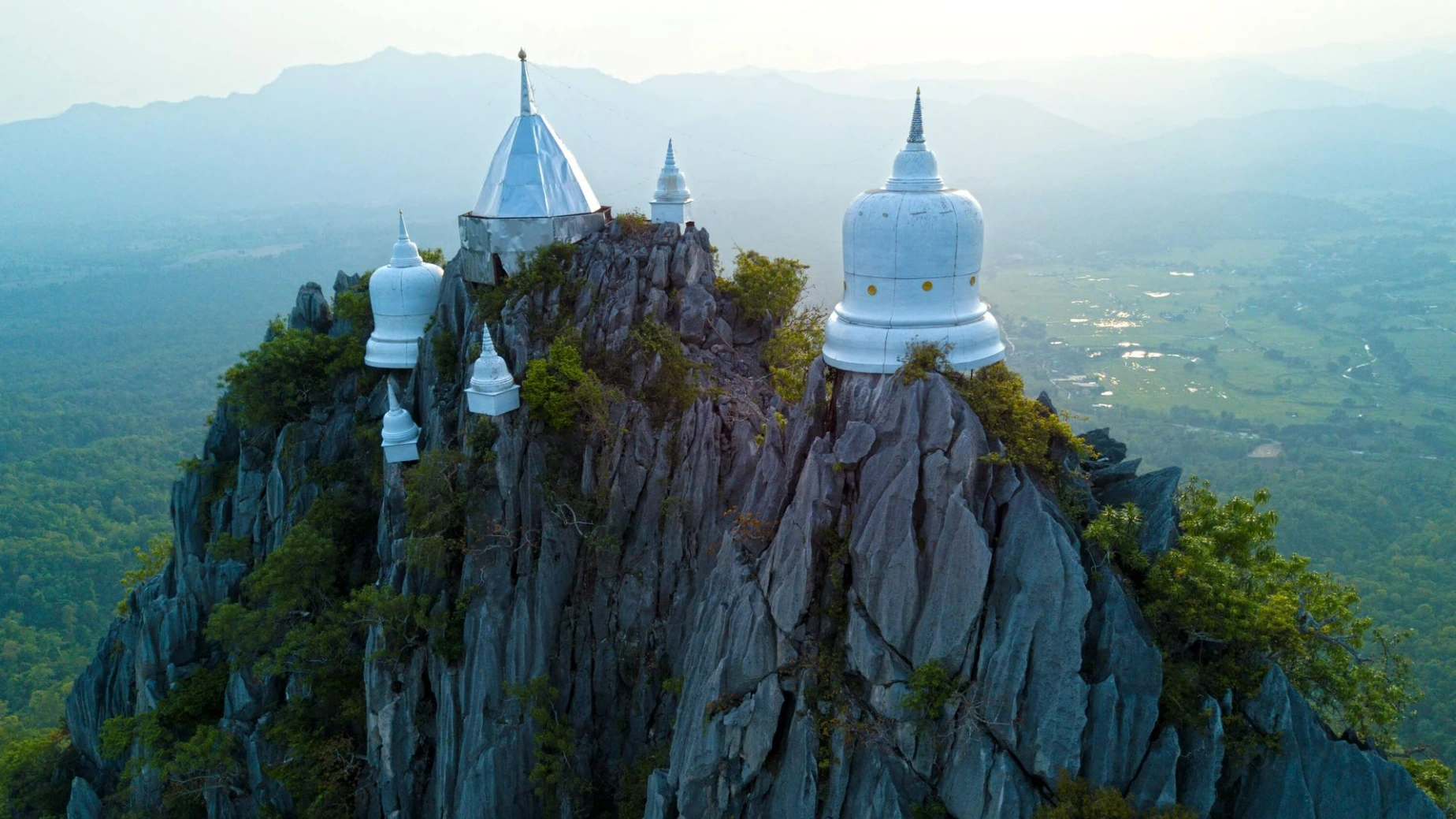
Lampang sits 100 kilometers southeast of Chiang Mai and is bypassed by most international itineraries. This is a planning gap rather than a considered choice. Lampang offers a temple, an elephant conservation facility, and a city character that has no equivalent in the north.
The City Itself
Lampang is the only city in Thailand where horse-drawn carriages remain in active local use. This is not a tourist reconstruction. It is a functioning transport tradition that gives the city a visible character distinct from any other destination in the region.
The city's old quarter along the Wang River contains Burmese-influenced temples and teak merchant houses from the logging era of the late 19th and early 20th centuries. The streetscape is quieter and less commercially oriented than Chiang Mai's Old City.
Wat Phra That Lampang Luang
Wat Phra That Lampang Luang, located 18 kilometers southwest of Lampang in Ko Kha district, is one of the oldest and most architecturally significant temples in northern Thailand. The walled compound contains a principal chedi believed to date to the 9th century, a viharn housing a revered Buddha image, and a small museum with historical artifacts from the Lanna period.
Visitor numbers here are a fraction of what Chiang Mai's major temples receive. The site can be explored at a composed pace without crowd management.
Honest trade-off: the distance from Lampang city requires a vehicle. Combining the temple with the city center and the Elephant Conservation Center makes a full-day itinerary that works logistically.
The Thailand Elephant Conservation Center
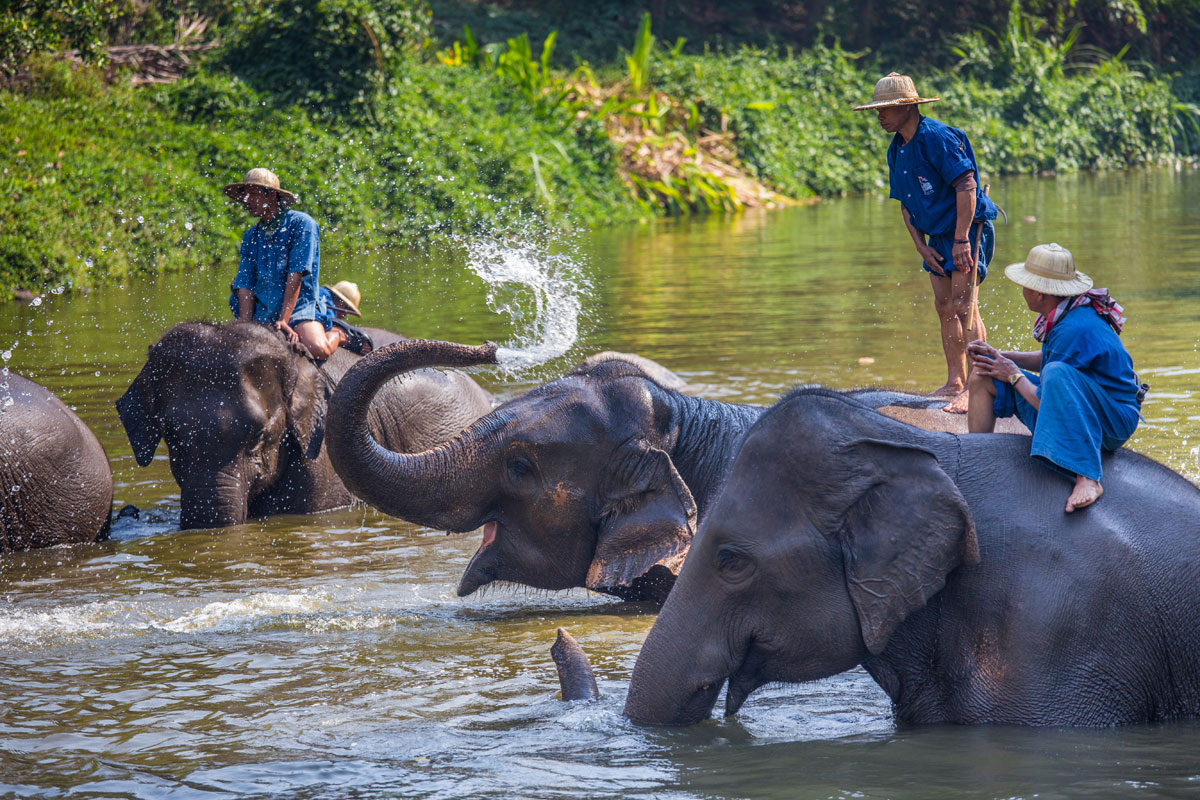
The Thailand Elephant Conservation Center (TECC) sits 37 kilometers north of Lampang near Thung Kwian. It is a government-operated facility under the Forest Industry Organization, with a veterinary hospital, a mahout training program, and a breeding program that has contributed to elephant population recovery in the region.
The Department of National Parks, Wildlife and Plant Conservation oversees conservation standards across Thailand's elephant facilities. TECC operates at a credibility level that places it among the most legitimate ethical options in the country.
The visit centers on observation and welfare-focused interaction rather than performance. What TECC offers is a considered, lower-stimulation encounter with working and retired elephants in a habitat that prioritizes the animals' conditions over visitor entertainment.
Honest trade-off: TECC is less intimate than smaller private sanctuaries operating near Chiang Mai. It is, however, one of the most credible ethical operators in the region and offers a transparency of operation that smaller facilities do not always match.
Lampang Access and Positioning
The road from Chiang Mai to Lampang via Highway 11 takes approximately 1.5 hours by private vehicle. The northern railway line also connects the two cities in approximately two hours, offering a scenic alternative to road travel.
A single overnight is sufficient to cover the city, the temple, and the Elephant Conservation Center without rushing. For luxury travelers, a day trip from Chiang Mai is the practical choice given the absence of accommodation at that tier in Lampang.
Honest trade-off: Lampang has no luxury accommodation. The correct positioning for most luxury itineraries is a full-day private excursion from Chiang Mai, combining the TECC, Wat Phra That Lampang Luang, and the city center in a structured itinerary.
Where this fits in your trip: Chiang Mai (base) → Lampang full-day private excursion → return to Chiang Mai
For a wider view of northern Thailand's lesser-known destinations and how they connect to the broader luxury travel landscape, the full spectrum of luxury destinations across Thailand covers options beyond the standard southern circuit.
How Northern Thailand Connects to the Rest of Your Itinerary
Moving between the north and the south of Thailand is operationally straightforward but requires explicit planning. The transfer does not manage itself.
Suvarnabhumi Airport (BKK) to Chiang Mai takes approximately 1 hour and 20 minutes by air. Full-service carriers, including Thai Airways and Bangkok Airways, operate from Suvarnabhumi. Low-cost carriers, including AirAsia, Nok Air, and Thai Lion Air, operate from Don Mueang Airport (DMK), located approximately 25 kilometers north of the Bangkok city center. The airport used for the international arrival determines which terminal is required for the domestic connection.
If transiting between Suvarnabhumi and Don Mueang on the same day, allow a minimum of four to five hours between flights. This constraint eliminates same-day international arrival to a budget domestic connection as a workable option without explicit scheduling.
Chiang Mai to southern Thailand requires a Bangkok connection in most cases. Direct Chiang Mai to Phuket routes exist but operate with limited frequency and irregular scheduling. The Bangkok connection is the reliable routing and adds approximately half a day to the journey.
The practical consequence: travelers combining northern and southern Thailand should position the north first, if visiting from November to January, and fly south from Chiang Mai via Bangkok at the end of the northern segment. This produces a logical routing arc that avoids doubling back.
Northern Thailand Travel Guide: Ideal Itinerary Structures
Structure A: Chiang Mai Only (4 to 5 Nights)
| Days | Location | Key Experiences |
|---|---|---|
| Days 1 to 2 | Chiang Mai Old City | Doi Suthep (early), Wat Chedi Luang, Wat Phra Singh, moat-side dining |
| Days 3 to 4 | Chiang Mai: Nimman district | Private cooking class with market visit, day spa, Nimman evening |
| Day 5 | Transfer south | Domestic flight via Bangkok connection |
Advance booking note: private cooking classes with market visits at reputable operators book out two to four weeks ahead during peak season. Secure before arrival.
Structure B: Chiang Mai and Chiang Rai (6 to 7 Nights)
| Days | Location | Key Experiences |
|---|---|---|
| Days 1 to 3 | Chiang Mai | Old City, Doi Suthep, Nimman, Lampang day trip |
| Days 4 to 5 | Chiang Rai | Wat Rong Khun (early), Wat Rong Suea Ten, Golden Triangle overnight |
| Days 6 to 7 | Return to Chiang Mai | Rest, final meals, onward flight preparation |
Advance booking note: a private vehicle for the Chiang Mai to Chiang Rai road should be confirmed before departure. The route is manageable independently, but a private driver adds navigational ease and allows stops along Route 118.
Structure C: Full Northern Loop (9 to 11 Nights)
| Days | Location | Key Experiences |
|---|---|---|
| Days 1 to 3 | Chiang Mai | Old City, Doi Suthep, cooking class, wellness |
| Day 4 | Lampang | Thailand Elephant Conservation Center, Wat Phra That Lampang Luang, old quarter |
| Days 5 to 6 | Chiang Rai | Wat Rong Khun, Wat Rong Suea Ten, Golden Triangle overnight |
| Days 7 to 8 | Pai | Pai Canyon at dusk, hot springs, Mae Yen trail, walking street |
| Days 9 to 10 | Return to Chiang Mai | Rest, packing, final meals before onward flight |
Advance booking note: the full loop requires a private vehicle for the Pai leg. The mountain road to Pai is not suited to self-driving for travelers unfamiliar with the route. A private driver for the Chiang Mai to Pai to Chiang Mai segment is the operationally sound choice.
Who Northern Thailand Is Not For
Setting honest expectations here prevents the most common form of northern Thailand disappointment.
Travelers expecting beach access or coastal scenery will not find it anywhere in this region. The north is a mountain, a valley, and a city. The nearest coast is a domestic flight and a Bangkok connection away.
Travelers visiting between February and April who have not planned around the burning season will encounter air quality conditions that compromise outdoor activity, temple visits, and the general experience of being in a mountain environment. The constraint is not mitigable through itinerary adjustments within the region.
Travelers with fewer than four days in Thailand should not allocate time to the north at the expense of the south. The routing cost of moving between regions does not justify the trade-off at that trip length.
Travelers for whom accommodation standard is a non-negotiable priority will find that Pai and Lampang do not deliver at the luxury tier. Both work well as day trips from Chiang Mai. Neither works as a luxury overnight destination.
Travelers expecting to visit Doi Suthep or Wat Rong Khun in isolation from other visitors should adjust their expectations rather than the destination. Early timing addresses the variable. It does not eliminate it.
Planning Your Northern Thailand Itinerary
If you are building a northern Thailand trip that connects to the south, the routing and booking sequence matter more than most travelers anticipate. The domestic flight timing, the positioning of the burning season, and the advance booking requirements for private transfers and cooking classes all interact in ways that are easier to manage with a clear structure from the outset.
For a planning conversation before confirming flights or accommodation, the team at Southeast Asia Simplified works with travelers building northern and multi-region Thailand itineraries at the luxury tier. To build your full Thailand itinerary from the planning stage, the curated planning guide covers the full sequence from regional selection through to booking windows.
FAQ: Northern Thailand Travel Guide
What is the best time to use a northern Thailand travel guide to plan your trip?
The best time to visit northern Thailand is between November and January. This window offers clear mountain air, cooler temperatures averaging 15 to 25 degrees Celsius in Chiang Mai, and stable conditions across all four destinations. February through April should be avoided due to the burning season, which produces AQI levels classified as unhealthy for all groups. Late April to May offers improving conditions as the rains begin.
How many days do you need for a northern Thailand travel guide itinerary covering all four destinations?
Covering Chiang Mai, Chiang Rai, Pai, and Lampang requires between 9 and 11 nights at a comfortable pace. A shorter visit of 6 to 7 nights can cover Chiang Mai and Chiang Rai effectively. Pai and Lampang function best as extensions for travelers with additional time rather than as compressed additions to a shorter itinerary.
Is Chiang Rai worth adding to a Chiang Mai trip?
Yes, for travelers with at least 6 nights in the north. Chiang Rai adds Wat Rong Khun, Wat Rong Suea Ten, and the Golden Triangle, none of which have equivalents in Chiang Mai. One to two nights is the appropriate allocation. The road journey via Route 118 takes approximately three hours each way and is part of the experience.
What is the burning season in northern Thailand, and when does it happen?
Burning season in northern Thailand runs from approximately February through April, with the worst air quality typically concentrated in late February and March. Agricultural and forest burning across the region produces AQI levels regularly reaching 150 to 200, classified as unhealthy for all groups. It is not a risk to be managed during the trip. It is a planning variable that should be avoided entirely through date selection.
Is Pai worth visiting for luxury travelers?
Pai suits luxury travelers who prioritize pace, natural scenery, and a different register from Chiang Mai's city environment over accommodation standards. It has no luxury-tier properties. Travelers for whom room quality and service infrastructure are essential should take Pai as a private day trip from Chiang Mai rather than an overnight destination. For those who can adapt their accommodation expectations for two nights, Pai delivers an experience that the rest of the north cannot replicate.
How do you travel from northern Thailand to southern Thailand?
The most reliable ways to travel from northern Thailand to southern Thailand are:
- Flight via Bangkok (most consistent option, adds approximately half a day)
- Limited direct flights from Chiang Mai to Phuket (low frequency, unreliable scheduling)
- Private routing via coordinated Bangkok connections (Suvarnabhumi to Phuket or Krabi)
Allow a minimum of four to five hours if transiting between Suvarnabhumi Airport (BKK) and Don Mueang Airport (DMK) on the same day.
Conclusion
Northern Thailand is a region, not a single city. Chiang Mai anchors it, Chiang Rai extends it, Pai changes its pace, and Lampang offers the version of the north that most itineraries never reach. Each destination has a distinct role, a distinct character, and a distinct set of trade-offs that determine whether it belongs in a given trip.
The one variable that governs all of them is timing. The November to January window is not a preference. It is the condition under which the North delivers what it is capable of delivering. Outside that window, the burning season does not reduce the experience. It replaces it with a different one.
Build the northern Thailand travel guide itinerary around the season first. Every other decision follows from there.
Thailand was never hidden. What most travelers miss is how it should be structured.