Most travelers who ask about northeastern Thailand, Isaan, have already been to Bangkok, possibly Phuket or Chiang Mai, and are now asking a different kind of question. Not where the best beach is. Not which resort has the best pool. They are asking what Thailand looks like when the tourism infrastructure steps back.
Most travelers should not include northeastern Thailand, Isaan, on a first trip to Thailand.
That is not a dismissal. It is the most useful planning clarification this region requires. In 2026, as flight connectivity into Isaan's secondary airports continues to improve and the Khmer temple circuit draws a more internationally aware repeat-visitor audience, the question is no longer whether Isaan is accessible. It is whether you are ready for it. The trade-off is not cost, but time allocation and routing efficiency. Misplacing it in a first-time itinerary often results in unnecessary transit time and a diluted experience of what the region actually offers. It requires a different approach to planning, a different measure of what constitutes value, and an honest assessment of whether you are the right traveler for it at this point in your travel history.
This guide covers the cities worth basing yourself in, the temple circuit that justifies a dedicated trip, the Mekong River route that rewards patience, the food culture that defines the region, and the logistical decisions that determine whether the experience is coherent or exhausting.
The Short Answer: What Northeastern Thailand Isaan Offers and Who It Suits
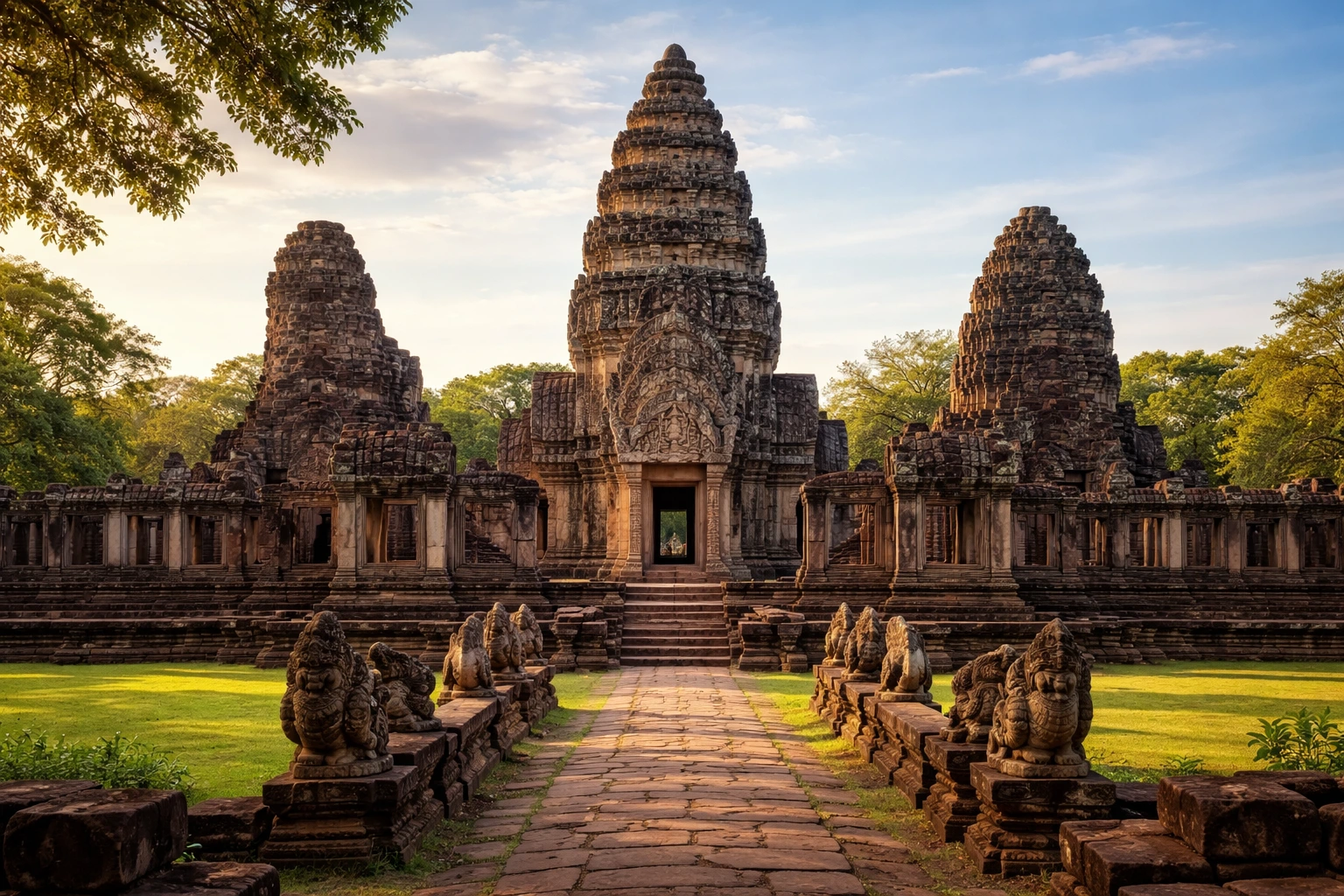
Northeastern Thailand, Isaan, is the country's largest region by land area, covering approximately 170,000 square kilometers across 20 provinces. It shares its northern and eastern borders with Laos along the Mekong River. Its culture, language, and cuisine are closely tied to Laos and reflect a distinct Lao-Khmer heritage that sets it apart from central or northern Thailand.
Isaan is best suited to travelers who have already seen at least one other part of Thailand and are specifically interested in temple architecture, rural Thai culture, riverside towns, or one of the most distinctive food traditions in Southeast Asia.
It is not a destination that competes with Phuket on scenery, Chiang Mai on accessibility, or Bangkok on density of experience. It competes on depth, quiet, and cultural specificity.
Before adding Isaan to a broader Thailand itinerary, review how all five Thailand travel regions interact with your dates and routing logic in the Thailand travel regions guide. Isaan works best as an extension, not a primary destination for a first visit to the country.
Quick Summary: Northeastern Thailand Isaan at a Glance
| Variable | Detail |
|---|---|
| Region size | 20 provinces, approximately 170,000 sq km |
| Best base cities | Khon Kaen, Udon Thani, Nakhon Ratchasima (Korat), Ubon Ratchathani |
| Best travel window | November to February (cool and dry) |
| Avoid | March to May (extreme heat), September to October (heaviest rains) |
| Access from Bangkok | Domestic flights to Khon Kaen, Udon Thani, Korat, or Ubon (approx. 1 hr) |
| Luxury infrastructure | Limited. Boutique and mid-range properties dominate. |
| Primary draws | Khmer temple trail, Mekong River route, Isaan food culture, Ban Chiang UNESCO site |
| Best-fit traveler | Repeat Thailand visitor, culturally motivated, self-directed |
Quick Picks: How to Approach Isaan by Interest
- Temple architecture focus: Base in Nakhon Ratchasima (Korat), day trip to Phimai, overnight to Phanom Rung
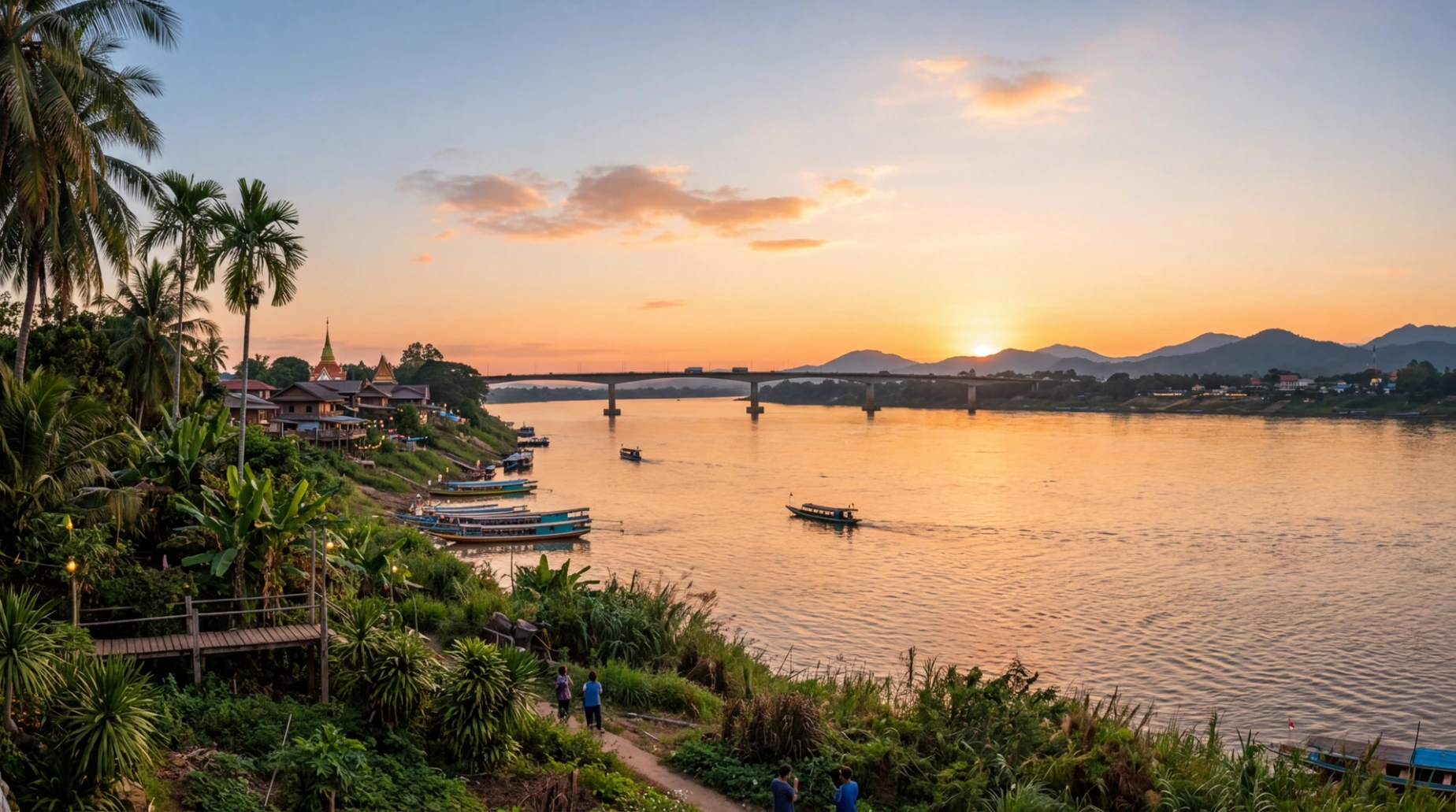
- Mekong River and slow travel: Nong Khai as primary base, with Chiang Khan as a two-night extension
- Food culture immersion: Khon Kaen for urban Isaan dining, local markets, and northeastern Thai cuisine in full range
- Repeat visitor adding depth: Udon Thani, Ban Chiang UNESCO site, and the border crossing to Vientiane for those continuing to Laos
- Short Isaan extension from Bangkok: Khao Yai National Park (Nakhon Ratchasima province) as a two-night add-on without committing to the full northeast
Decision Shortcut
Choose northeastern Thailand, Isaan, if you want cultural depth, unhurried pace, and access to a part of Thailand that operates on its own terms, and you are prepared to arrange private transport and manage moderate infrastructure independently.
Choose Northern Thailand if you want cultural access with better luxury infrastructure, a more established international traveler community, and a destination that rewards a first or second visit with less logistical friction.
If you are weighing whether northeastern Thailand, Isaan, fits into your broader Thailand routing, use the Thailand travel regions guide to structure the regional sequence before committing to flights or accommodation in the northeast.
Key Cities and Bases in Isaan
Nakhon Ratchasima (Korat): The Gateway City
Nakhon Ratchasima, almost universally referred to as Korat, is the largest city in Isaan and the one most accessible from Bangkok. It sits approximately 260 kilometers northeast of the capital and is reachable by road in three to four hours or by domestic flight in under an hour from Suvarnabhumi (BKK).
Korat functions primarily as a gateway rather than a destination in itself. The old city moat area and the Thao Suranari Monument are worth a few hours. The real reason to base here is access to the Khmer temple circuit. Prasat Hin Phimai is 60 kilometers northeast of Korat. Prasat Hin Khao Phanom Rung, in Buriram province, is approximately 160 kilometers southeast. Both are manageable as day trips or one-night extensions with a private driver arranged from Korat.
Accommodation at the luxury tier is limited. Several business-oriented four-star properties operate in the city center. The Dusit Princess Korat is the most consistently cited upper-midrange option. Expectations should be calibrated accordingly: Korat provides logistical access, not resort-quality stays.
Trade-off: Korat's urban environment is functional rather than atmospheric. Travelers expecting old-city charm or walkable cultural neighborhoods will find it modest. Its value is entirely logistical.
Where this fits in your trip: Bangkok (road or domestic flight) → Korat (1 to 2 nights) → Khmer temple circuit → continue northeast or return to Bangkok
Khon Kaen: The Most Livable Isaan Base
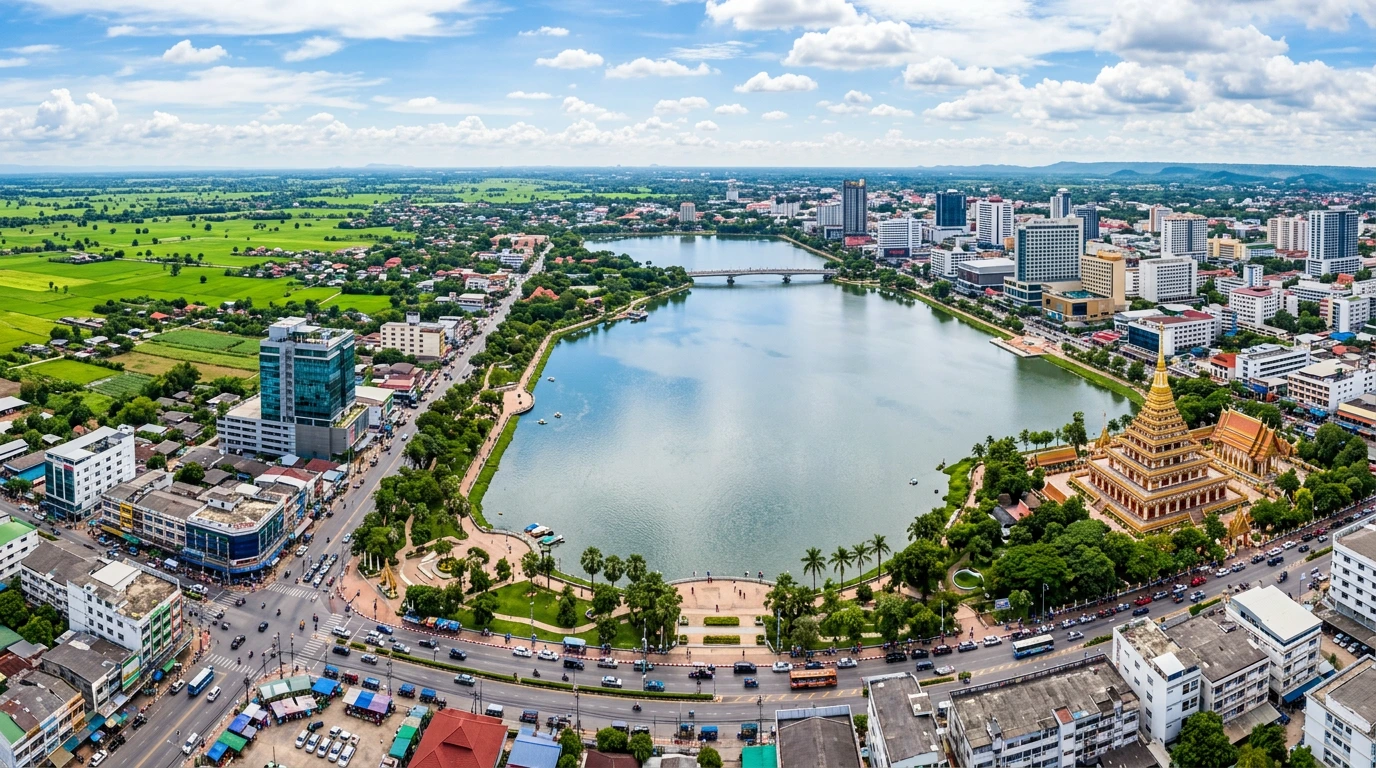
Khon Kaen is the commercial and educational center of the northeast, home to one of Thailand's largest regional universities. It is cleaner, better organized, and more accessible to independent travelers than most other Isaan cities. The Beung Kaen Nakhon Lake at the city's southern edge provides a calm focal point. The Khon Kaen National Museum holds one of the region's strongest collections of prehistoric artifacts and Khmer-era objects.
For travelers interested in Isaan food culture, Khon Kaen is the most productive base. The night market along the lake, the Ton Tann Market complex, and the restaurant strip along Rimbueng Road provide access to northeastern Thai cuisine in full range: larb, som tam, grilled river fish, fermented sausage, and sticky rice at a quality level that the tourist-oriented establishments of Bangkok rarely replicate.
The Pullman Khon Kaen Raja Orchid is the highest-quality accommodation option in the city and operates to a standard that international business travelers would find adequate. It is not a luxury resort property. It is a well-maintained urban hotel with reliable service.
Trade-off: Khon Kaen has no iconic single sight that justifies a trip on its own. Its value is cumulative: food, market culture, regional museum, and a comfortable base from which to move in multiple directions.
Where this fits in your trip: Udon Thani or Korat → Khon Kaen (2 nights) → east toward Ubon or west back to Bangkok
Udon Thani: The Archaeological Base
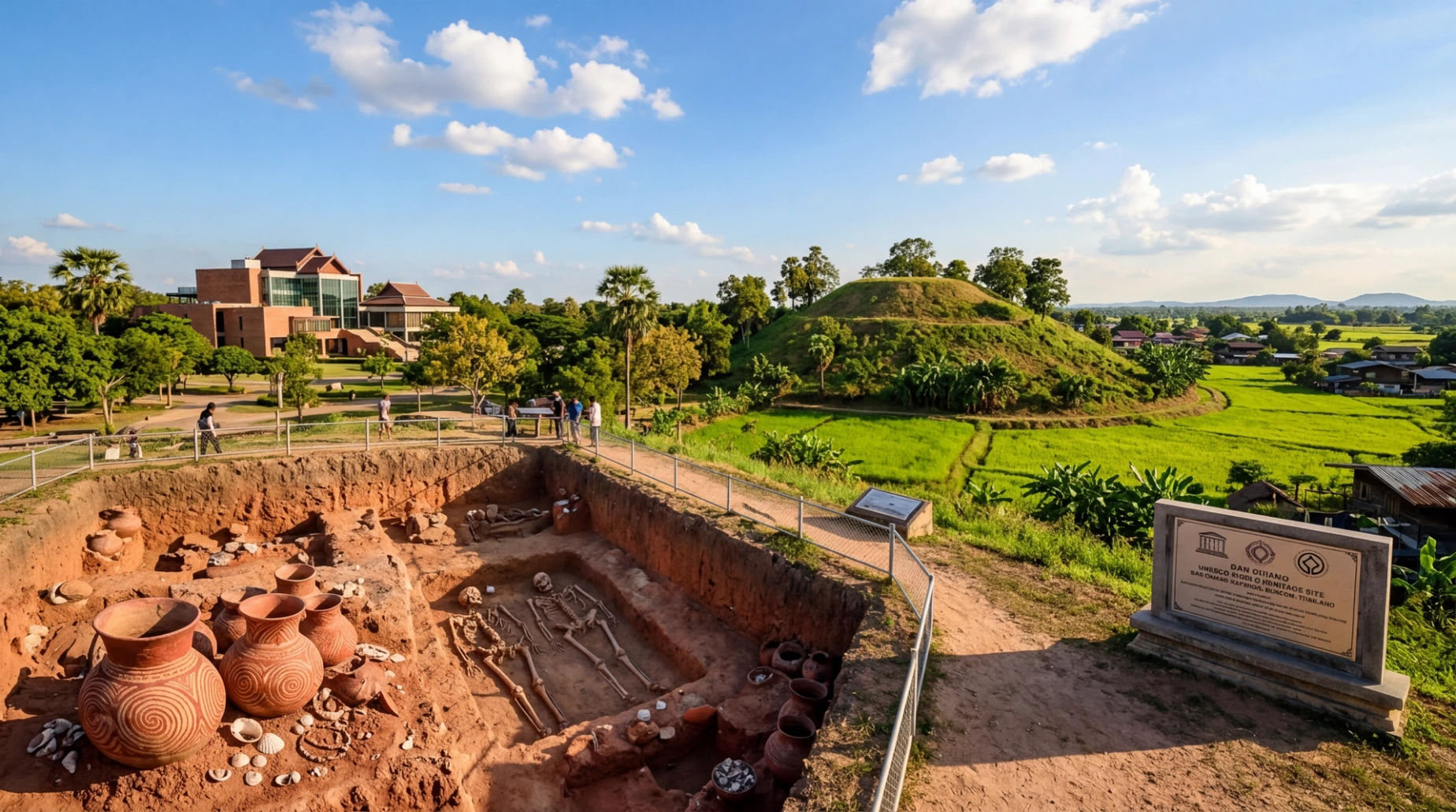
Udon Thani is the most internationally connected city in Isaan, with direct flights operating from Bangkok (DMK and BKK), Chiang Mai, and several regional hubs. It has historically attracted a resident expatriate community due to its American military-era infrastructure and its proximity to the Laos border at Nong Khai, 55 kilometers north.
The primary reason to base in Udon Thani specifically is Ban Chiang, a UNESCO World Heritage Site located approximately 50 kilometers east of the city. Ban Chiang is one of Southeast Asia's most significant prehistoric archaeological sites, with evidence of Bronze Age civilization dating back more than 5,000 years. The on-site museum and the excavation pits that remain open to visitors provide a genuinely rare window into pre-Thai civilizations in the region.
Beyond Ban Chiang, the Red Lotus Sea (Talay Bua Daeng) at Nong Han Lake draws seasonal visitors between late December and February when the lotus blooms. Access requires an early morning boat departure to catch the flowers before they close in the heat.
Trade-off: Udon Thani itself has limited appeal as a city. Most travelers use it as a hub for Ban Chiang and as the departure point for Nong Khai, rather than as a destination requiring more than one night.
Where this fits in your trip: Fly into Udon Thani from Bangkok → Ban Chiang day trip → continue to Nong Khai by road (55 km)
Ubon Ratchathani: The Eastern Anchor
Ubon Ratchathani sits at the far eastern edge of Isaan, close to the Laos and Cambodia border tripoint. It is the least frequently visited of the four main Isaan cities by international travelers, which in part defines its character.
The city holds a genuine local identity centered on its position along the Mun River and its status as one of Thailand's centers for Theravada Buddhist practice. The Wax Castle Festival (Khao Phansa candle parade) in July and August is one of Isaan's most visually distinctive cultural events, drawing significant domestic attendance.
Ubon is relevant primarily to travelers building an eastern Isaan circuit, combining it with the Pha Taem National Park cliff paintings above the Mekong, and potentially crossing into southern Laos via the Chong Mek border crossing.
Trade-off: Ubon requires a commitment to the eastern Isaan route. It does not sit naturally on a loop with the other three cities unless a dedicated northeastern circuit of at least seven days is planned.
Where this fits in your trip: Khon Kaen (fly or road) → Ubon Ratchathani (2 nights) → Pha Taem National Park → return or cross into Laos
The Khmer Temple Trail: Phimai and Phanom Rung
This is the section of an Isaan trip that justifies the extension for travelers with a serious interest in pre-Thai civilization and Khmer architecture.
Prasat Hin Phimai
Prasat Hin Phimai, in the small town of Phimai, approximately 60 kilometers northeast of Korat, is one of the most complete and well-restored Khmer temple complexes in Thailand. Construction began in the late 10th century during the reign of the Khmer Empire. The complex is oriented unusually: it faces southeast toward Angkor, rather than east, which is the conventional Khmer temple orientation.
The central sanctuary is made of white sandstone, which gives it a visual character different from the laterite-heavy complexes further east. The surrounding moat and gopura gateways remain largely intact. The Phimai National Museum, a short walk from the temple, holds original lintels and statuary removed from the site for preservation.
Phimai town itself is small, calm, and largely domestic in its tourism profile. Staying overnight in Phimai rather than returning to Korat provides a more composed experience of the site at opening and closing hours, when visitor numbers are lowest.
Trade-off: The town has almost no luxury accommodation. The practical approach is a day trip from Korat for travelers with high accommodation standards, with an early morning departure to reach the site before the heat builds.
Prasat Hin Khao Phanom Rung
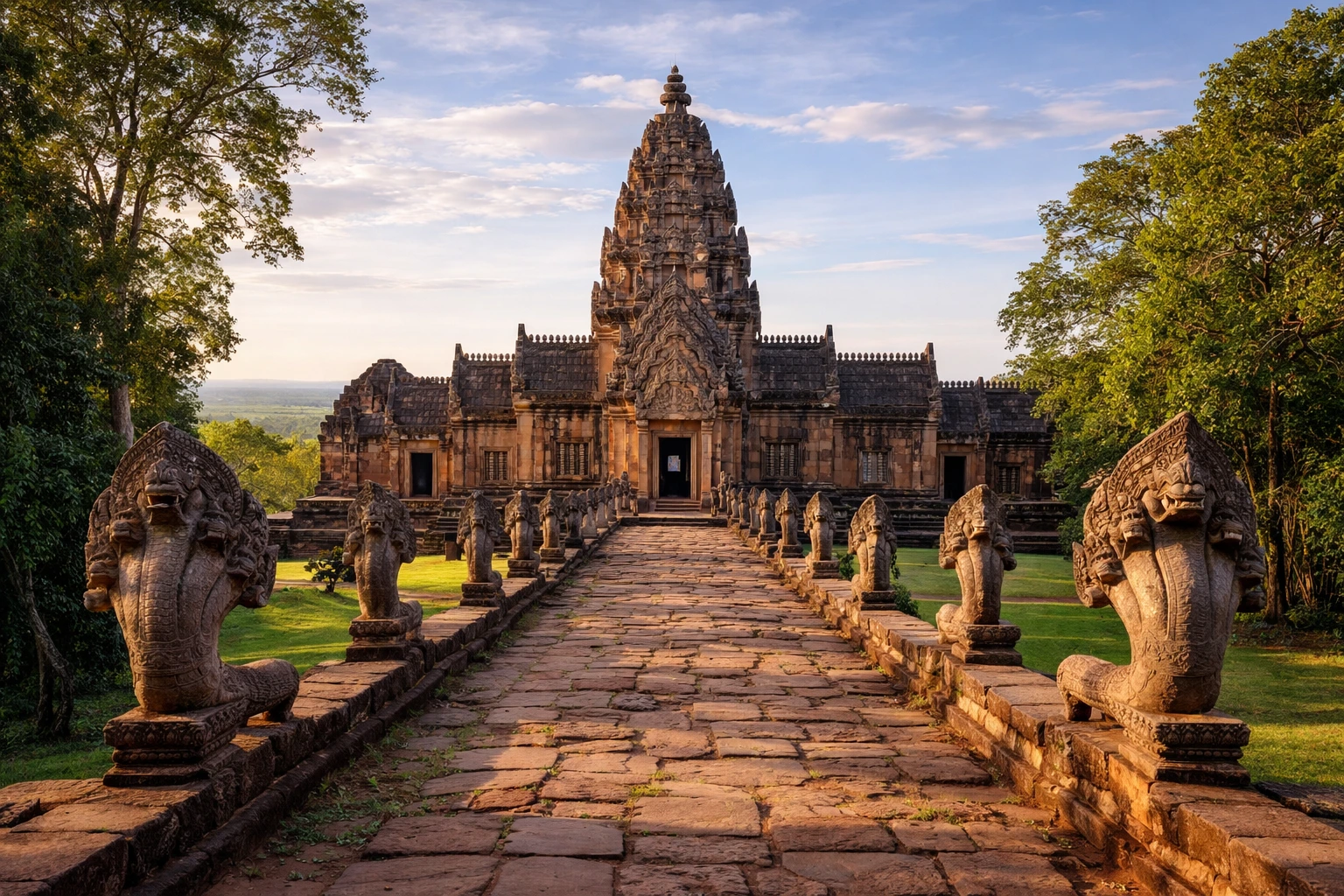
Phanom Rung is the more dramatic of the two Khmer temple complexes and, for many travelers, the more memorable. It sits atop an extinct volcano in Buriram province, approximately 160 kilometers southeast of Korat. The approach along a ceremonial staircase of 162 steps and three naga bridges, rising toward the main sanctuary, is one of the most considered pieces of architectural staging in the country.
The complex was built between the 10th and 13th centuries and served as a Shaivite Hindu sanctuary dedicated to Shiva. The main prangs, the carved sandstone lintels, and the alignment of the doorways, which produce a straight line of sight through 15 doorways at sunrise on four days each year, demonstrate a level of astronomical and architectural precision that photographs do not adequately convey.
The four sunrise alignment dates (approximately mid-April, early September, early October, and late March) draw significant domestic crowds. In practice, outside these dates, the site is quiet and manageable at a measured pace.
Trade-off: Getting to Phanom Rung without private transport is possible but slow. Songthaew connections from Nang Rong town (the nearest hub) operate infrequently. A private driver from Korat for the day, with a return via Phimai, is the most operationally efficient approach.
Where this fits in your trip: Korat base → Phimai (morning) → Phanom Rung (afternoon or separate day) → return to Korat or continue east to Khon Kaen.
The Mekong River Route: Nong Khai to Chiang Khan
The Mekong River forms the entire northern border of Isaan with Laos. The route along its southern bank, from Nong Khai in the west to Chiang Khan further west in Loei province, is one of the quieter and more considered travel experiences in northern Isaan.
Nong Khai
Nong Khai is a river town 55 kilometers north of Udon Thani, connected to Vientiane, Laos, by the Thai-Lao Friendship Bridge. For travelers continuing to Laos, this is the primary land crossing from Isaan. For those remaining in Thailand, Nong Khai offers a river promenade, a modest but distinctive roster of temples, and the Sala Kaew Ku sculpture park: a surreal collection of enormous concrete Hindu and Buddhist statuary built by the mystic Luang Pu Bunleua Sulilat. The sculpture park is unlike anything else in Thailand.
The riverside guesthouses along the Mekong promenade are atmospheric rather than luxurious. The Mut Mee Garden Guesthouse is the most consistently referenced for international travelers seeking a calm, river-facing stay with genuine character. It does not operate at the luxury tier. It operates at the level of thoughtful, considered hospitality that the Mekong route rewards.
Trade-off: Nong Khai's appeal is entirely in its pace and its river position. Travelers who measure value by facilities, pool quality, or dining range will find it modest. Those who measure it by atmosphere and freedom from crowds will find it proportionate.
Chiang Khan
Chiang Khan, in Loei province on the western edge of Isaan, is a small riverside town with a preserved wooden shophouse street along the Mekong. It sits approximately 300 kilometers west of Nong Khai by road, passing through terrain that becomes noticeably cooler and more mountainous in the cool season.
Between November and February, the morning mist over the Mekong and the surrounding mountains produces a visual quality that bears no resemblance to coastal Thailand. The town fills with domestic Thai tourists on weekends during this period. Arriving midweek extends the quiet considerably.
The walking street market along Chai Khong Road operates in the evening and carries the regional food culture: miang kham, Loei-style grilled meats, and coconut-based sweets. The Kaeng Khut Khu rapids, a short distance outside town, are accessible by boat or bicycle.
Trade-off: The road from Nong Khai to Chiang Khan is long and not always in optimal condition. This section of the Mekong route requires either a private vehicle or a willingness to accept slow, connecting transport. It is not suited to travelers with tight schedules.
Where this fits in your trip: Udon Thani (fly in) → Nong Khai (2 nights) → Chiang Khan (2 nights) → return via Loei or continue north toward Chiang Mai by road
Isaan Food Culture: Why It Matters
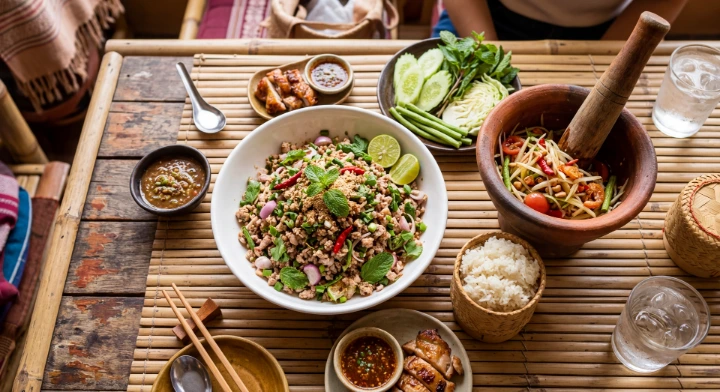
Isaan food is not a regional variation of Thai food. It is a distinct culinary tradition with Lao roots, fermented flavors, and a reliance on fresh herbs, grilled proteins, and sticky rice that differs structurally from central Thai cuisine.
The core elements are worth understanding before arrival.
Larb (sometimes spelled laab) is a minced meat salad dressed with fish sauce, lime juice, toasted rice powder, dried chili, and fresh herbs. It is served with sticky rice and eaten at almost any time of day. The northeastern version uses more fermented fish paste (pla ra) than Bangkok-adapted versions, producing a deeper, more pungent flavor profile.
Som tam in Isaan uses fermented crab, fermented fish, and long-fermented palm sugar in combinations that produce a sharply sour, intensely savory result. The versions sold in Bangkok have typically been moderated for central Thai palates. Eating som tam in Khon Kaen or Udon Thani is a different experience from eating it in Sukhumvit.
Gai yang (grilled chicken) with sticky rice is the Isaan daily meal in its simplest form. The marinade, the charcoal method, and the accompanying jeaw (roasted chili dipping sauce) vary by town. However, the best versions are found at market stalls and roadside operations, not in restaurants designed for tourists.
Pla pao (salt-crusted grilled river fish) is specific to Mekong towns and requires proximity to the river to find it in its freshest form. In Nong Khai and Chiang Khan, it is available at riverside restaurants in the evening with minimal lead time.
The practical instruction for food in Isaan is to eat where locals eat, not where menus carry photographs. As a result, the market circuit in any Isaan city between 6:00 and 8:00 in the morning produces a more representative experience of the food culture than any restaurant operating at lunch.
Getting to Northeastern Thailand, Isaan: The Practical Logic
By Air
All four main cities have domestic airports with regular service from Bangkok:
- Nakhon Ratchasima (Korat): Limited scheduled service; Thai AirAsia operates routes from Bangkok (DMK). Check current schedules as frequency varies.
- Khon Kaen (KKC): Regular departures from Bangkok (BKK and DMK) with Thai Airways, Bangkok Airways, and AirAsia. Flight time approximately 55 minutes.
- Udon Thani (UTH): Well-served from Bangkok (BKK and DMK) with AirAsia, Nok Air, and Thai Lion Air. Flight time approximately 1 hour.
- Ubon Ratchathani (UBP): Service from Bangkok (BKK) with Thai Airways and AirAsia. Flight time approximately 1 hour 10 minutes.
Flying into one city and out of another (open-jaw routing) is the cleanest structure for an Isaan circuit. Fly into Korat or Udon Thani, move through the region by private vehicle, and depart from Ubon or Khon Kaen.
By Road and Rail
The Bangkok to Korat expressway is the most traveled road route in Isaan, taking three to four hours by private vehicle or approximately four hours by bus from Mo Chit Northern Bus Terminal. The State Railway of Thailand operates overnight trains from Bangkok Hua Lamphong to Ubon Ratchathani, Khon Kaen, and Udon Thani. For travelers with flexibility and a preference for ground-level movement, the overnight train is an efficient way to cover distance while sleeping.
Private Driver: Non-Negotiable for Temple and River Routes
Isaan's points of interest do not cluster conveniently around city centers. The Khmer temple circuit, the Mekong river towns, and the national parks all require movement on roads that are not served by reliable public transport at a pace suited to considered travel. A private driver, arranged through your hotel or a local operator, is not a luxury upgrade in Isaan. It is the operational baseline for getting the most out of the region.
Estimated cost for a private driver in Isaan: 1,800 to 3,500 THB per day, depending on distance and vehicle type (clearly marked as an estimate; rates vary by operator and season).
Luxury Infrastructure in Isaan: An Honest Assessment
Isaan does not have the luxury hotel infrastructure that the Andaman coast, Bangkok, or Chiang Mai provide. This is not a gap in the market that is about to be filled. It reflects the region's orientation toward domestic Thai tourism and its distance from the international arrival patterns that drive luxury hospitality investment.
What exists is a set of well-run business hotels in the main cities, a small number of boutique riverside properties along the Mekong, and resort-style accommodation around Khao Yai National Park in Nakhon Ratchasima province.
For the city stays: the Pullman Khon Kaen Raja Orchid, the Centara Hotel and Convention Centre Udon Thani, and the Pathumrat Hotel in Ubon Ratchathani represent the upper end of what is locally available. These are reliable four-star business properties. At the same time, they are not comparable to Anantara, Six Senses, or the Andaman villa market.
For travelers whose baseline is high-end luxury resort accommodation, the correct expectation for Isaan stays is: well-managed, clean, and comfortable, with service that is warm and locally oriented, in properties that prioritize function over atmosphere.
The luxury in Isaan is not in the accommodation. It is in the access: an empty Khmer sanctuary at 7:00 in the morning, a private boat on the Mekong at dusk, a market table with food that has no menu.
For a broader view of where Thailand's less-visited experiences sit across all regions, the luxury Thailand travel experiences guide covers private access structures and hidden-gem destinations in detail. For the full overview of what Thailand's luxury tier looks like across regions, the Thailand luxury travel overview sets the wider context.
Seasonal Considerations for Isaan
November to February is the optimal travel window. Temperatures in this period range from approximately 15 to 28 degrees Celsius across the region. The cool season produces the mist on the Mekong at Chiang Khan, the manageable temple visit conditions at Phimai and Phanom Rung, and the dry roads that make private driver circuits straightforward.
March to May brings extreme heat across the plateau, with temperatures regularly exceeding 38 to 40 degrees Celsius. Temple visits in direct sun between 10:00 and 16:00 become physically demanding. Travel during this window requires early morning starts and a realistic assessment of comfort in the heat.
June to October is the rainy season. The northeast's monsoon is less dramatic than the Andaman coast's, but rainfall is consistent, and some rural roads become unreliable in September and October. Temple sites remain accessible, and the landscape is at its greenest. Travelers who are comfortable with afternoon rains and adjusted scheduling will find the region quieter and less expensive during this period.
According to the Tourism Authority of Thailand, the cool season from November to February is the consistently recommended window for northeastern Thailand travel across all experience categories.
Sample Isaan Itinerary: 7 Days
| Days | Location | Key Experiences |
|---|---|---|
| Days 1 to 2 | Nakhon Ratchasima (Korat) | City orientation, Phimai temple (day trip), evening Korat market |
| Day 3 | Buriram / Phanom Rung | Private driver to Prasat Hin Khao Phanom Rung, afternoon drive to Khon Kaen |
| Days 4 to 5 | Khon Kaen | Beung Kaen Nakhon Lake, Khon Kaen National Museum, Isaan food circuit, night market |
| Day 6 | Udon Thani / Ban Chiang | Domestic flight or road from Khon Kaen, Ban Chiang UNESCO site, afternoon arrival in Nong Khai |
| Day 7 | Nong Khai | Sala Kaew Ku, Mekong promenade, riverside evening, depart from Udon Thani (UTH) |
Booking notes: Arrange a private driver in advance from Korat for the Phanom Rung day. Open-jaw flights (into Korat or Bangkok by road, out of Udon Thani) simplify the routing considerably. All accommodation should be confirmed before arrival, as the best riverside properties in Nong Khai operate with limited room inventory.
Who This Is Not For
Northeastern Thailand, Isaan, is not the right choice in several specific situations.
Travelers on their first visit to Thailand, with 7 to 10 days. Those days are better structured across Bangkok and the Andaman or the Gulf coast. Isaan rewards prior Thailand experience. It does not substitute for it.
Travelers whose primary interest is beach access, private pool villas, or coastal scenery. None of those exist in Isaan. Adding it to an Andaman itinerary involves logistics that are rarely worth the compromise on time.
Travelers who require five-star resort infrastructure as a baseline. The accommodation ceiling in Isaan does not meet that standard in any of its cities. This is a factual limitation, not a temporary one.
Travelers without a planned private transport arrangement. Isaan's temple circuit and river towns are not accessible at a reasonable pace without a private vehicle. Depending on public transport or songthaews for the Khmer sites adds hours to each movement and limits how much can be covered in a week.
For the broader Thailand itinerary picture across all five regions, including where Isaan sits relative to the Andaman and Gulf coasts, the Thailand travel regions guide provides the complete routing framework before any final itinerary decisions are made.
Plan Your Isaan Trip with Southeast Asia Simplified
If northeastern Thailand, Isaan, is part of the trip you are building, the routing decisions matter more here than in any other Thai region. The open-jaw flight structure, the private driver arrangement, the temple visit timing, and the accommodation calibration all require advance thought.
If you are serious about building a well-structured Isaan extension, begin with the city and temple sequence, confirm the private driver before arrival, and build the Mekong section around the cool season window. The details that make Isaan coherent are not complicated. They simply require prior attention.
Plan your Isaan trip and broader Thailand itinerary with Southeast Asia Simplified at southeastasiasimplified.com/contact-us.
FAQ: Northeastern Thailand Isaan
Is northeastern Thailand, Isaan, worth visiting?
Northeastern Thailand, Isaan, is worth visiting for travelers who have already experienced at least one other part of Thailand and are seeking cultural depth, Khmer heritage architecture, or a slower, more locally oriented travel experience. For first-time visitors to Thailand with limited time, however, other regions offer a higher return on available days. The region rewards prior Thailand experience and self-directed travel more than it rewards general tourism.
What is northeastern Thailand, Isaan, and what makes it different?
Northeastern Thailand, Isaan, is a 20-province region covering the country's largest geographic area, bordered by Laos along the Mekong River to the north and east. Unlike central or northern Thailand, Isaan carries a distinct Lao-Khmer cultural identity expressed through its architecture, language, and cuisine. It is oriented almost entirely toward domestic Thai tourism, which defines both its character and its infrastructure ceiling.
What is the best time to visit northeastern Thailand, Isaan?
The best time to visit northeastern Thailand, Isaan, is from November to February. This cool and dry period produces the most comfortable conditions for temple visits, river travel, and outdoor movement. March to May brings extreme heat. June to October is the rainy season, which is manageable but adds road variability in rural areas. In practice, the cool season window is the consistently recommended period across all Isaan experience categories.
What are the best cities to base yourself in northeastern Thailand, Isaan?
The best base cities in northeastern Thailand, Isaan, are:
- Nakhon Ratchasima (Korat) for the Khmer temple circuit and access to Phimai and Phanom Rung
- Khon Kaen for food culture, livability, and central positioning within the region
- Udon Thani for the strongest international flight connections and access to the Ban Chiang UNESCO site
- Nong Khai for the Mekong River route and the Thai-Lao border crossing to Vientiane
Most structured Isaan trips use two or three of these in sequence rather than committing to one city for the full duration. Open-jaw routing between Korat and Udon Thani covers the majority of the region's key experiences within a seven-day window.
What is Isaan food, and where is the best place to try it?
Isaan food is a distinct northeastern Thai culinary tradition with strong Lao roots, built around fermented flavors, grilled proteins, fresh herbs, and sticky rice. Core dishes include larb (minced meat salad with toasted rice powder and dried chili), som tam (green papaya salad using fermented crab and fish), gai yang (charcoal-grilled chicken with jeaw dipping sauce), and pla pao (salt-crusted grilled river fish). The best place to experience northeastern Thailand's Isaan food is in the region itself: Khon Kaen's night market and morning markets, the riverside restaurants of Nong Khai, and the market stalls of Chiang Khan. Bangkok versions of the same dishes are typically modified for central Thai palates.
Is there luxury accommodation in northeastern Thailand, Isaan?
Luxury resort accommodation, as defined by the Andaman coast or Bangkok standard, does not exist in northeastern Thailand, Isaan. The upper end of what is available includes well-run four-star business hotels in Khon Kaen, Udon Thani, and Ubon Ratchathani. Boutique riverside properties in Nong Khai and Chiang Khan operate with character and quality of hospitality rather than resort facilities. Travelers whose baseline is five-star resort infrastructure should approach Isaan accommodation with adjusted expectations. The region's value lies elsewhere: in access, in quiet, and in cultural specificity.
Conclusion
Northeastern Thailand, Isaan, is not the part of Thailand that announces itself. It does not have the coastal scenery of the Andaman, the mountain culture of Chiang Mai, or the urban density of Bangkok. What it has is a coherent regional identity, a Khmer architectural heritage of genuine significance, a food culture that does not exist in the same form anywhere else in Southeast Asia, and a Mekong River route that rewards the kind of traveler who measures a trip by what it leaves behind rather than what it provides.
The traveler this region suits is already forming in the description. They have been to Thailand before. They are asking a different question now. And northeastern Thailand, Isaan, approached with the right planning and the right expectations, will answer it precisely.
For the broader itinerary context, begin with the Thailand travel regions guide before confirming your routing. For the less-visited experiences across all Thai regions, the luxury Thailand travel experiences guide sits alongside this article as the next logical read.
Thailand was never hidden. Only the way you arrive decides what it reveals.