Many travelers choose a city for Songkran, but the real decision is not the city. It’s the time of day.
Morning and afternoon function as two different festivals.
Songkran 2026 officially runs from April 13 to 15, but celebrations in Bangkok can start as early as April 11 and continue through April 19 in some areas of Chonburi. This year, the holiday follows right after the weekend, making for a five-day break. Expect very high demand for travel and accommodation.
Hotels in Chiang Mai, Bangkok, and Phuket will fill quickly, so that last-minute options will be limited.
This guide explains why the Thai New Year is celebrated, describes the main rituals and how they differ by city, and helps foreign travelers join in with the right expectations.
Songkran Festival Thailand: Quick Answer
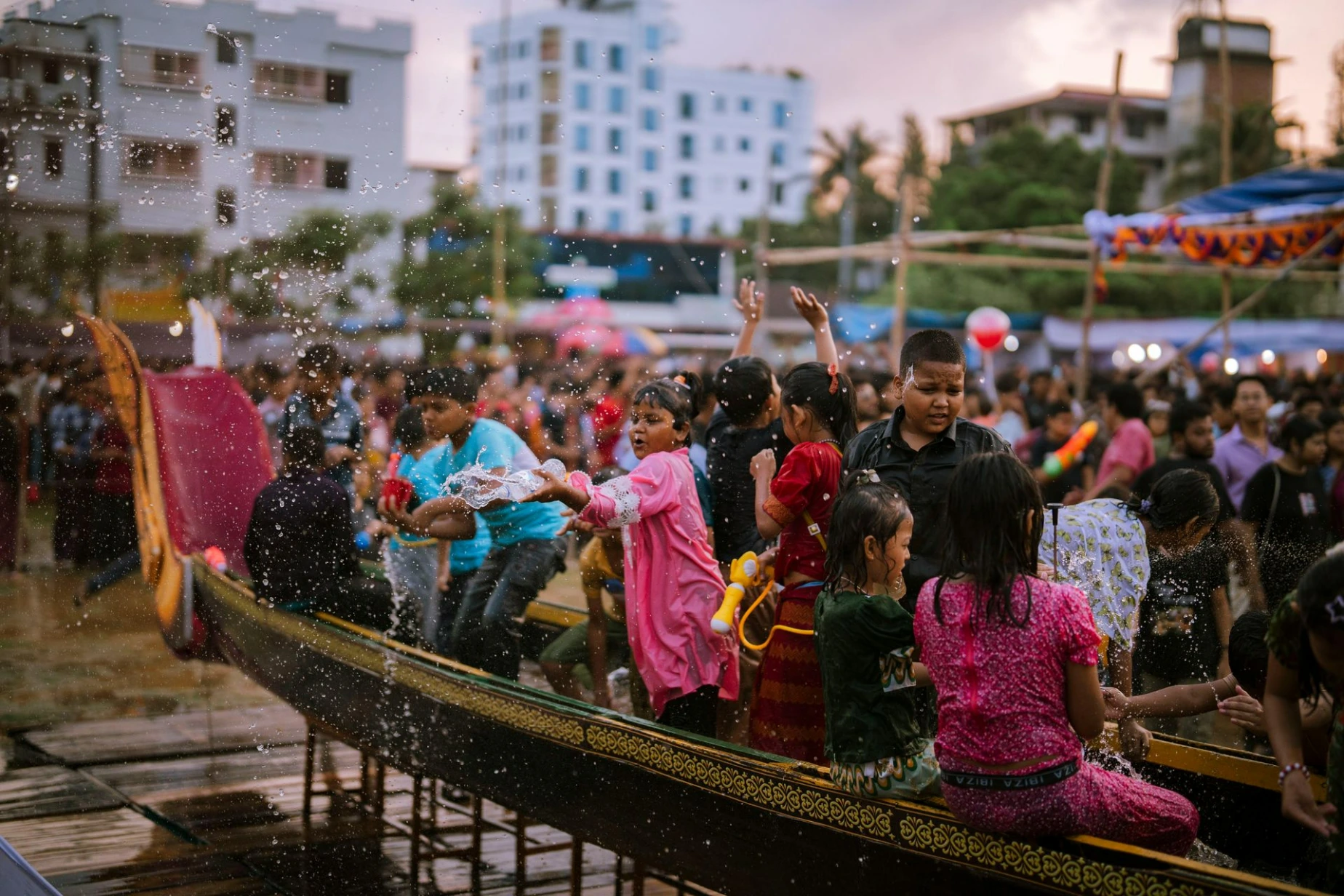
The Songkran festival in Thailand runs from April 13 to 15, 2026, and combines morning Buddhist rituals with large-scale public water celebrations. It marks the Thai New Year on the traditional solar calendar and has been recognized by UNESCO as Intangible Cultural Heritage since December 2023.
Chiang Mai offers the most complete experience, balancing temple ceremonies with the Old City moat water festival from April 12 to 16. Bangkok offers the largest scale and major international music events. Phuket and Koh Samui deliver a beach-paced version of the water festival.
Ayutthaya and Sukhothai offer heritage-focused, lower-crowd options. Important tip: Book your accommodation and intercity transport at least two months before April, as both tend to sell out quickly.
If you are choosing one destination, choose Chiang Mai for the full cultural and street-festival experience, Bangkok for big events and crowds, or Phuket and Koh Samui for a more relaxed, beach-focused celebration.
Quick Summary: Songkran 2026 at a Glance
Element | Detail |
| Official dates | April 13 to 15, 2026 (Monday to Wednesday) |
| Extended celebrations | Chiang Mai: April 12 to 16. Sukhothai: April 6 to 19. Pattaya Wan Lai: April 17 to 19 |
| UNESCO status | Inscribed December 6, 2023 |
| Origin of the word | Sanskrit Sankranti, meaning astrological passage |
| Core ritual | Scented water poured over the Buddha images and the elders' hands |
| Best for tradition and spectacle | Chiang Mai |
| Best for scale and music | Bangkok |
| Best for the beach, combined with a festival | Phuket, Koh Samui |
| Best for heritage and low crowds | Ayutthaya, Sukhothai |
| Key logistical constraint | Accommodation and intercity transport must be booked months in advance |
What Is the Songkran Festival in Thailand?
The Songkran festival in Thailand is the country's traditional New Year celebration, marking the sun's annual passage into Aries on the traditional Thai solar calendar.
The word derives from the Sanskrit Sankranti, meaning "astrological passage" or "transition". At its core, the festival is built on three principles: purification, gratitude, and renewal. Water is the central symbol. Pouring it washes away accumulated bad luck and misfortune from the previous year. Offering water to elders and to Buddha images is an act of respect, not performance.
The festival has an unbroken history of more than 700 years, traceable to the Sukhothai Kingdom in the 13th century. It continued through the Ayutthaya period and into the Bangkok era, each adding layers of ceremony without displacing the sacred core.
Thailand was never colonized, which kept those traditions intact from outside disruption. On December 6, 2023, UNESCO formally inscribed Songkran on its Representative List of Intangible Cultural Heritage of Humanity during the 18th Session of the Intergovernmental Committee held in Kasane, Botswana.
It was the fourth Thai cultural element to receive this recognition, following Khon masked dance drama (2018), Nuad Thai traditional massage (2019), and Nora dance drama in southern Thailand (2021).
Why Songkran Is Celebrated
The Astronomical and Cultural Origin
Songkran marks a precise astronomical moment: the day the sun enters Aries in the traditional Thai solar calendar. Ancient scholars calculated this transition with precision.
The festival did not begin as a street party. It began as an act of calendrical and cosmic alignment. Its roots extend to Theravada Buddhist and Hindu cosmological traditions that traveled through mainland Southeast Asia from India, incorporating elements from the Indian Makar Sankranti and the Burmese Thingyan.
As it moved through the Khmer and Ayutthaya periods, it absorbed Buddhist meaning and became the sacred communal event that Thailand observes today.
The Myth Behind the Water
A foundational legend ties Songkran's water rituals to a wisdom contest between a young boy named Dhammapala and the god Brahma. After losing, Brahma forfeited his own head. Because his head carried great power, it required annual ritual cleansing by his seven daughters.
Each year, a different daughter presides over Songkran, corresponding to the day of the week on which the festival falls. This mythological structure gave the water ceremony its divine significance.
April and the Heat
April is the hottest month across most of Thailand, with temperatures regularly exceeding 35 degrees Celsius in Bangkok and Chiang Mai. The timing of the water celebration is not coincidental.
The water serves a practical function alongside the spiritual one. For Thai families returning home from cities for the holiday, it is both symbolic and genuinely welcome.
How Songkran Is Celebrated: The Two Registers
Many foreign visitors make the mistake of seeing Songkran as one long event. In reality, it has two very different parts. Knowing both helps you get a true sense of the festival and of Thailand.
The Sacred Morning
Songkran begins with temple visits and merit-making, often before sunrise. Thai families begin before sunrise. Visiting a temple, offering alms to monks, and making merit (tam boon) for the new year are the opening acts of the Thai Buddhist New Year.
The atmosphere in the temple courtyard is composed and reverent. The air carries jasmine and incense. Most foreign travelers miss this side of Songkran because it happens before the water fights begin.
Rod Nam Phra (bathing the Buddha)
Scented water, often infused with jasmine or rose petals, is carried to temples and poured slowly over sacred Buddha images.
The ritual brings good fortune and cleanses the spirit of accumulated misfortune. At major temples in Chiang Mai, including Wat Phra Singh and Wat Chedi Luang, families queue patiently while monks chant in the background. If you arrive early and dress modestly, you can watch this ritual respectfully from a distance.
Rod Nam Dam Hua (water for elders)
This is Songkran's most intimate ritual, and it takes place primarily in homes. Younger family members pour scented water gently over their parents' and grandparents' hands, an act of gratitude and humility.
Elders offer words of wisdom and blessings for the year ahead. This ritual isn’t a public street event, but knowing about it gives the street water fights a deeper meaning.
Ko Phra Sai (sand pagoda building)
At temples across Thailand, families bring sand to the grounds and build miniature chedis decorated with colorful flags and flowers. The ritual symbolically returns to the temple any grains of sand unknowingly carried on worshippers' shoes throughout the year.
Temple courtyards transform into quiet, intricate installations. Chiang Mai's Tha Phae Gate area is among the most photogenic locations for this. In Chiang Mai and northern cities, Buddha image processions carry sacred Buddha images on ornate floats through the streets on April 13 (Maha Songkran Day).
The Phra Phuttha Sihing procession is the most significant in the north. Crowds line the route and pour water over the images as they pass, the sacred and the communal occupying the same space simultaneously.
The merit-making act of releasing captive birds or fish into the wild is common during Songkran. It represents the release of past burdens and the cultivation of positive intention for the year ahead, and is practiced at temples and along rivers throughout the country.
By midmorning, the atmosphere begins to shift.
By early afternoon, the public water celebration takes over.
The gentle morning pouring ritual evolves into the outdoor water festival Thailand is known for worldwide. Pickup trucks loaded with barrels of water and participants circle major roads and moat areas as mobile water-fight platforms. Water guns, buckets, and hoses are standard.
Foam machines and water cannons feature at the music event zones in Bangkok. Even during the street celebrations, the water still stands for purification and goodwill. Remembering this can shape how you join in.
The three-day period, which includes April 13 (Maha Songkran Day), is also National Elderly Day. Grand processions, temple ceremonies, and the start of public celebrations define the day. April 14 (Wan Nao, National Family Day) focuses on family gatherings, with river sand collection for temple pagodas and continued celebrations.
April 15 (Wan Payawan, Thai New Year's Day) centers on temple visits and merit-making, with public celebrations running through the evening.
Songkran brings the year's most concentrated street-food environment. Vendors line every celebration street.
The seasonal specialty is Khao Chae, cold, jasmine-scented water poured over rice and served with savory accompaniments, prepared and eaten only during Songkran.
Where the Thai New Year Water Festival Is Celebrated Across Thailand
Songkran isn’t the same everywhere in Thailand. Each region celebrates in its own way. Picking a city that matches your travel style is the most important decision you’ll make for the festival.
Bangkok
Bangkok delivers the Thai New Year water festival at its largest and most logistically accessible scale.
Silom Road is the most organized zone, with road closures, fire trucks spraying crowds, and direct BTS access via Sala Daeng station. Khao San Road is the most internationally oriented zone, dense and continuous from morning into the early hours.
Asiatique The Riverfront offers a more composed riverside atmosphere along the Chao Phraya. ICONSIAM Thaiconic Songkran Celebration operates from April 10 to 15.
The Siam Songkran Music Festival at RCA runs from April 11 to 14. S2O Songkran Music Festival runs from April 11 to 13.
The Maha Songkran World Event at Benjakitti Park runs from April 11 to 15. During peak hours, traffic near major celebration areas can come to a standstill.
The BTS and MRT are the only reliable ways to get around, so plan your travel with this in mind.
For the cultural layer of Bangkok during or around the festival, the Bangkok private tours and wellness guide covers temple access, private routing, and wellness experiences that work around the Songkran saturation zones.
Chiang Mai
Chiang Mai is consistently the most complete single destination for the Songkran festival experience in Thailand. The 6.5-kilometer moat surrounding the Old City becomes the primary water battle zone from April 12 to 16.
Pickup trucks circle the moat road continuously throughout the day. Tha Phae Gate is the most photogenic gathering point, with parade floats, opening events, and sand pagoda contests alongside the street celebrations.
Morning temple ceremonies at Wat Phra Singh and Wat Chedi Luang represent traditional Lanna-style merit-making that predates the street festival by centuries. The Rod Nam Dam Hua ceremony and Buddha image processions connect the celebration to its northern cultural roots in ways not replicated elsewhere in Thailand. April 16 (Wan Pak Pi) still holds cultural importance.
On this day, Chiang Mai is less crowded but still festive, and many long-term visitors say it’s one of the most enjoyable days of the festival.
Accommodations near the Old City moat in Chiang Mai usually fill up three to four months before April 13. In 2026, with the longer holiday, rooms will book up even faster than usual.
Ayutthaya
Ayutthaya offers the most historically grounded version of the Thai New Year celebrations in the country. The ancient, ruined temples of the former capital form the backdrop for ceremonies and community rituals.
The Elephant Splashing Songkran Festival (April 13 to 15, Sri Sanphet Road) is the city's defining event: decorated elephants participate in the water celebrations in a scene found nowhere else in Thailand.
Crowd levels are substantially lower than in Bangkok or Chiang Mai. The tone is more temple-focused and spiritually oriented.
Dress codes apply throughout the historic city. For travelers pairing Ayutthaya with a broader central Thailand journey, the Central Thailand beyond Bangkok guide covers routing, timing, and the surrounding heritage sites that make the region most worth visiting.
Sukhothai
The Maha Songkran at Sukhothai runs from April 6 to 19, 2026, the longest celebration window in the country. The UNESCO-listed ruins of Sukhothai Historical Park provide one of the most visually distinctive backdrops for traditional merit-making and floral processions available anywhere in Thailand.
Sukhothai is much less crowded than Chiang Mai or Bangkok. If you value history as much as celebration, Sukhothai gives you the most authentic, heritage-rich Songkran experience.
Phuket
Phuket delivers Songkran at beach pace. Patong Beach and Bangla Road represent the highest-energy option in the south, with water celebrations running alongside the existing nightlife infrastructure. Phuket Old Town carries a more traditional feel, with local processions and the Dibuk Road Songkran Festival on April 13.
The quieter western beaches, including Bangtao and Kamala, maintain hotel-based events and smaller local celebrations with significantly less street intensity.
If you're using Phuket as a festival base and planning travel along the Andaman coast before or after Songkran, the southern Thailand Andaman Coast travel guide is your most comprehensive resource for navigating travel between Phuket, Krabi, and Phang Nga Bay.
For charter options on the water, the private boat tours in Phuket guide covers operator options and timing windows before and after peak-season demand.
Pattaya and Chonburi
Pattaya runs official Songkran celebrations from April 13 to 15, then extends into the Wan Lai festival through approximately April 17 to 19.
Chonburi province extends further: Bang Saen's Wan Lai runs from April 16 to 17, and Phra Pradaeng's celebrations run from April 24 to 26. This makes Pattaya and Chonburi the longest-running Songkran zones in Thailand, making them relevant for travelers who cannot reach Thailand during the core national holiday window.
Koh Samui and the Gulf Coast
Koh Samui celebrates Thai New Year in a relaxed, island-style, with hotel pool parties and smaller street events.
It’s a great choice for families and couples who want the festive atmosphere without the big crowds of Bangkok or Chiang Mai. The southern Thailand Gulf Coast guide covers Koh Samui's seasonal positioning alongside Koh Phangan and Koh Tao for travelers planning a wider southern Thailand itinerary around the April window.
Northeast Thailand (Isaan)
Khon Kaen runs from April 11 to 15 at Bueng Kaen Nakhon and Si Chan Road, blending cultural ritual with urban energy in a format primarily aimed at local Thai participants.
Udon Thani runs from April 13 to 16 at UD Town Shopping Center. The Renu District in Nakhon Phanom carries one of the most culturally specific Songkran traditions in the northeast: the Ram Phu Tai traditional dance performance alongside a Bai Sri ceremony.
The Mon-style Songkran at Sangkhlaburi (Kanchanaburi), running April 13 to 18 at Wat Wang Wiwekaram, is among the most ethnically distinct versions of the water festival in Thailand.
For a full picture of what northeast Thailand offers beyond Songkran, the Isaan guide covers the logistics and experience design for traveling through the region.
Picking the wrong city for Songkran can completely change your experience. Chiang Mai is very different from Bangkok, and Ayutthaya is nothing like Pattaya.
Check the Central Thailand and Andaman Coast guides before booking your flights and hotels, as you won’t be able to change cities easily after April 12.
How Foreign Travelers Experience the Songkran Festival in Thailand
This section calibrates expectations rather than listing activities.
The Morning Access Point
Foreign travelers who arrive at a functioning temple before 8 am on April 13 will encounter the face of Songkran that most visitors never see.
Families carry jasmine-scented water. Monks receive alms in the pre-dawn quiet. Buddha images are bathed with care and deliberate slowness. Visitors may observe respectfully from a distance, dressed modestly (no bare shoulders, no shorts above the knee).
Direct participation in the Rod Nam Dam Hua ceremony is reserved for family members unless a Thai host specifically extends an invitation. The contrast between the same spot at 7 am and at noon is striking. The street celebration is genuinely public and genuinely inclusive.
Foreign travelers are fully expected to participate. For Songkran, pack a waterproof bag for your phone and money, wear quick-dry dark clothes (since white turns see-through when wet), wear closed sandals with good grip, wear eye protection, and apply sunscreen before heading out.
Leave your passport in the hotel safe and only carry cash. The Songkran shirt, a brightly patterned short-sleeved design, is widely available at markets in the days leading up to the festival.
Wearing one signals participation and cultural alignment. Etiquette is the same everywhere: aim water below the shoulders, ask before splashing anyone who seems uninvolved, and never use ice water or strong hoses near faces.
Don’t splash monks, elders, pregnant women, babies, or people in work uniforms. Never splash anyone inside a temple. Remember, the water is meant for purification, not for aggression.
Music Festivals and Organized Events
The Siam Songkran Music Festival at RCA, Bangkok (April 11 to 14) is the primary internationally marketed ticketed event in 2026, with confirmed headliners including Martin Garrix, Marshmello, and John Summit.
S2O Songkran Music Festival (April 11 to 13) combines large-scale water cannon infrastructure with EDM programming.
Both are ticketed, age-restricted (20 and above), and represent a categorically different register from the free street celebrations and the temple rituals.
Cost Reality During Songkran
Songkran falls within the highest-demand pricing window on the Thai calendar. Prices below are estimates only and vary by property type and booking timing.
Category | Estimated Price Range (2026) |
| Chiang Mai hotels, Old City | $120 to $400+ per night |
| Bangkok hotels (Silom/Siam) | $150 to $500+ per night |
| Domestic flights | $80 to $250 one-way |
| Songkran shirts | $3 to $10 |
| Water guns | $5 to $25 |
| Temple alms | $3 to $8 |
Plan your Songkran budget as you would for a peak travel season, not a regular one. The higher prices are due to real demand, not just seasonal markups.
The Logistics Foreign Travelers Get Wrong
If you arrive in Thailand for Songkran without confirmed accommodation and transport, you are not planning a trip. You are reacting to one.
Accommodation in Chiang Mai and Bangkok near the celebration zones is booked months in advance of April 13.
The 2026 extended weekend alignment will accelerate this further. Intercity transport is the second pressure point. Domestic flights, night trains, and buses to Chiang Mai routinely sell out during the national holiday window. Booking in February or earlier is not excessive preparation for an April festival.
Traveling between cities by road from April 13 to 15 can take much longer than expected. It’s best to stay in one city during the first three days of Songkran, and travel between regions either before April 12 or after April 16.
Many offices, banks, and smaller businesses close or reduce their hours on public holidays. Stock sufficient cash before April 13. ATM queues in celebration zones can be significant.
If you prefer a luxury experience during Songkran, it is about controlling how and when you access the festival. Properties located near but outside the primary celebration zones allow you to enter and exit on your own terms.
A hotel near the Ping River in Chiang Mai, rather than directly on the Old City moat road, gives you the option to engage in the festival at a chosen hour and return to calm when you decide. Properties with rooftop or elevated viewing access allow observation of the processions and street energy without immersion at street level.
Private villa accommodation with dedicated cultural programming, including temple visits, rod nam phra ceremonies, and traditional Lanna dance performances, represents the highest-quality access to the sacred register of Songkran, away from street-level crowds.
If you're looking for exclusive experiences beyond the festival, the luxury Thailand travel experiences guide shows you the structures and experience design across the country.
Suggested Itinerary: Songkran Festival Thailand 2026
Days | Location | Key Experiences |
| April 11 to 12 | Bangkok | Arrive and settle. Visit Wat Arun and Wat Pho before the crowds peak. Stock cash. Confirm ground transport. Pre-festival events at Asiatique and ICONSIAM begin. |
| April 13 | Bangkok | Morning temple visit to Wat Benchamabophit (Wat Boworniwet) before 8 am. Afternoon: Silom Road via BTS Sala Daeng. Evening: Asiatique riverfront. |
| April 14 | Transfer to Chiang Mai (fly, 1 hour) | Arrive midday. Old City moat celebrations are in full swing. Tha Phae Gate evening events and sand pagoda viewing. |
| April 15 to 16 | Chiang Mai | April 15: morning at Wat Phra Singh for a Buddha bathing ceremony; afternoon: moat celebrations. April 16 (Wan Pak Pi): quieter, culturally specific, ideal for unhurried temple exploration. |
| Post-festival | Phuket or Krabi | Connect south via flight. The Andaman coast in April is still within excellent conditions before the southwest monsoon arrives in mid-May. |
Booking note: Chiang Mai accommodation near the Old City moat and Bangkok-to-Chiang Mai flights on April 13 and 14 are the two highest-demand bookings in this structure. Confirm these first, before anything else.
Who This Is Not For
Songkran isn’t ideal for travelers who need everything to run on schedule. Transport is often delayed, businesses may close unexpectedly, and roads near celebration areas can be unpredictable.
If you’re not comfortable spending long hours outdoors in heat above 35°C, Songkran may not be for you. April in Bangkok and Chiang Mai is truly hot and can be challenging.
In the main celebration areas, such as Silom Road, Khao San Road, and the Old City moat, everyone joins in. You might be able to walk around the edges without getting wet, but in the center, it’s not realistic to expect to stay dry.
Renting a motorcycle in any major city during Songkran is risky. Thai authorities call this period the "seven dangerous days" because of the high number of road accidents. Wet roads, big crowds, and poor visibility make motorcycle travel unsafe during the festival.
Plan your Songkran 2026 trip with Southeast Asia Simplified. For help with destinations, hotel recommendations, or private transfers in Bangkok, Chiang Mai, and the Andaman coast, reach out to the team directly.
Conclusion
At the beginning, we asked how to truly understand Songkran: why it happens, how it works, and how foreign travelers can join in the right way.
Songkran is Thailand’s biggest festival, but also the most misunderstood. If you come expecting just a water fight, that’s what you’ll see. But if you know the water has over 700 years of ritual meaning, and that mornings and afternoons are completely different, you’ll discover much more.
Chiang Mai is the most complete version of Songkran, where the sacred morning and street festival exist within the same walkable space. Bangkok is the right choice for its scale, organization, and the convergence of Thailand's water festival with international music programming. Ayutthaya and Sukhothai are for travelers who want the historical weight of the occasion visible in the landscape around them.
Planning for Songkran in April can be challenging, but if you prepare carefully, the experience is well worth it. In Thailand, the water is never just water.
Frequently Asked Questions
What is the Songkran festival in Thailand, and when does it take place in 2026?
The Songkran festival in Thailand is the country's traditional New Year celebration, marking the sun's passage into Aries on the traditional Thai solar calendar. In 2026, the official public holiday runs from April 13 to 15. Celebrations in Chiang Mai and Pattaya begin before the 13th and extend after the 15th. The word Songkran derives from the Sanskrit Sankranti, meaning astrological passage. The Thai New Year festival combines Buddhist temple rituals, family ceremonies, and the public water celebration, making it one of the most recognized cultural events in Southeast Asia.
How does the Songkran festival in Thailand actually work for travelers?
The festival operates in two parts: sacred mornings and public afternoon celebrations. Travelers who want the full experience should plan for both.
Mornings are sacred: temple visits, Buddha bathing ceremonies, and the Rod Nam Dam Hua ritual (pouring scented water over elders' hands) take place before the street celebrations begin. By late morning, the public water fight takes over. Arriving at a temple before 8 am on April 13 and being on Silom Road by noon are not conflicting activities. They are the same festival, separated by a few hours and an entirely different atmosphere.
Which city is best for experiencing the Songkran festival in Thailand?
Chiang Mai offers the most complete single-city experience, balancing Buddhist temple ceremonies with the Old City moat water festival from April 12 to 16. Bangkok offers the largest scale and the major international music events. Ayutthaya offers a heritage-focused, lower-crowd alternative, featuring the distinctive elephant water-splashing tradition. Phuket connects the Thai New Year water festival with a beach stay. Pattaya's extended Wan Lai celebrations through April 19 suit travelers who cannot be in Thailand during the core window. No single city is correct for every traveler. The city's decision is the most consequential planning choice of the festival.
What does the Songkran festival in Thailand cost to experience?
The festival itself is free on public streets. The cost is for accommodation and transport, which are subject to peak-of-year pricing from April 12 to 16. Hotels in Chiang Mai's Old City area typically range from $120 to $400 or more per night during Songkran. Bangkok hotels near Silom and Siam run $150 to $500 or more. One-way domestic flights from Bangkok to Chiang Mai range from approximately $80 to $250 when booked in advance. Participation gear (Songkran shirt, water gun) costs under $35. Plan for Songkran as a premium-window trip, not a standard-season one.
Is the Songkran festival in Thailand worth building a trip around?
Yes, for the right traveler. It is the largest and most culturally significant festival in the country, and the only Thai festival to hold UNESCO Intangible Cultural Heritage recognition. Travelers who plan logistics, choose a city for a specific experience, and understand the festival's dual nature will find it among the most immersive cultural events in Southeast Asia. Travelers who arrive without confirmed accommodation or intercity transport in April will find it very difficult logistically and will expend significant energy on problems that planning eliminates.
What should foreign travelers avoid during Songkran in Thailand?
Motorcycle travel in peak celebration zones should be avoided entirely. The "seven dangerous days" designation reflects documented accident data for this period. White or light-colored clothing is impractical: it becomes transparent when wet. Leaving passports, significant cash, or unprotected electronics in bags during the main water fight zones risks damage or loss. Attempting to book intercity flights or trains after April 10 without a reservation will generally yield no availability. Arriving at major temples after 9 am on April 13, expecting to observe the sacred rituals in calm, will instead result in street celebrations.