Most travelers researching elephant experiences in Chiang Mai begin with the wrong question. They ask which sanctuary is the best. The more useful question is which format of access, private, small-group, or immersive multi-day, matches the kind of experience they are actually trying to have.
That distinction matters because private elephant sanctuaries in Chiang Mai do not operate on the same model as private villas or charter boats. Exclusivity here is not primarily a function of price. It is a function of group size, animal welfare standards, land area, and how the sanctuary structures time with the elephants.
Across Chiang Mai, these differences are visible in daily visitor caps, land size, and how each sanctuary structures its hours with the elephants. Some operators offer formally bookable private slots. Others maintain such low visitor caps that intimacy is nearly guaranteed regardless. And a few have adopted models where the absence of direct contact is precisely what makes the experience credible.
This guide covers the sanctuaries worth considering, what each format actually includes, and how to match your choice to how you travel.
What Private Elephant Sanctuaries in Chiang Mai Actually Offer
The word private means something different here than in most luxury travel contexts.
At a beach villa or charter boat, private means exclusive occupancy: you have paid to ensure no other group shares your space. At an elephant sanctuary, private has two possible meanings. It can refer to a formally designated private booking, where your group is the only visitors on a given day or time slot. Or it can refer to a structurally small-group experience, where visitor caps are set low enough that you will rarely encounter more than a handful of other people, regardless of whether you have paid a premium.
Both are legitimate. The distinction is worth understanding before you book.
A formally private booking, such as the Serene Boutique Elephant Care option at Elephant Rescue Park, guarantees your group only. You control the pacing, the focus, and the interactions within the program's framework. You are not sharing the mahout's attention or waiting behind another group at a feeding station.
A structurally intimate sanctuary, such as ChangChill or BEES, achieves a similar result through design rather than exclusivity pricing. Visitor numbers are kept deliberately low as an ethical principle, not a commercial one. The result, in practice, is an experience that feels private even if it is technically shared.
For luxury travelers, the choice between these two models often comes down to one question: Do you need the guarantee, or does the outcome satisfy you regardless?
Quick Picks
- Best formally private booking: Elephant Rescue Park (Serene Boutique Elephant Care, half-day, your group only)
- Best structurally intimate observation experience: ChangChill (Mae Wang, observation-only, small groups, World Animal Protection certified)
- Best for conservation immersion over multiple days: BEES, Burm and Emily's Elephant Sanctuary (Mae Chaem, 2-day or 4-day programs, hands-off, remote)
- Best known and most accessible large sanctuary: Elephant Nature Park (Mae Taeng, 60km north, large rescued herd, book 4 to 6 weeks in advance for peak season)
- Best for families wanting guided interaction: Elephant Jungle Sanctuary (multiple camps, Karen hill-tribe partnership, certified ethical)
At a Glance: Format Comparison
Private, Structurally Intimate, Large | |||
|---|---|---|---|
| Example | Elephant Rescue Park | ChangChill / BEES | Elephant Nature Park |
| Group size | Your group only | 4 to 10 per session | Up to 20 to 30 per day |
| Contact with elephants | Feeding, close observation | Observation only | Observation, some feeding |
| Drive from Chiang Mai | 50km, approx 1 hour | 60 to 90 minutes | 60km, approx 1 hour |
| Booking lead time | Direct booking, flexible | 2 to 5 days advance | 4 to 6 weeks in peak season |
| Best for | Couples, small groups wanting exclusive access | Conservation-focused travelers | First-time visitors, larger groups |
Decision Shortcut
If you are deciding between formats:
Choose a formally private booking if your priority is guaranteed exclusivity, you are traveling as a couple or small group, and you want the flexibility to move at your own pace within the program structure.
Choose a structurally intimate sanctuary if your priority is the highest ethical standards, you are comfortable with observation-only access, and you want the experience to feel genuinely removed from mass tourism without paying a private premium.
If you are planning a northern Thailand itinerary where timing, transfers, and access need to align cleanly, review how routes are structured in Luxury Thailand Travel Experiences: Hidden Gems and Exclusive Destinations before confirming sanctuary bookings.
The Sanctuaries Worth Considering
Elephant Nature Park (Mae Taeng District)
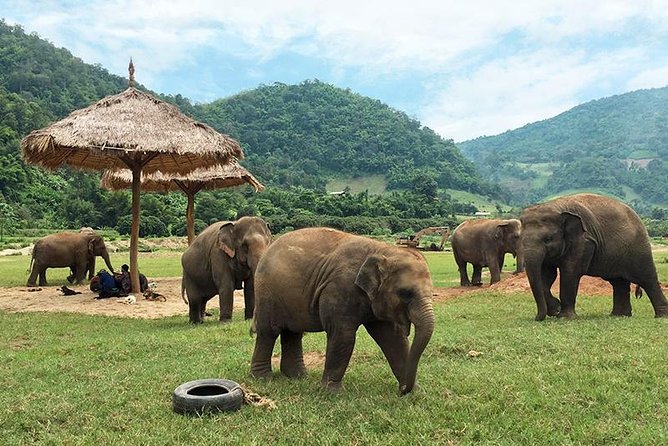
Elephant Nature Park is one of the most recognized elephant conservation projects in Thailand, founded by conservationist Lek Chailert in the 1990s. The sanctuary sits on the edge of a rainforest near Chiang Mai, in the Mae Taeng district, approximately 60km north of the city, with a rescued herd of more than 75 elephants.
Full-day visits are priced at approximately 3,500 THB per adult, with half-day options at 2,500 THB. An overnight program is available at approximately 5,800 THB, which includes dinner and on-site accommodation.
The scale of the herd and the depth of the conservation work are ENP's core strengths. On a full-day visit, the experience of watching a large, free-moving herd interact across open pasture and river is not replicated elsewhere in the Chiang Mai region.
The limitation is volume. ENP is not a small-group experience. Peak season slots sell out, and experienced visitors recommend booking four to six weeks in advance for the December to February window. Shared timing blocks mean waiting between activities during peak periods, which is a real friction point for travelers used to moving on their own schedule. If your priority is seclusion, this is not the right format. If your priority is scale, herd diversity, and the depth of the conservation story behind each elephant, it remains the benchmark.
Worth noting: As of the World Animal Protection review updated in December 2025, Elephant Nature Park has been temporarily removed from the elephant-friendly certified list due to an ongoing legal investigation. This does not affect the welfare of the herd or the quality of the visit, but it is a relevant context for travelers whose booking decision rests on formal certification.
Where this fits in your trip: Chiang Mai Old City → Mae Taeng Highway 107 north → Elephant Nature Park (approx 1 hour)
ChangChill (Mae Wang District)
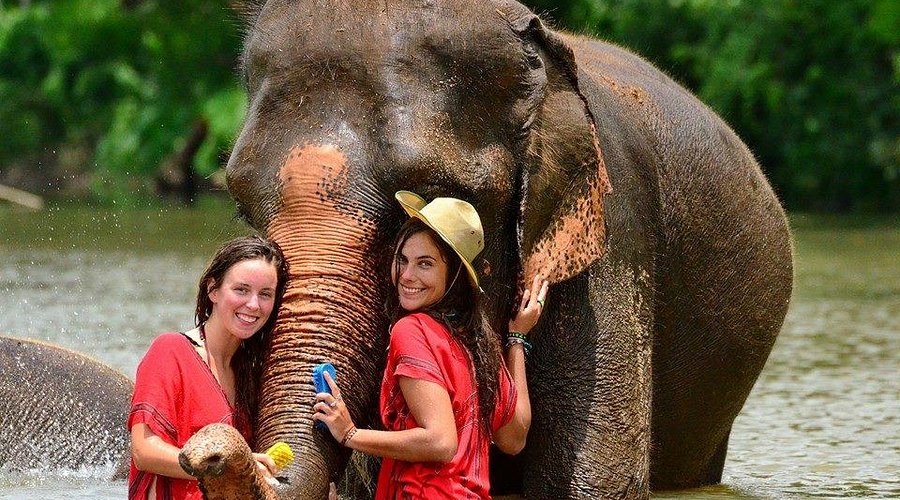
ChangChill takes its name from the Thai concept of relaxed elephants. The sanctuary is home to four resident elephants, most rescued from logging or riding operations, who now roam freely across an expanded forested land area in the Mae Wang hills, approximately 60 to 90 minutes southwest of Chiang Mai.
ChangChill operates a strictly hands-off policy. Guests observe the elephants as they graze, play, bathe in mud, and interact with one another, without direct contact, hand feeding, or any staged activity. Half-day and full-day programs are available, with hotel pickup from the Chiang Mai Old City included.
ChangChill holds World Animal Protection elephant-friendly certification at both its Hillside and View Doi locations, as of the December 2025 review.
The experience is structurally intimate. Groups are guided into the forest to observe the elephants in their own space, with guides providing context on individual animal histories and behavior. The terrain involves a meaningful uphill hike through forested ground. The humidity and gradient can make the experience physically demanding, particularly in the hot season between March and May, and this is worth accounting for before booking.
The trade-off: if you are expecting proximity or hands-on interaction, this format will not satisfy that expectation. The distance between the visitor and animal is maintained deliberately, and this is the ethical point of the experience. For travelers who have already decided they want to observe rather than interact, ChangChill is among the clearest choices in northern Thailand.
Where this fits in your trip: Chiang Mai Old City → Route 108 southwest → Mae Wang → ChangChill (approx 90 minutes)
Elephant Rescue Park (Mae Taeng District)
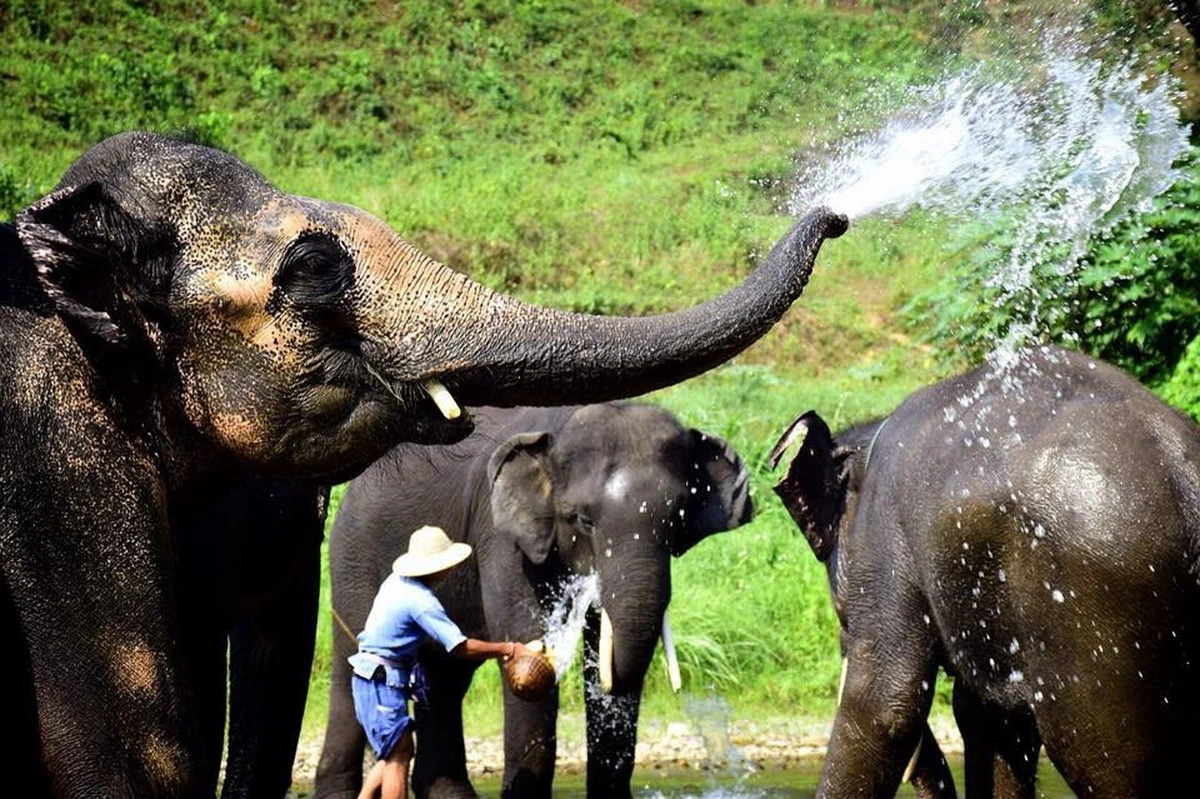
Elephant Rescue Park, founded in 2015 and located approximately 50km north of Chiang Mai in the Mae Taeng area, offers a formal, private half-day program called the Serene Boutique Elephant Care experience. This option guarantees the visit is limited to your group only, at approximately 4,400 THB per person. A standard group half-day is available at 2,200 THB.
This is the most straightforward option for travelers who need the guarantee of exclusivity rather than a structural approximation of it. The sanctuary operates on a no-riding policy. The private format includes your own guide and mahout, with full control of the session's pacing within the program's agreed parameters.
Private programs still operate within fixed session structures, which limit how long you can spend at each interaction point. The sanctuary is also smaller in scale than ENP: the herd is more limited, and the land area is more contained. For a couple or small group prioritizing guaranteed private access over maximum immersion, the format is well-suited.
Advance booking: same-day to several days. The private format is more flexible on lead time than ENP. Confirm directly with the park before finalizing any itinerary around it.
Where this fits in your trip: Chiang Mai → Mae Taeng highway north → Elephant Rescue Park (approx 1 hour)
BEES: Burm and Emily's Elephant Sanctuary (Mae Chaem District)
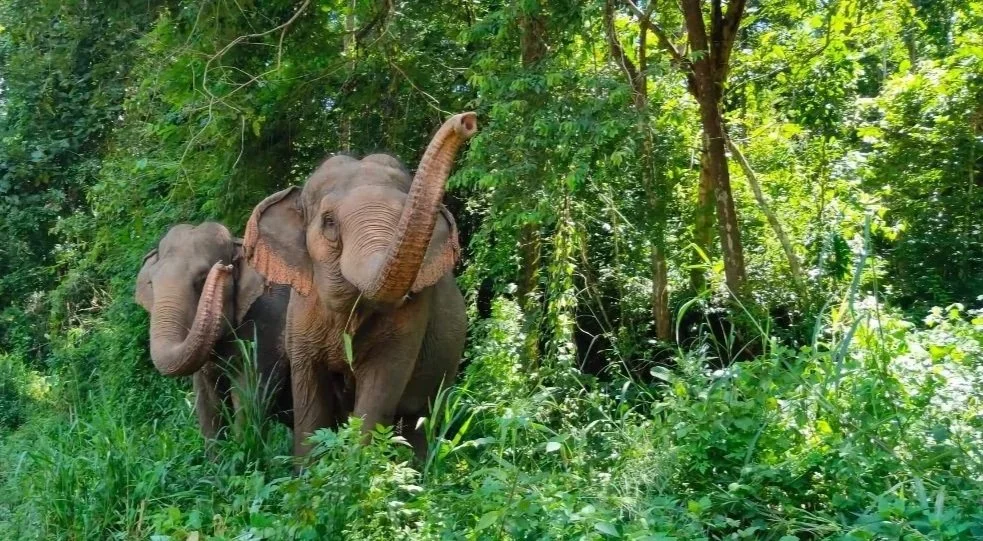
BEES is a family-run operation located in the Mae Chaem district, approximately 2.5 hours from Chiang Mai. The sanctuary hosts rescued elephants across more than 300 acres, and operates two-day and four-day visitor programs built around observation-based, hands-off principles.
The two-day program includes pickup from the Old City, on-site accommodation, meals, and a full-day forest observation experience. The four-day program extends this with direct involvement in sanctuary tasks and community engagement.
BEES is the most remote option in this guide, and that is its defining characteristic. The distance from Chiang Mai is not a drawback. It is the structure that makes the experience possible. BEES holds full elephant-friendly certification from World Animal Protection, confirmed in the December 2025 review.
The accommodation is basic by luxury travel standards. Expect functional rural conditions: power outages are possible, and the environment is a working farm rather than a resort. Wet season trails between July and September become significantly more demanding underfoot, which is worth confirming with the operator before travel. Travelers who prioritize comfort infrastructure alongside their wildlife experience should plan accordingly. Those who want genuine distance from the tourist circuit and a multi-day format with real depth will find very little that competes with it in the Chiang Mai region.
Where this fits in your trip: Chiang Mai → Doi Inthanon → Route 1009 southwest → Mae Chaem (approx 2.5 to 3 hours)
What Ethical Certification Actually Covers
Calling a sanctuary ethical is not a protected term in Thailand. Any operator can use it.
The meaningful standard is World Animal Protection's elephant-friendly designation, which is independently assessed and publicly listed. The core criteria include no riding, no direct-contact bathing or forced interaction, freedom of movement within the sanctuary's land, and mahout welfare considered alongside animal welfare.
Sanctuaries on the current World Animal Protection elephant-friendly list in the Chiang Mai area include BEES, ChangChill Hillside, and ChangChill View Doi, as of the December 2025 update.
A venue that hand-feeds elephants over a barrier is noted with a yellow designation, indicating partial compliance rather than full certification. The distinction matters if your decision is anchored to the highest available standard.
Three practical questions worth asking any operator before booking:
Does the sanctuary allow elephant riding, now or as a secondary offering on the same property? Is direct contact structured by the visitor's preference or the elephant's behavior? What is the daily visitor cap per elephant?
A credible operator will answer all three clearly. Hesitation or redirection is relevant information.
Cost Structure and What Affects Price
Prices below are estimates based on published operator rates as of early 2026, and are subject to change. Always confirm directly with the operator before booking.
- Standard small-group half-day: 1,900 to 2,500 THB per person
- Full-day ethical sanctuary: 3,000 to 3,500 THB per person
- Private half-day (formally exclusive): 4,400 THB per person
- Overnight program (Elephant Nature Park): approximately 5,800 THB per person
- Multi-day immersive program (BEES, 2-day): contact operator for current pricing
The variables that most affect cost are: formal private booking status, distance from Chiang Mai (longer transfers add operating cost), and duration. Multi-day programs at remote sanctuaries include accommodation and meals, making the per-day comparison more favorable than the headline price suggests.
Private transfers from Chiang Mai add 500 THB or more, depending on vehicle type and origin point. Some sanctuaries include round-trip pickup from within the Old City moat as standard.
When to Book and How Far in Advance
The cool season, November through February, is when demand is highest and private slot availability is most constrained. Elephant Nature Park is the most affected, with peak slots known to sell out several weeks in advance.
ChangChill and Elephant Rescue Park are more flexible, typically requiring two to five days' advance notice outside of peak periods. BEES requires planning due to the multi-day format and limited program slots per week.
For the rainy season, approximately July through October, most sanctuaries remain operational. Forest trails become more challenging. BEES, in particular, involves meaningful terrain that is affected by wet season conditions. Confirm access details with the operator if you are visiting between July and September.
The hot season, March through June, is the trade-off period. Fewer tourists means easier booking and shorter lead times. Temperatures in Mae Taeng and Mae Wang routinely exceed 35 degrees Celsius by midday, which affects both the comfort of the visit and elephant behavior patterns. Morning programs are significantly more comfortable than afternoon slots in these months.
Building This Into a Chiang Mai Itinerary
A sanctuary day works most cleanly as a standalone day, with arrival back in Chiang Mai by late afternoon. The drive out, the experience itself, and the return transfer account for most of a waking day.
For multi-day itineraries based in the Old City or Nimmanhaemin, pairing a sanctuary day with an evening at the Saturday or Sunday Night Market requires no additional planning. For those routing through northern Thailand more broadly, a BEES program fits naturally as a standalone departure from Chiang Mai before continuing south or west.
| Day | Location | Experience |
|---|---|---|
| Day 1 | Chiang Mai Old City | Arrival, Doi Suthep, old city orientation |
| Day 2 | Mae Taeng or Mae Wang | Elephant sanctuary (private or small-group day program) |
| Day 3 | Chiang Mai | Cooking class, Nimman area, departure prep |
| Alternative Days 2 to 4 | Mae Chaem (BEES) | Multi-day immersive program, departing from the Old City on Day 2 morning |
For a broader view of how northern Thailand connects to the rest of a luxury itinerary, the Northern Thailand Travel Guide: Chiang Mai, Chiang Rai, Pai, and Lampang covers regional sequencing in full.
For coastal planning after Chiang Mai, compare locations using the Luxury Beaches in Phuket and Krabi: The Complete Comparison Guide before finalizing where to base yourself. If your itinerary continues south, structure that transfer leg using the Phuket to Krabi Private Transfer: Speedboat vs Van vs Helicopter guide before confirming timings.
Who This Is Not For
Travelers who want hands-on interaction at the highest-welfare venues. The sanctuaries with the strongest ethical credentials, ChangChill and BEES, operate on a no-contact, observation-only model. If direct interaction is the primary appeal, the fully certified venues will not deliver it.
Travelers expecting resort-level facilities at remote sanctuaries. BEES operates in a rural Mae Chaem setting with basic accommodation. Elephant Nature Park's overnight stay is rustic by design. Neither is a wildlife lodge in the conventional luxury sense.
Anyone planning same-day or next-day bookings for Elephant Nature Park in December and January. The booking window at ENP during peak season is a real operational constraint, not a marketing construct. If ENP is the priority, it needs to be the first booking confirmed in your Chiang Mai itinerary, not the last.
Travelers conflating "private" with "unlimited access." Private bookings at sanctuaries operate within ethical welfare frameworks. The mahout and guide structure, the observation distances, and the daily elephant schedules remain in place regardless of how much you have paid. Private access means no shared group. It does not mean unrestricted interaction.
FAQ
What are the best private elephant sanctuaries in Chiang Mai?
The best private elephant sanctuaries in Chiang Mai, by traveler type, are:
- Elephant Rescue Park for a formally exclusive private booking
- ChangChill in Mae Wang for an observation-based, World Animal Protection certified small-group experience
- BEES in Mae Chaem for a multi-day immersive program at a remote family-run sanctuary
- Elephant Nature Park in Mae Taeng is the largest rescued herd and has the most established conservation infrastructure
How much does a private elephant sanctuary experience cost in Chiang Mai?
A formal private half-day booking costs approximately 4,400 THB per person at Elephant Rescue Park. Standard small-group ethical experiences run between 1,900 and 3,500 THB per person, depending on duration. Multi-day programs at BEES and overnight stays at Elephant Nature Park (approximately 5,800 THB) sit at the higher end and include accommodation and meals. All figures are estimates; confirm directly with the operator before booking.
Is a private elephant sanctuary in Chiang Mai worth it compared to a small-group ethical tour?
For couples or groups of two to four people who want guaranteed exclusivity, the private format is worth the premium. For solo travelers and those comfortable with a structured small-group setting, sanctuaries like ChangChill and BEES deliver a comparably intimate experience without the private booking cost. The gap in experience quality is narrower than the gap in price.
How far in advance should you book private elephant sanctuaries in Chiang Mai?
Elephant Nature Park requires four to six weeks' advance booking during the November to February peak season. ChangChill and Elephant Rescue Park typically need two to five days outside peak periods. BEES multi-day programs should be booked at the same time as your flights, as program slots are limited per week. Any sanctuary visit that is central to your itinerary should be confirmed before departure from home.
What is the difference between an ethical elephant sanctuary and a standard elephant camp in Thailand?
The core differences are:
- No riding or forced performance at ethical sanctuaries
- Freedom of movement within sanctuary land, rather than tethering
- No staged interaction or entertainment built around the visitor's schedule
World Animal Protection's elephant-friendly certification provides the most reliable independent verification. Sanctuaries that market themselves as ethical without independent certification vary considerably in actual practice.
Can you visit an elephant sanctuary in Chiang Mai during the rainy season?
Yes. Most sanctuaries operate year-round. The rainy season runs roughly from July through October, with the heaviest rainfall in August and September. Forest trails at BEES and ChangChill become more physically demanding in wet conditions. Morning programs across all sanctuaries are generally less affected by afternoon rain. The trade-off is straightforward: fewer tourists and more flexible booking availability, against more challenging terrain and occasional operational adjustments. Confirm with your chosen sanctuary before traveling.
Planning Help
If you are structuring a Thailand itinerary that includes Chiang Mai, the sanctuary choice affects timing, routing, and how you sequence the north with the south.
Private access, small-group formats, and multi-day programs each require a different planning approach. Getting that wrong usually results in either unnecessary transfers or compromised experiences later in the trip.
If you want this structured correctly from the start, plan your route and experiences with Southeast Asia Simplified before confirming bookings.
Conclusion
The choice of private elephant sanctuaries in Chiang Mai comes down to one honest assessment: what kind of access are you actually after, and does it match what the highest-welfare venues actually provide?
Travelers who want formal exclusivity with guided interaction should book Elephant Rescue Park's private program or an equivalent operator that offers group-only slots. Those willing to trade direct contact for the highest ethical standards will find ChangChill and BEES deliver an experience that is harder to find elsewhere in Southeast Asia. Elephant Nature Park remains the benchmark for scale, conservation depth, and herd diversity, with the caveat that peak season demand makes it the least spontaneous option of the group.
Northern Thailand has a longer and more complex relationship with working elephants than any marketing phrase can resolve. The sanctuaries that have earned genuine trust have done so by making the animal's welfare structurally prior to the visitor's expectations.
It is what remains when access is structured around the animal, not the visitor.