
The Mandarin Oriental Bangkok opened in 1876. It now ranks No. 7 on the World's 50 Best Hotels list, operates 331 rooms across multiple wings, runs 12 dining and drinking outlets, and holds the most extensive guest history of any luxury hotel on the Chao Phraya River. Starting rates sit at approximately $757 per night, the highest entry point among Bangkok's three world-ranked riverside properties.
The question is not whether the hotel is exceptional. The record on that is clear. The question is whether it suits how you actually travel.
It does not fit every Bangkok itinerary. The design spans multiple eras, and some wings carry their age more visibly than others. BTS Skytrain access requires a river taxi or a car. The property's depth rewards longer stays and suffers on short ones. Travelers who define luxury through contemporary minimalism, boutique-scale intimacy, or location convenience will find the Four Seasons or Capella a better structural fit.
For those who want institutional depth, a riverfront setting, and the broadest dining structure of any world-ranked hotel in the city, the Mandarin Oriental Bangkok remains the most operationally layered option on the Chao Phraya.
Early Answer
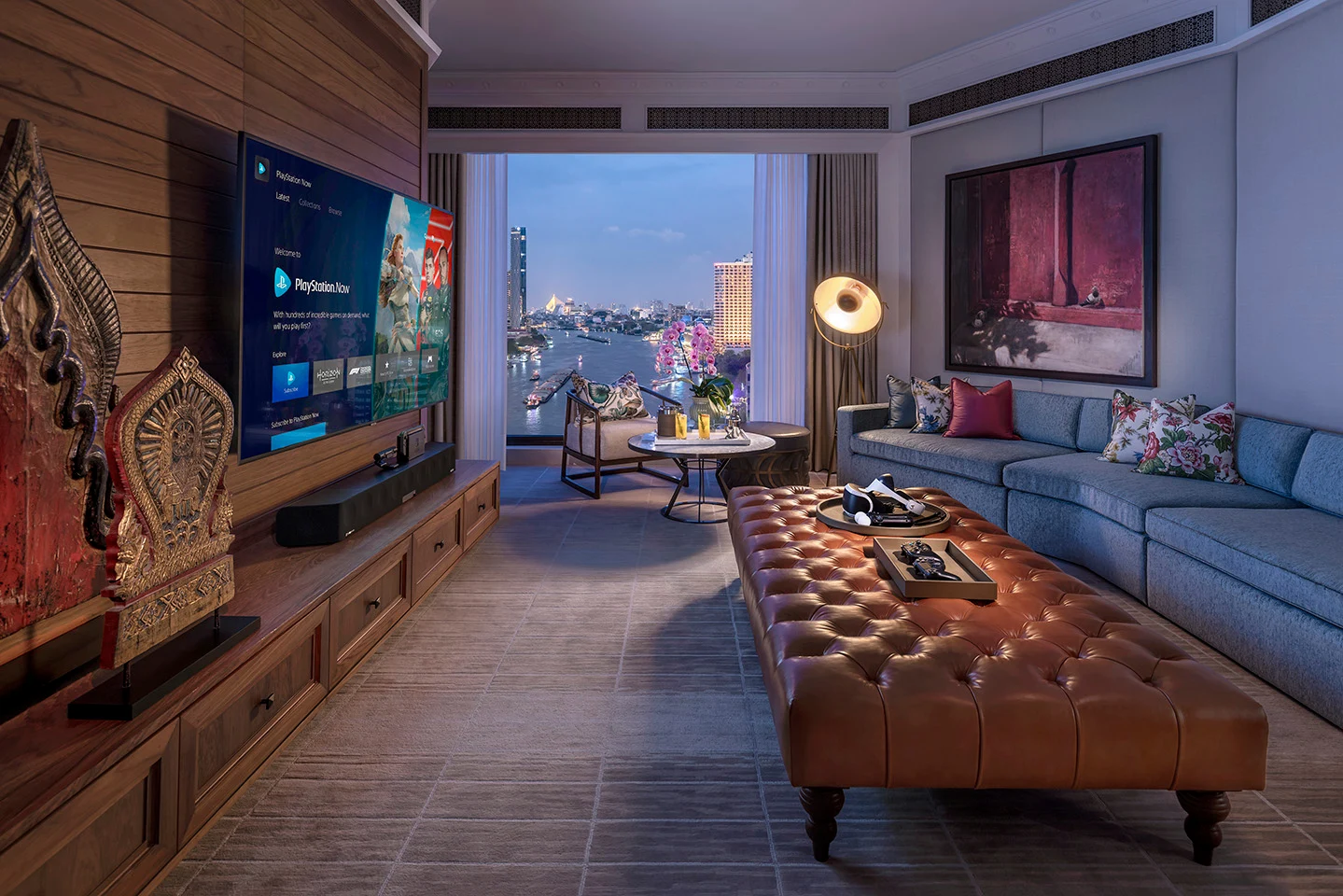
The Mandarin Oriental Bangkok is worth booking for travelers who want institutional depth, cultural layering, and the most extensive dining structure of any world-ranked hotel currently on the Chao Phraya River. It is less suited to those who prioritize contemporary minimalist design, boutique-scale intimacy, or proximity to the BTS Skytrain. Starting rates are approximately $757 per night, making it the highest entry point among Bangkok's three world-ranked riverside properties.
Quick Summary
| Detail | Overview |
|---|---|
| World ranking | No. 7, World's 50 Best Hotels 2025 |
| Location | 48 Oriental Avenue, Bang Rak, Chao Phraya Riverfront |
| Rooms | 331 rooms and suites |
| Starting rate | From approximately $757 per night (est.) |
| Established | 1876 |
| Dining outlets | 12 |
| Best for | History-aware travelers, couples, milestone stays, long visits |
| Less suited to | Design minimalists, short stays, and BTS-dependent itineraries |
What Is the Mandarin Oriental Bangkok, and What Makes It Different
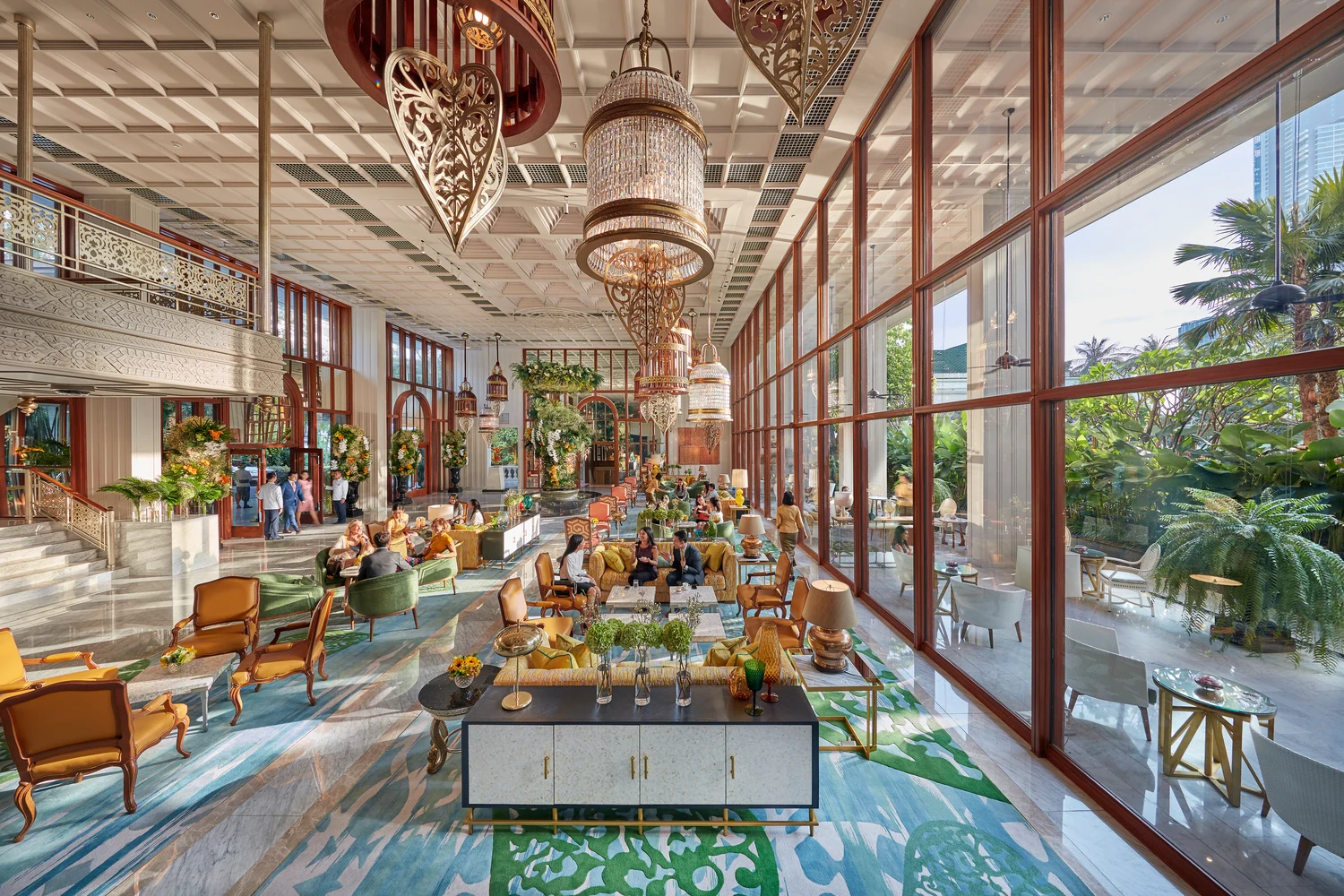
The Mandarin Oriental Bangkok is a 331-room luxury hotel on the Chao Phraya River in the Bang Rak district, established in 1876. It is one of the oldest continuously operating luxury hotels in Asia and one of three world-ranked properties now occupying Bangkok's Chao Phraya riverfront.
The property operates across multiple wings, each with its own character. Twelve dining and drinking outlets give it the broadest dining range of any property on the river. Its guest history across nearly 150 years includes Joseph Conrad, Graham Greene, Grace Kelly, Elizabeth Taylor, Marlon Brando, Michelle Yeoh, and Stanley Tucci.
That list is not a marketing position. It is a record of consistent performance over time.
What separates the Mandarin Oriental Bangkok from its newer neighbors is not simply age. The distinction lies in the accumulation of operational refinement that comes only from 148 years of continuous delivery at the highest level. No amount of design investment replicates that.
The Chao Phraya Riverfront: Bangkok's Most Concentrated Luxury Corridor
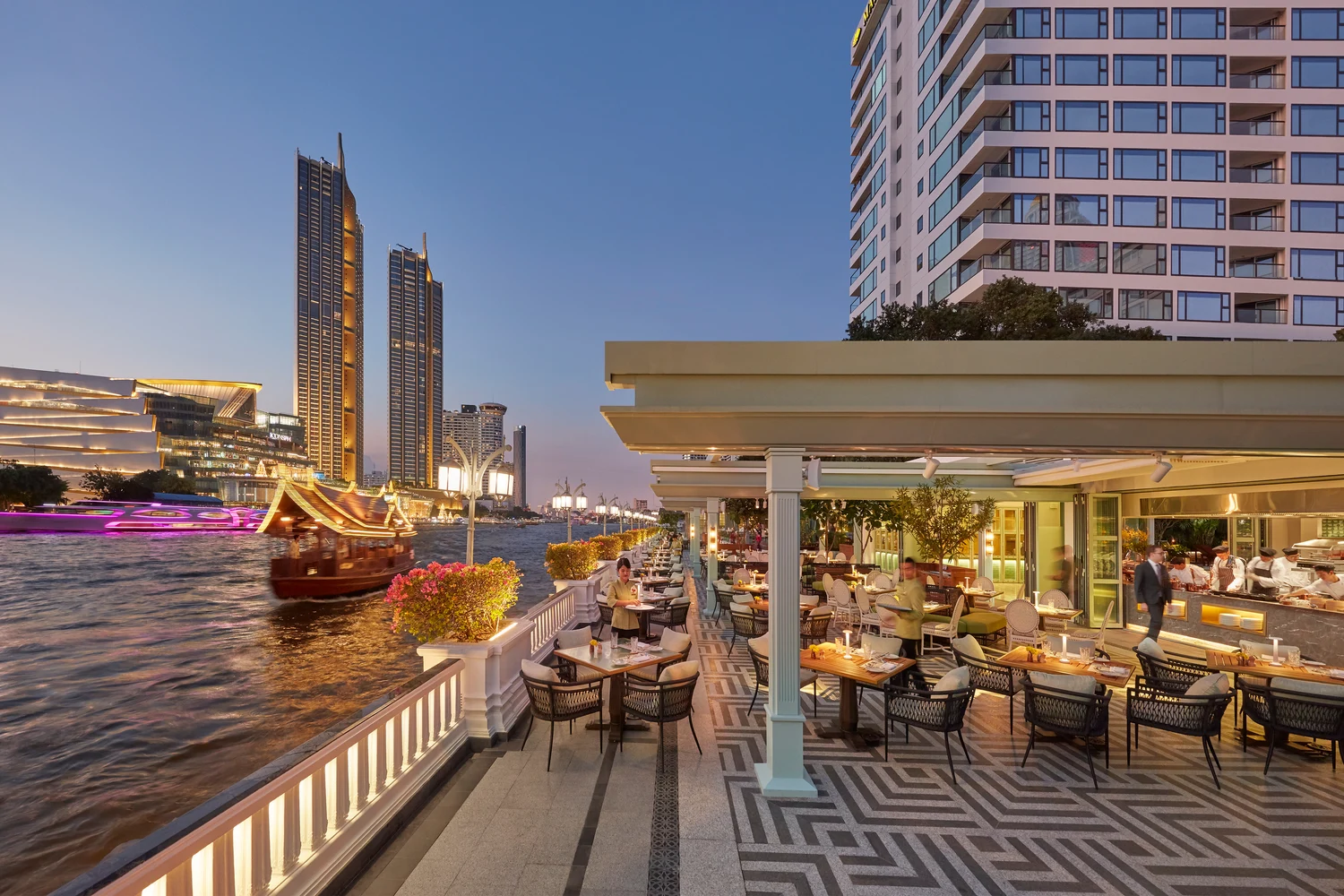
The Bang Rak and Charoenkrung stretch of the Chao Phraya River now holds three of the world's top ten hotels within a short distance of each other along the river.
The Four Seasons Bangkok at Chao Phraya River ranks No. 2 globally, with five dining outlets, a ranked destination bar, and resort-scale design by Jean-Michel Gathy. The Capella Bangkok ranks No. 3, with 101 rooms and a service model built around the Capella Culturist program.
The Mandarin Oriental Bangkok sits at No. 7 with the deepest operational history of the three.
What the river position gives every property in this corridor: boat access to Wat Pho, the Grand Palace precinct, and Asiatique; a neighborhood texture distinct from the commercial Sukhumvit corridor; and a separation from the city's traffic density that road-based hotels cannot replicate. The Tourism Authority of Thailand provides a useful overview of Bangkok's riverside zones and district character for travelers planning to navigate the city.
What it does not give: BTS Skytrain walking distance, proximity to the Sukhumvit dining and nightlife circuit, or the convenience-first structure that short-stay, high-mobility itineraries require.
At a Glance: Mandarin Oriental Bangkok vs Its Riverside Rivals
| World ranking Factor Mandarin Oriental Four | No. 7 | No. 2 | No. 3 |
| Established | 1876 | 2020 | 2021 |
| Character | Historic, literary, layered | Resort-scale, design-led | Intimate, service-first |
| Rooms | 331 | 299 | 101 |
| Starting rate (est.) | $757 | $450 | $600 |
| Dining breadth | 12 outlets | 5 outlets | 3 outlets |
| Signature experience | Authors' Lounge, Le Normandie | BKK Social Club | Capella Culturist program |
| Design age | Multi-era, historic wings | Contemporary | Contemporary |
| Weakness | Older finishes in some wings | Large and social | Very limited inventory |
Decision Shortcut
Choose the Mandarin Oriental Bangkok if you want the property with the greatest operational depth on the river. Twelve dining outlets, a globally recognized spa, 24-hour butler service, and a literary cultural identity that no newer property can replicate.
Choose the Four Seasons Bangkok or Capella Bangkok if a newer design language, a ranked destination bar, or a highly personalized small-property atmosphere takes priority over institutional depth.
Rooms and Suites: Wings, Categories, and Honest Trade-offs
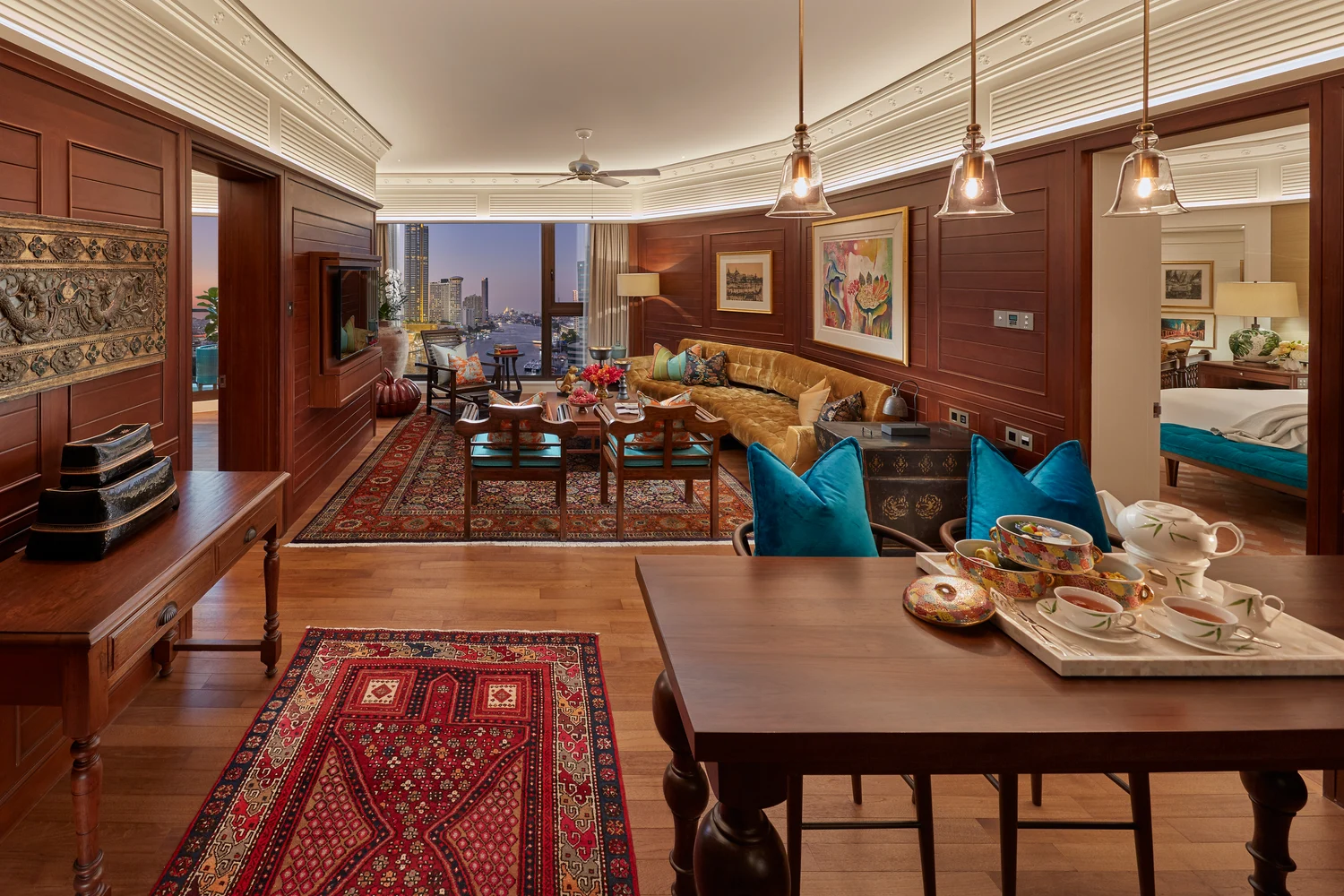
The Mandarin Oriental Bangkok operates across several wings, and the choice of wing is as consequential as the choice of room category.
The Authors' Wing occupies the original Victorian-era building. This is the most atmospheric section of the property, with shuttered windows, climbing jasmine, and the kind of architectural character that was built rather than designed. Rooms here carry historical weight but may reflect the building's era in certain finishes and proportions. Travelers who value atmosphere over contemporary polish will find this wing the most compelling reason to choose the property.
The River Wing houses the property's most recognized suites, named after literary figures with direct connections to the hotel. The Somerset Maugham Suite and James Michener Suite are the most requested categories. These rooms offer the most contemporary presentation within the historic property and carry the longest booking lead times.
The Garden Wing offers a central position: closer to the garden and pool than to the river, with a quieter orientation suited to guests who prioritize sleep quality over water views.
The honest trade-off across all categories: this is not a newly built hotel, and certain areas of the property carry that reality in their finishes. Travelers with expectations calibrated to a brand-new property may notice this. Travelers who understand that continuity and character are related will not.
Rate estimates, verify directly before booking: River Wing suites range from approximately $1,500 to $3,000 per night. Entry-level rooms begin at approximately $757. All figures are estimates subject to seasonal and availability variation.
Dining at Mandarin Oriental Bangkok: 12 Outlets, Structured by Purpose
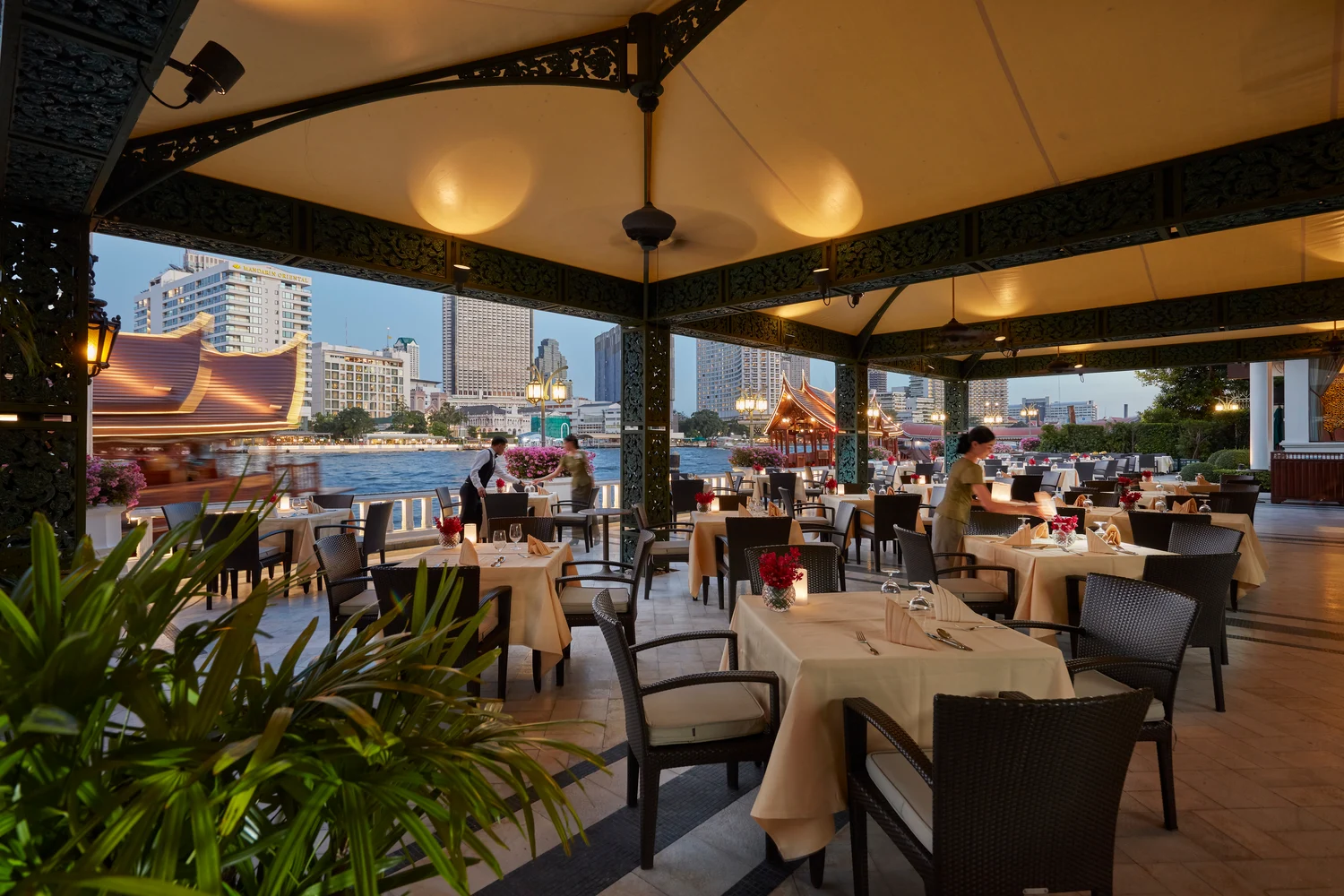
The dining program at the Mandarin Oriental Bangkok is the widest of any world-ranked hotel currently on the Chao Phraya River. Twelve outlets across a property of this size create genuine variety, but it also requires navigation. Not every outlet is equally relevant to every guest.
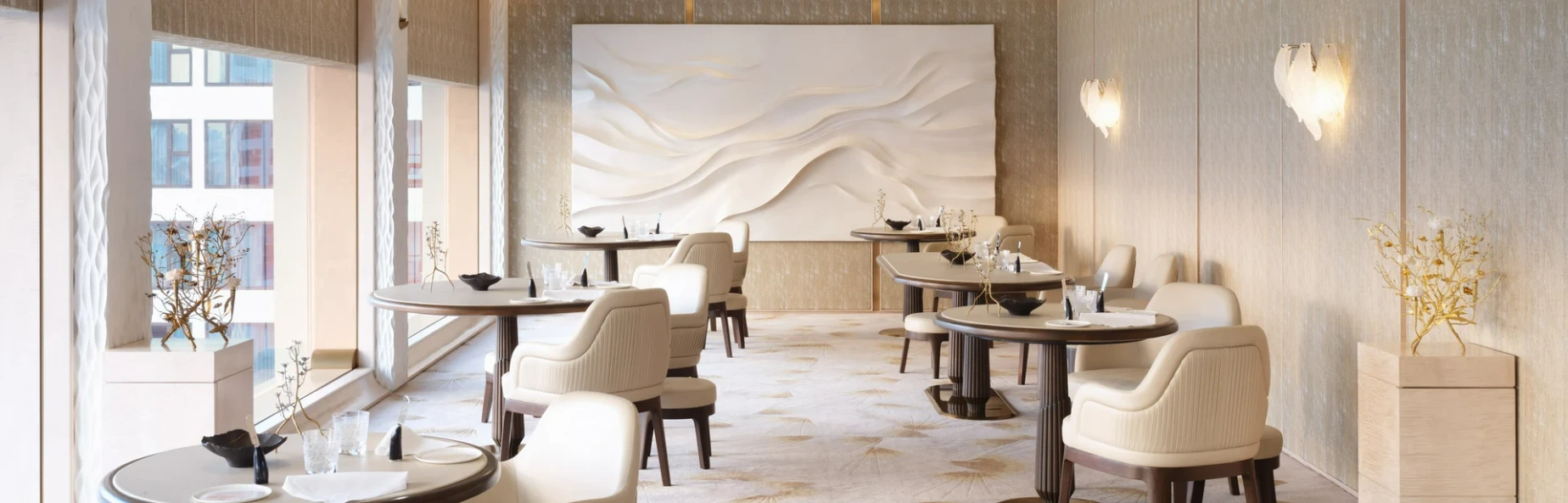
Le Normandie is the property's flagship French fine-dining restaurant, recently taken over by Anne-Sophie Pic, one of the world's most recognized three-Michelin-star chefs. The transition has considerably elevated international attention on this restaurant. Advance reservation is essential, particularly from November through February, when availability tightens weeks ahead of arrival.
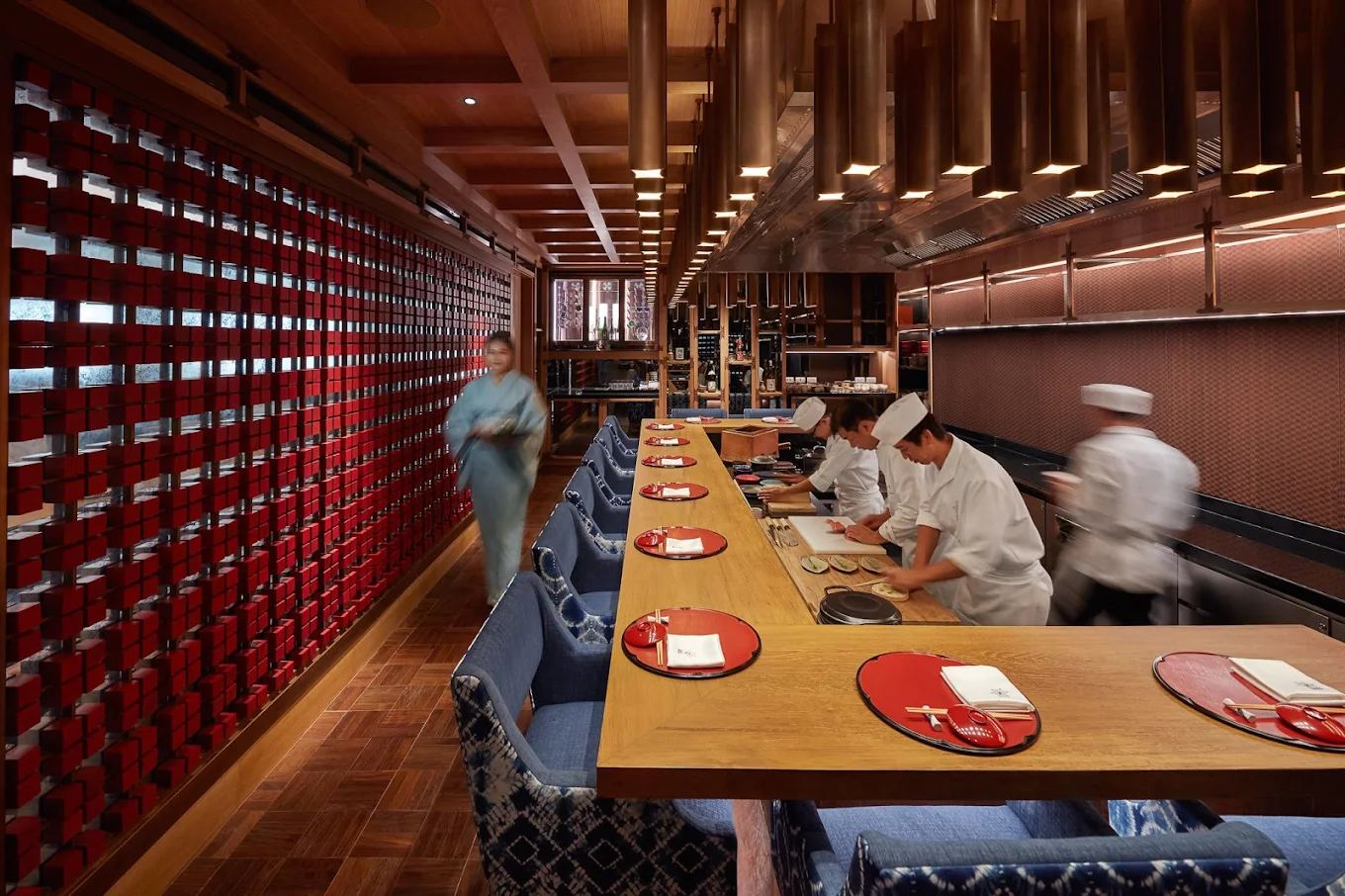
Kinu by Takagi is the property's award-winning, structurally precise Japanese kaiseki outlet. For travelers who want the most considered, course-structured dining on the property outside of Le Normandie, this is the correct choice.
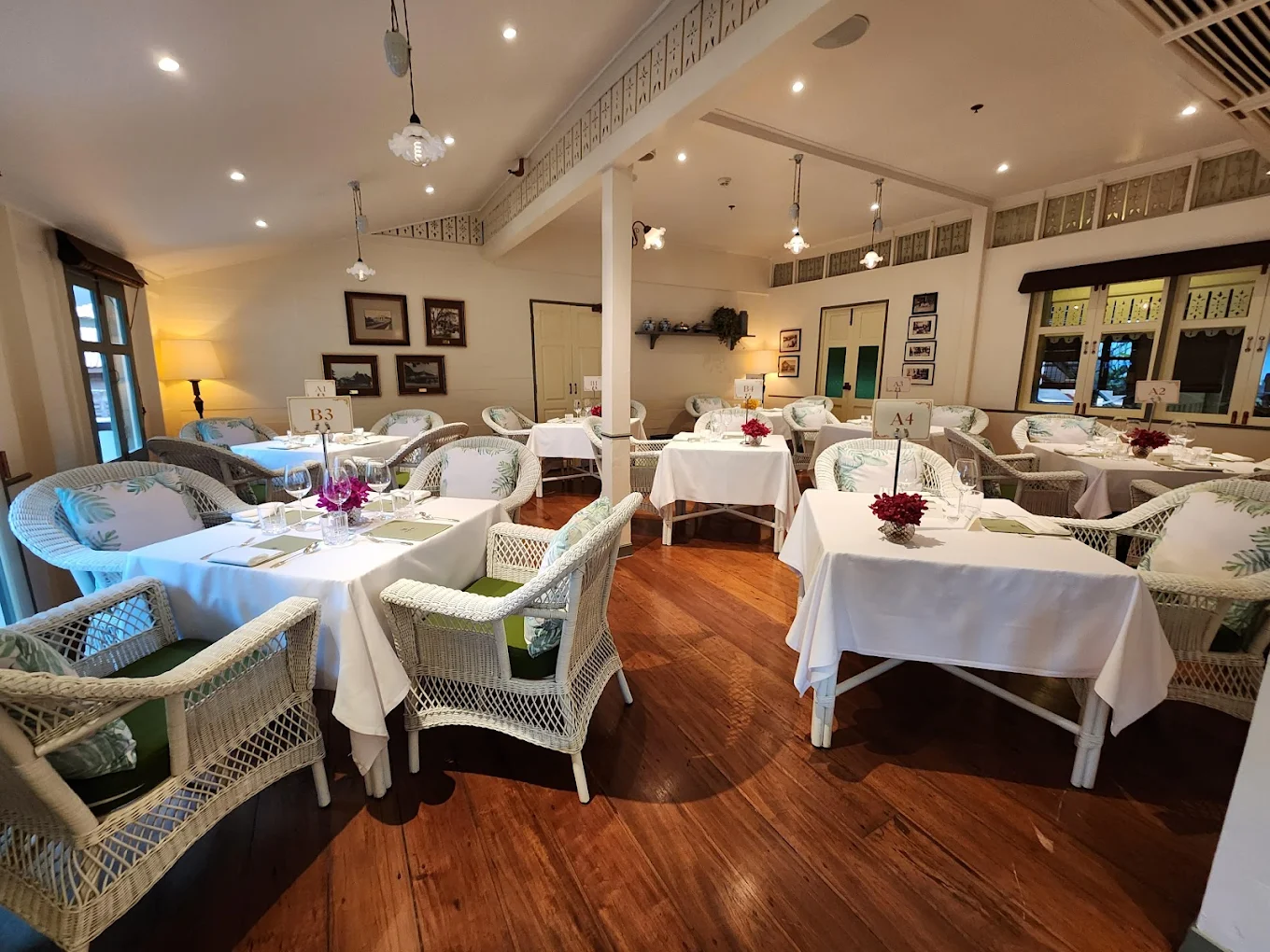
Baan Phraya serves modern Thai food in a traditional Thai house setting. This is the most locally grounded outlet in the portfolio and the most appropriate for guests who want Thai food without leaving the property.
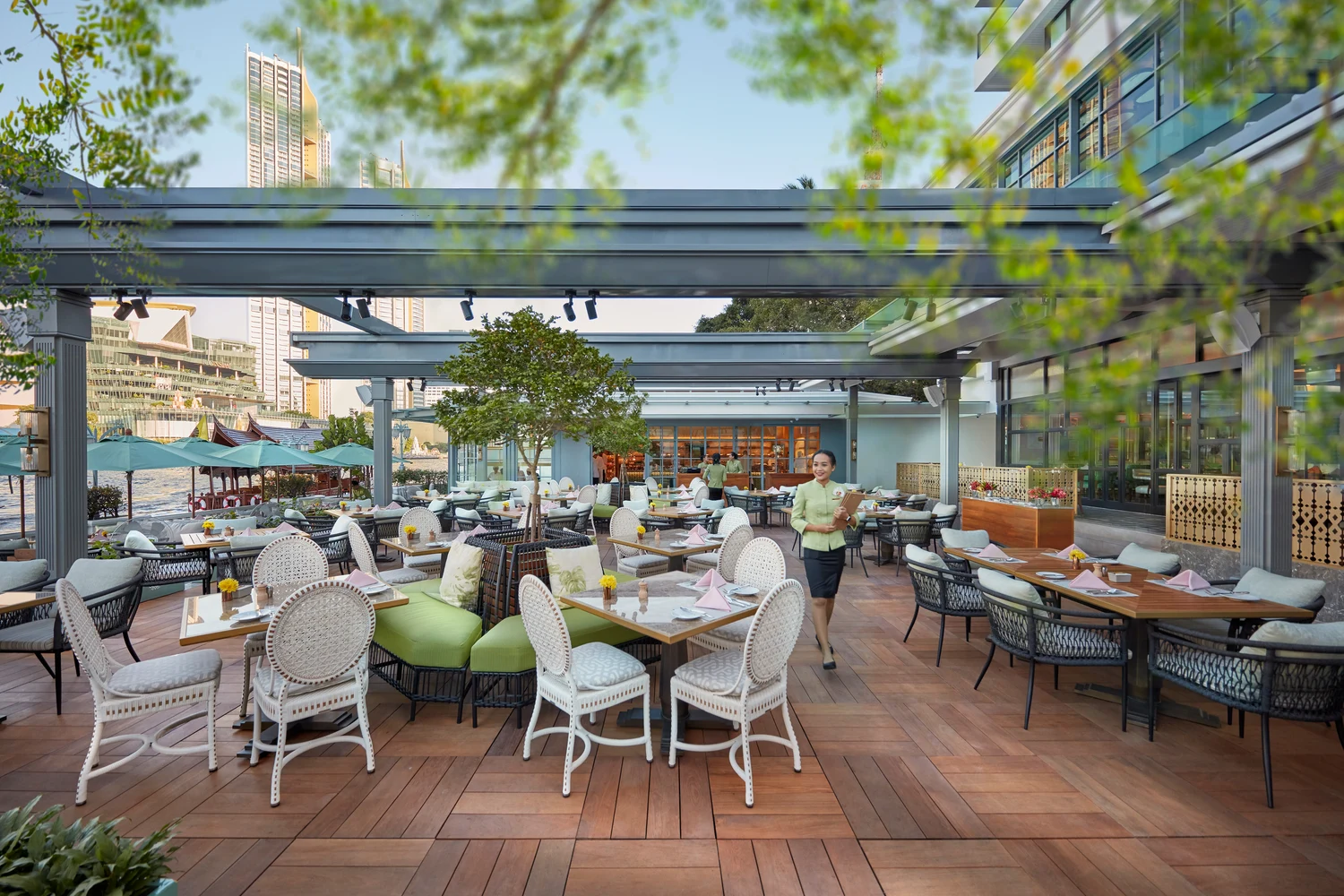
The Verandah serves as the riverside breakfast venue, noted as one of Bangkok's finest morning dining settings. It functions as the default daily orientation point for most guests, and justifiably so.
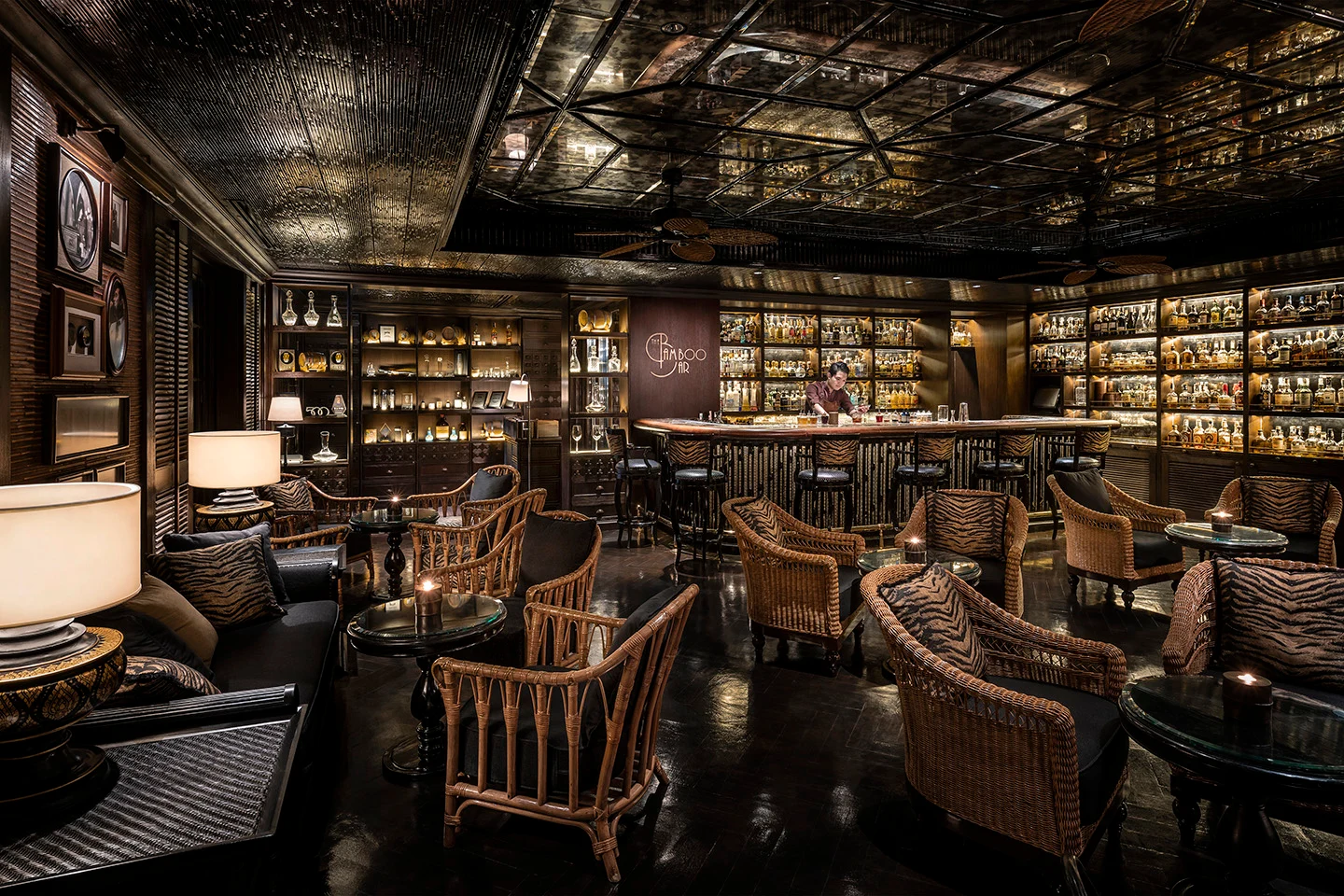
The Bamboo Bar is Bangkok's longest-running jazz bar. It operates as an evening destination in its own right, with live programming and a cocktail list refined over decades. For guests who want to remain on the property after dinner, this is the straightforward choice.
Booking note: Le Normandie and Kinu by Takagi require advance reservations. Anne-Sophie Pic's involvement in Le Normandie has added a level of demand that did not exist under the previous format. Book these before arrival, not on check-in day.
The Authors' Lounge: Bangkok's Most Distinctive Afternoon Tea
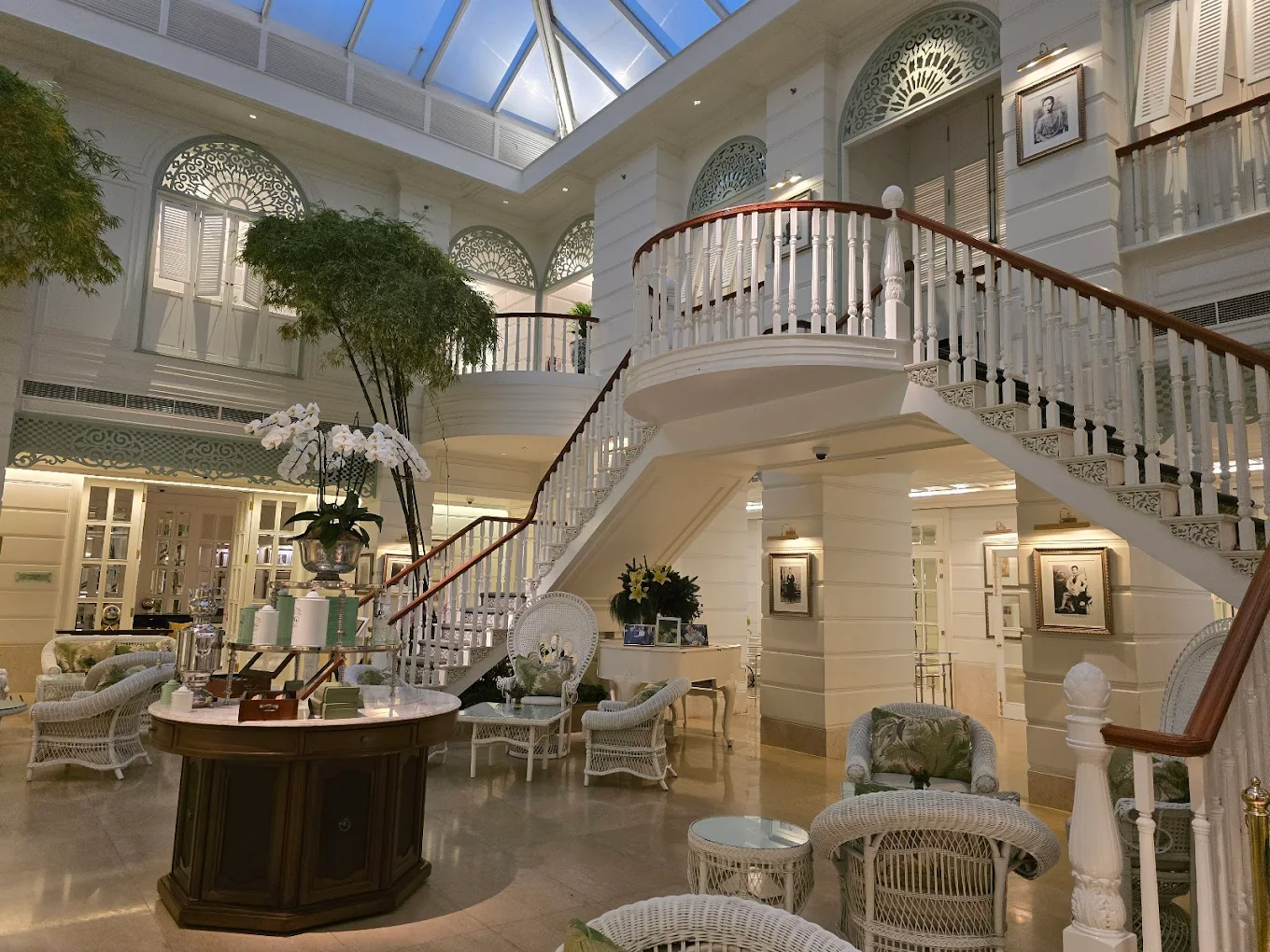
The Authors' Lounge is the clearest point of differentiation for Mandarin Oriental Bangkok from every other luxury hotel in the city.
It operates on the ground floor of the original Victorian-era building, with shuttered windows, climbing jasmine, and elegant balconies. Wicker furniture, hand-painted fabrics, finger sandwiches, scones, and a selection of teas drawn from the world's major tea-producing regions define the format. The room has maintained this structure for decades.
This is not a hotel amenity designed to photograph well. It is a room built with a particular purpose in 1876 that has continued to serve that purpose ever since.
For travelers who engage with it deliberately, it is the most culturally specific experience available at any Bangkok hotel. Book in advance. During the November through February high season, the most desirable afternoon slots fill well ahead of arrival.
The Oriental Spa: Independent Reputation, Separate Building
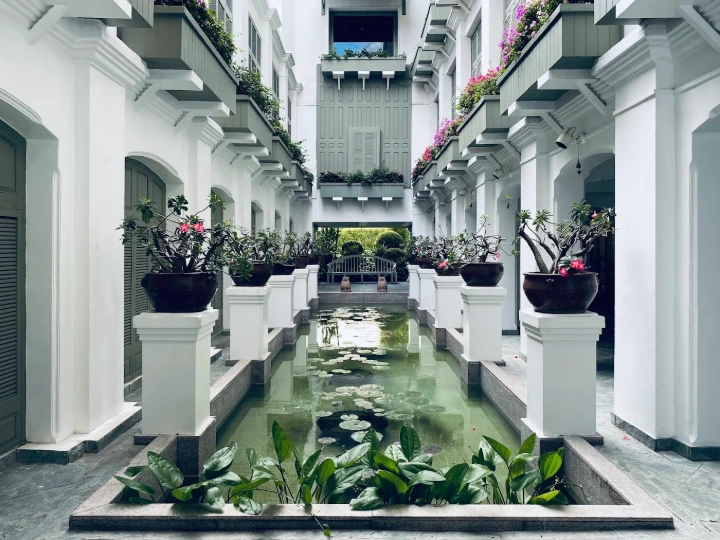
The spa at the Mandarin Oriental Bangkok is located in a dedicated building across the river from the main hotel. Guests are transported by boat, which creates a genuine sense of separation from the property and the city.
The spa carries its own international reputation, independent of the hotel's ranking. Treatment frameworks draw on Thai wellness traditions alongside broader therapeutic approaches. The setting functions as a deliberate transition from Bangkok's density.
For travelers arriving from a week on the southern Andaman coast, the spa provides a composed final chapter before a departure flight. For those beginning their trip in Bangkok, it calibrates the pace before heading south.
Advance booking is required. Same-day appointments during high season are rarely available.
Service: 24-Hour Butler, Precision, and What It Means at Scale
Service at the Mandarin Oriental Bangkok operates around the clock, with 24-hour butler access to all rooms. In practical terms, this means personalized assistance with dining reservations, transfers, in-room requests, and itinerary coordination at any hour.
The physical details reinforce the standard: Japanese electronic toilets, silk kimonos, toiletries in aluminum containers with no single-use plastic, and room-adjustable lighting scenes. These are not novel features at this price point. Notably, they are consistent across 331 rooms.
Maintaining service precision at scale across a multi-wing historic property is operationally more challenging than at a 101-room purpose-built hotel. The Mandarin Oriental Bangkok's world ranking reflects sustained delivery across that challenge, not merely a design statement.
Location: Bang Rak, the River, and Practical Movement
The Mandarin Oriental Bangkok sits at 48 Oriental Avenue in the Bang Rak district. The neighborhood is one of Bangkok's older commercial areas, distinct in character from the polished towers of Sukhumvit and the tourist-oriented density around the Grand Palace precinct.
The river provides the most efficient mode of transport for historical Bangkok. From the hotel pier, longtail access to Wat Pho and the Grand Palace complex runs approximately 15 to 20 minutes. Asiatique is accessible in a similar window.
For city movement beyond the river corridor, the practical approach is the hotel shuttle to the BTS Saphan Taksin station, which connects to the broader Skytrain network. Grab operates reliably from the hotel driveway for guests who prefer direct road routing.
Distances and transfer realism:
- Wat Pho and Grand Palace: 15 to 20 minutes by river from the hotel pier
- BTS Saphan Taksin: 10 to 15 minutes by hotel shuttle
- Sukhumvit (BTS Asok): 30 to 45 minutes by road in normal traffic
- Suvarnabhumi Airport: 45 to 60 minutes by road, depending on the time of day
- Don Mueang Airport: 60 to 75 minutes by road
Where this fits in your wider itinerary:
Bangkok: Mandarin Oriental (3 to 4 nights) > Phuket > Krabi or Koh Yao Noi
For travelers building a complete Thailand itinerary with Bangkok as the opening chapter, the 2 Weeks in Thailand: A Luxury Private Itinerary (2026) guide covers how to structure the transition south.
Who the Mandarin Oriental Bangkok Is Not For
Being specific here is more useful than a generalized recommendation.
The Mandarin Oriental Bangkok is not the right choice if:
- Your itinerary depends on the proximity of the BTS Skytrain or the walking distance to Sukhumvit. The river location adds transfer friction that compounds across short, high-mobility stays.
- You are booking two nights or fewer and plan to spend most of your time moving across the city. At this price point and with this property's program, a two-night stay is a significant underuse of what the hotel offers.
- You expect contemporary minimalist design throughout. The Authors' Wing and parts of the property reflect their era. Travelers calibrated to newly built properties may notice this.
- You want a boutique atmosphere with a small guest community. This is a 331-room property with a corresponding level of activity in the lobby and communal spaces.
- You are building an itinerary around Bangkok nightlife that requires late-night mobility. The river location favors settled evenings on the property over spontaneous city movement.
Suggested Stay Structure
| Days | Focus | Key Experiences |
|---|---|---|
| Day 1 | Arrival and orientation | River Wing check-in, The Verandah dinner, Bamboo Bar evening |
| Day 2 | Cultural circuit | Longtail to Wat Pho and Grand Palace, Authors' Lounge afternoon tea (pre-booked), Baan Phraya dinner |
| Day 3 | Wellness and dining | Oriental Spa morning (pre-booked, boat transfer), Kinu by Takagi dinner (pre-booked) |
| Day 4 | Departure preparation | Verandah breakfast, Le Normandie final evening (advance booking essential), onward transfer confirmed. |
Booking note: Le Normandie, Kinu by Takagi, the Authors' Lounge afternoon tea, and the Oriental Spa all require advance reservations. The most requested time slots at the Authors' Lounge fill weeks before arrival during the November through February high season.
Costs, Booking Windows, and Planning Realism
All rates below are estimates. Verify directly with the property before booking.
- Entry-level rooms: from approximately $757 per night (est.)
- River Wing suites (Somerset Maugham, James Michener categories): from approximately $1,500 to $3,000 per night (est.)
- Le Normandie: dinner for two with wine, approximately $300 to $500 and above (est.)
Optimal booking window for high season dates (November through February): four to six months in advance for River Wing suite categories. Shoulder season (March through May) offers improved availability and lower rates before the heat and pre-monsoon humidity peak in late May.
Bangkok sits outside the Andaman monsoon pattern that affects Phuket and Krabi from May through October. The city has its own wet season, but it does not materially disrupt the quality of stays at a river property in the way that open-coast exposure does further south.
The key reservations at this property should be secured before you arrive: the Le Normandie suite, the Kinu by Takagi table, and the Oriental Spa. Once those are confirmed, the rest of the itinerary fits around them. Plan your luxury travel with Southeast Asia Simplified.
How the Mandarin Oriental Bangkok Sits Within the Planning Decision
For travelers who have reviewed all three Chao Phraya world-ranked properties and are making a final choice:
Choose the Mandarin Oriental Bangkok for: the broadest dining range on the river (12 outlets), cultural and literary depth that no newer property can match, a globally recognized spa with an independent reputation, and a guest history that remains relevant to travelers for whom that continuity adds meaning. The highest starting rate on the river is a trade-off against that program breadth.
Choose the Four Seasons Bangkok for its contemporary design by Jean-Michel Gathy, the BKK Social Club bar experience (No. 19 on Asia's 50 Best Bars), and a resort-scale pool environment. Full assessment: Four Seasons Bangkok at the Chao Phraya River: Is It Worth It?
Choose Capella Bangkok for: the most personalized service model currently operating in Bangkok (the Culturist program), the smallest guest community of the three, and the most composed atmosphere. Full assessment: Capella Bangkok: What to Know Before You Book.
Frequently Asked Questions
Is the Mandarin Oriental Bangkok worth it in 2026?
Yes, it is designed for the traveler. The Mandarin Oriental Bangkok offers the widest dining program of any world-ranked hotel on the Chao Phraya River, a spa with an independent global reputation, and 24-hour butler service across 331 rooms. It is worth the rate for travelers who engage with its full program: the Authors' Lounge, Le Normandie or Kinu by Takagi, the Oriental Spa, and at least three nights to make full use of these. It is less justifiable for short stays, BTS-dependent itineraries, or travelers who prefer contemporary design throughout.
Is the Mandarin Oriental Bangkok suitable for first-time visitors to Bangkok?
It depends on how you plan to use the city. First-time visitors who want to cover Bangkok broadly across neighborhoods, nightlife, and commercial districts will find the river location adds friction to a high-mobility itinerary. First-time visitors who want a well-appointed base with structured access to the historical core, including the Grand Palace precinct and Wat Pho by the river, will find the property well positioned. The key variable is whether your priority is to move through Bangkok or to settle into it. The Mandarin Oriental Bangkok rewards the second approach at any level of familiarity with the city.
What is the best room at the Mandarin Oriental Bangkok?
The best room depends on what you want from the property. River Wing suites, including the Somerset Maugham Suite and James Michener Suite, offer the most contemporary presentation and the most requested orientation. For travelers who want a historical atmosphere over modern finish, the Authors' Wing rooms in the original Victorian building carry the strongest sense of place. The Garden Wing is the quietest option and suits light sleepers or guests who do not prioritize river views.
How does the Mandarin Oriental Bangkok compare to Capella Bangkok and Four Seasons Bangkok?
The three properties share a river corridor and a world ranking but operate with distinct identities. The Mandarin Oriental Bangkok has the deepest history, the most extensive dining structure, and the highest starting rate. The Four Seasons Bangkok offers contemporary resort-scale design, a ranked destination bar, and a more accessible entry rate. Capella Bangkok operates in an intimate setting, with 101 rooms and the Culturist service model as its primary differentiator. Full comparisons are available for both the Four Seasons Bangkok and the Capella Bangkok.
What is the Authors' Lounge at the Mandarin Oriental Bangkok, and is it worth visiting?
The Authors' Lounge is the original Victorian-era ground-floor space at Mandarin Oriental Bangkok, serving as one of the world's most recognized afternoon tea settings. The format includes wicker furniture, hand-painted fabrics, climbing jasmine, finger sandwiches, scones, and an extensive tea selection. The room is named for its long association with visiting writers, and the suites above carry those writers' names. It is worth visiting for travelers who engage with it deliberately. Advance booking is required, particularly from November through February. For travelers who treat afternoon tea as a generic hotel offering, that view will not change, but the setting remains the most historically specific experience available at any Bangkok hotel.
What is the best time to visit the Mandarin Oriental Bangkok?
November through February is the optimal window. This is Bangkok's dry season, with the lowest humidity, coolest temperatures, and most comfortable conditions for walking, river movement, and outdoor dining. This period coincides with peak demand and the highest room rates. March through May offers better availability and lower rates before the peak of pre-monsoon heat in late May. Bangkok's wet season (June through October) brings regular rain but does not disrupt a river-based stay as much as open-coast exposure affects Phuket or Krabi.
How far is the Mandarin Oriental Bangkok from Suvarnabhumi Airport?
Suvarnabhumi Airport is approximately 45 to 60 minutes from the Bang Rak district by private road transfer, depending on traffic and time of day. Early-morning and late-evening arrivals experience lower congestion. The hotel arranges private transfers with fixed pricing confirmed in advance. The Airport Rail Link reaches Phaya Thai station, from which a taxi to the hotel adds approximately 20 to 30 minutes, depending on conditions.
Plan Your Bangkok Itinerary with Southeast Asia Simplified
For travelers planning a Bangkok stay around the Mandarin Oriental Bangkok and seeking a broader Thailand routing to match the same standard of planning, begin with a private inquiry. Whether your itinerary continues south to the Andaman coast or remains focused on Bangkok, the key reservations and logistics decisions should be confirmed before you arrive.
Plan your luxury travel with Southeast Asia Simplified.
Conclusion
Bangkok rewards travelers who arrive with a clear decision already made. The choice of hotel is not a minor logistical variable. In 2026, the Chao Phraya River will determine what kind of city Bangkok will become.
The Mandarin Oriental Bangkok suits travelers who want a property with operational depth, cultural continuity, and a dining program broad enough to anchor the entire stay without requiring a departure. It suits milestone travel, longer visits, and guests for whom the knowledge that Graham Greene once sat in the same lounge adds to, rather than detracts from, the experience.
It does not suit everyone. But then, it never needed to.
The Mandarin Oriental Bangkok was not built to impress the traveler who arrived last year. It was built for the one who arrives with the intention of returning.